WALL-E
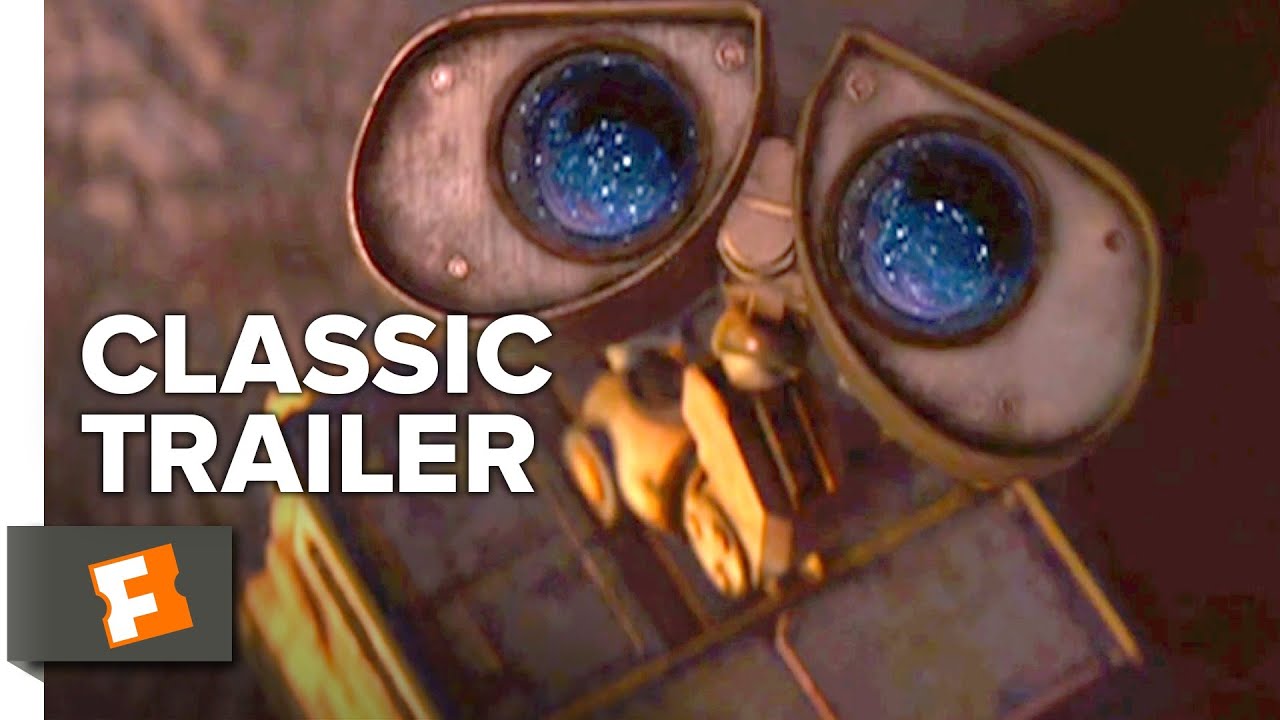
A trash-compacting robot alone on a garbage planet, a cockroach for a pet, a tape of Hello, Dolly! watched on repeat and a sleek white probe named EVE. Pixar's 2008 film barely speaks for its first act, cost a then-record $180 million, won the animated-feature Oscar and was called the best film of the decade by Time's critic.
The idea dates to a 1994 lunch where Andrew Stanton, John Lasseter, Pete Docter and Joe Ranft brainstormed what Pixar would make after Toy Story. Stanton's question was: what if mankind had to leave Earth and somebody forgot to turn off the last robot? He made the robot a waste collector because a low-status, menial job made it instantly sympathetic. He and Docter spent two months on it as "Trash Planet" in 1995 and shelved it. Stanton picked it up again in 2002 while finishing Finding Nemo, and a story reel of the first twenty minutes in late 2003 convinced Lasseter and Steve Jobs to greenlight it. One early draft had the remnants of humanity as gelatinous green aliens; they became "big babies" instead.
The robot was built from odd parts. His eyes came from a pair of binoculars Stanton was handed at an A's game, which cost him an entire inning; Buster Keaton's stone face convinced Stanton he needed no nose or mouth; his arms slide on side tracks borrowed from an animator's father's inkjet printers. Stanton had iPod designer Jonathan Ive look over EVE, whose eyes were modeled on a Lite-Brite, and AUTO is a deliberate homage to HAL 9000. The crew watched a Keaton and a Chaplin film every day for almost a year to learn how to act without words. Ben Burtt, the Star Wars sound designer, recorded 2,500 sounds, twice what a Star Wars film needs, including a 1950 hand-cranked generator he bought on eBay for WALL-E's movement; the Macintosh startup chime plays when the battery is full.
It opened on June 27, 2008, to $63.1 million and finished at $532.5 million worldwide, ninth for the year. Critics placed it on 162 of the 286 year-end top-ten lists tallied by Movie City News, more than any other 2008 release, and Roger Ebert called it the best science-fiction movie in years. The second act's hoverchair-bound humans drew fire from both directions: the New York Post's Kyle Smith wondered whether a corporation had ever spent so much to insult its own customers, and National Review writers called it leftist propaganda, while a writer at The American Conservative argued it was a conservative film about the farm and the family. It won the Academy Award for Best Animated Feature with five more nominations; Disney's push for a Best Picture slot failed and set off a debate over whether the Academy had boxed animation into its own category.
Disney built 318-kilogram animatronic WALL-Es for the promotional tour but would not let them meet children for fear of a crushed foot, so photos were taken with a cardboard cutout. The Library of Congress added the film to the National Film Registry in 2021, the second Pixar feature after Toy Story. Pixar has said it considers the story finished.
Similar items

Finding Nemo
A clownfish searches an ocean for his kidnapped son, guided by a forgetful blue tang with the most memorable catchphrase of the decade. Pixar's Finding Nemo won instant hearts with its vibrant coral-reef world, stellar voice acting, and emotional stakes that proved animated films could make you cry.

Toy Story
Pixar's Toy Story was the first fully computer-animated feature film, directed by John Lasseter and starring Tom Hanks and Tim Allen as mismatched toys Woody and Buzz. Released November 1995, it reinvented animation and launched a franchise that still dominates 30 years later.

The Incredibles
Pixar's 2004 superhero film about a family forced to hide their powers in suburban normalcy — Mr. Incredible, Elastigirl, and their kids Violet, Dash, and baby Jack-Jack. They're drawn out of retirement to battle the villain Syndrome, and the film balances family comedy with genuine action and heart. The Academy Award–winning film proved animation could deliver both laughs and thrills.
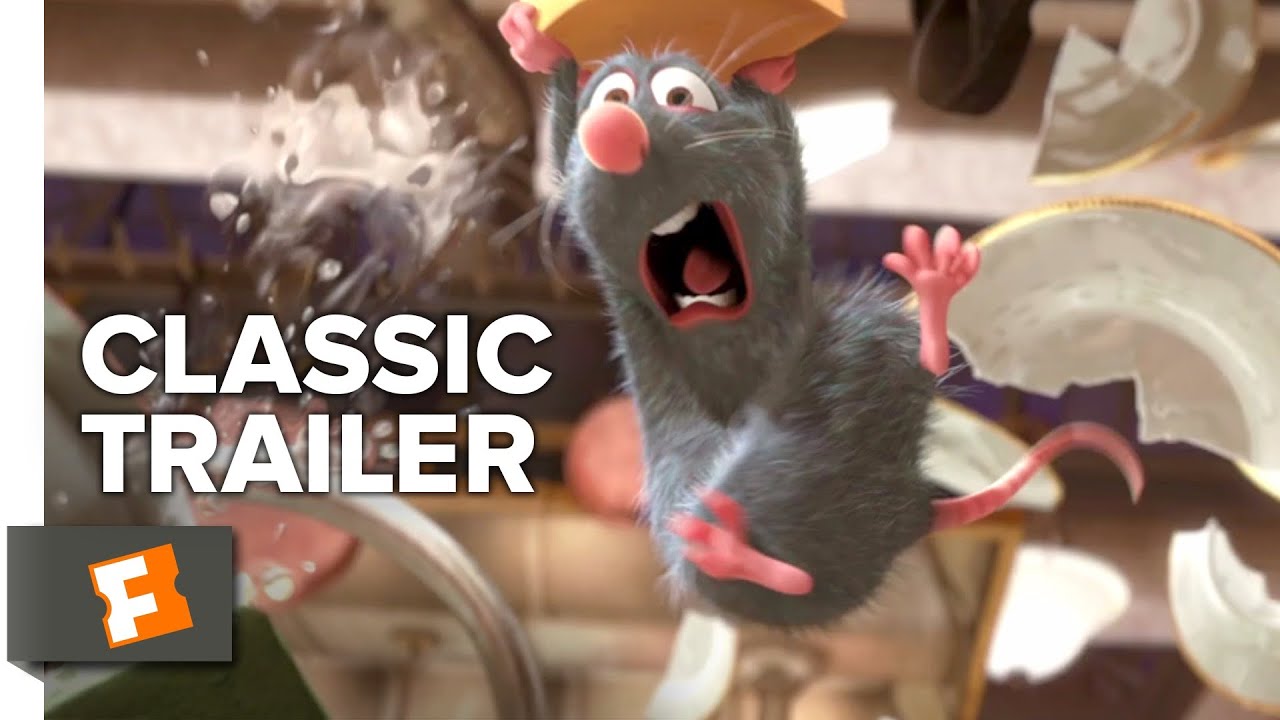
Ratatouille
Pixar's rat-in-a-toque masterpiece: Remy, a rodent with a chef's palate, secretly cooking in a Paris kitchen by puppeteering a hapless garbage boy by the hair. It ends with a single bite of vegetables sending a feared critic hurtling back to his childhood — the most devastating flashback in animation.