The Fantanas

Coca-Cola invented four fictional spokes-girls to lip-sync about wanting Fanta, and for most of the 2000s the jingle lived in everyone's head rent-free. Each Fantana repped a flavor; together they were the bubbliest, most aggressively catchy thing on television. "Wanta Fanta — don't you wanta?"
Ogilvy & Mather built the campaign for Coca-Cola starting in 2001, and the four Fantanas debuted in 2002: Nina for strawberry, Calli for orange, Leelee for pineapple, and Raquel for grape, complete with a manufactured backstory about being discovered on Fantana Island. The "Wanta Fanta" jingle — produced by John Alters and co-written by Alters and Eric Kupper — did the actual work: the women on screen lip-synced while session singers made it inescapable.
The campaign's trick was reinvention. The lineup cycled through a "Mod" era from 2004 to 2006 and a "Party" phase through 2009, then a full 2009 relaunch with four new Fantanas, before an eventual co-ed rebrand in 2017; Robot Chicken parodied them in 2006, the surest sign the culture had absorbed them. The joke underneath is that Fanta itself is old — born in Germany in 1940 as a wartime Coca-Cola substitute and not widely available in the US until the 1960s. But for a generation of American kids, the soda simply is those four women and that jingle, learned by heart before anyone thought to ask why.
Similar items

Budweiser "Whassup?!"
Friends on the phone, watching the game, having a Bud — tongues out, "Whassaaaap!" Budweiser's campaign turned a real short film about real friends into the catchphrase that ate the year 2000, when every phone call, hallway, and sitcom in America did the bit.
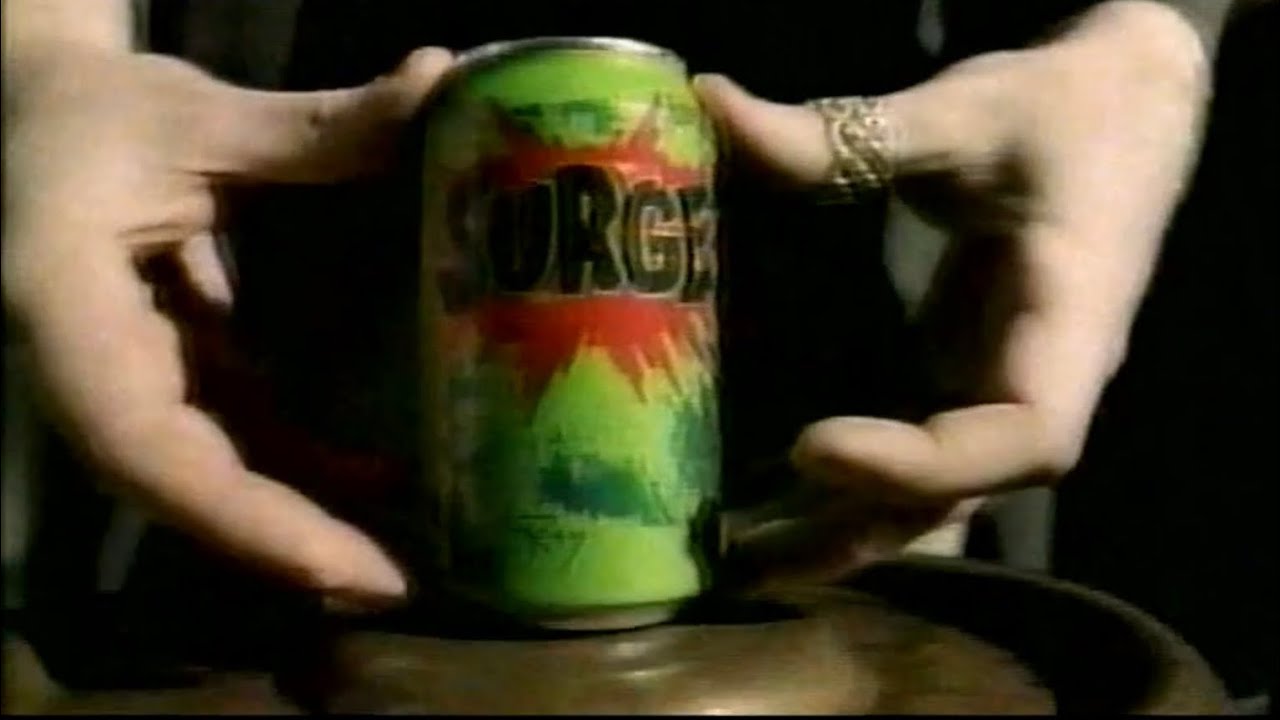
Surge
Coca-Cola's aggressively marketed neon-green citrus soda that positioned itself as the extreme-sports answer to Pepsi's Mountain Dew. Heavy on caffeine and attitude, Surge fueled the mayhem marketing of the late 90s before vanishing from shelves in 2003 — only to surge back after a passionate fan movement brought it to Amazon in 2014.

Axe Body Spray
One part deodorant, three parts marketing, applied in quantities visible from space. Axe hit American shelves in 2002 and turned every middle-school locker room into a chemical event — while its ads promised that one spray would summon stampedes of women.
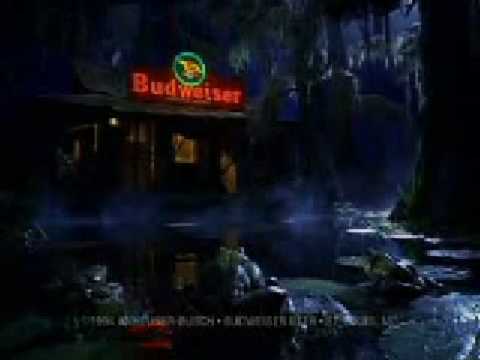
Budweiser Frogs
Three frogs on a swamp log, croaking one syllable each: "Bud." "Weis." "Er." That was the whole ad — and the entire country spent 1995 doing the impression. It didn't matter that most of the people quoting it weren't old enough to buy the product. That, it turned out, was the problem.