The Day After Tomorrow

Roland Emmerich's 2004 blockbuster trades aliens for air currents — a cascade of extreme weather that flash-freezes New York in a matter of days. Dennis Quaid's climate scientist goes unheeded, Jake Gyllenhaal ends up burning library books to survive, and that frozen Statue of Liberty became the poster image for every "what if the climate does THIS" conversation you had in school.
Roland Emmerich, the man who blew up the White House in Independence Day, returned to the disaster-film playground in 2004 with a premise that swapped alien invasion for atmospheric collapse. When the North Atlantic's ocean circulation shuts down, the result is a catastrophe that compresses what should take geological ages into days — tornadoes shred Los Angeles, a colossal storm surge swallows Manhattan whole, and then a blast of arctic cold flash-freezes everything in its path. After a Mexico City premiere on May 17, 2004, 20th Century Fox released it in US theaters on May 28 — a summer tentpole built on spectacle and dread in equal measure.
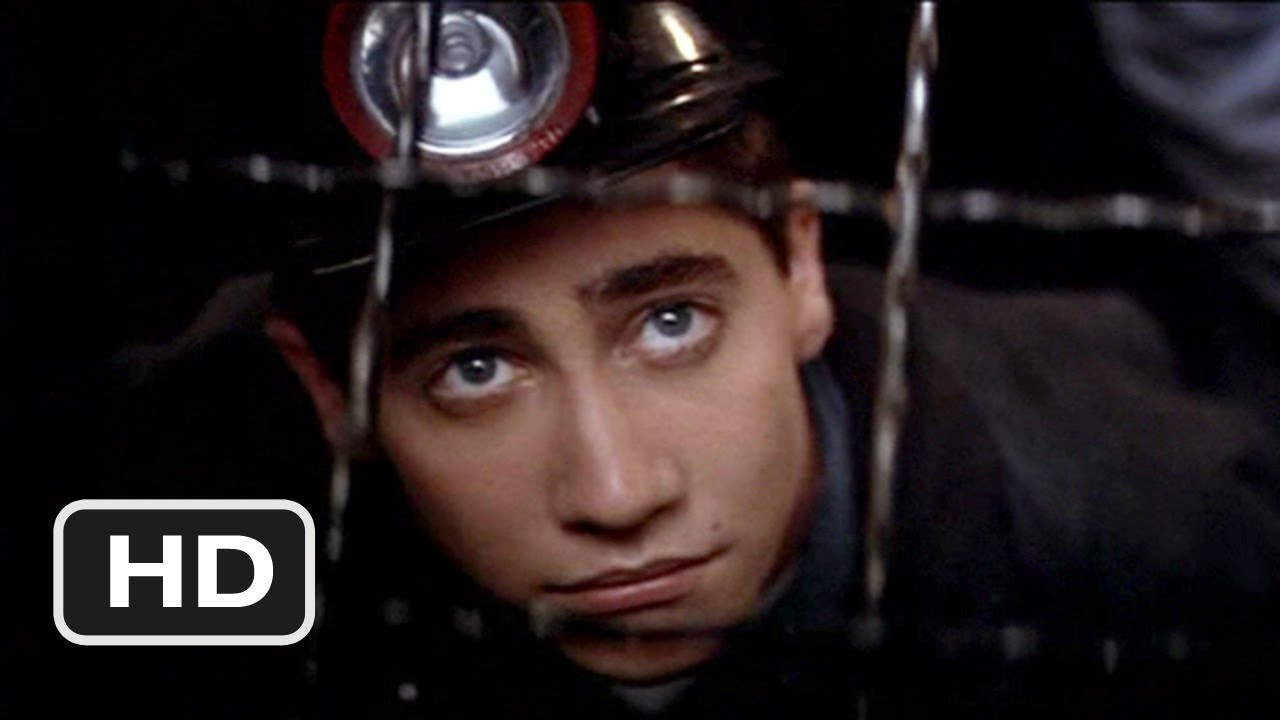
Dennis Quaid anchors the film as Jack Hall, a NOAA paleoclimatologist whose warnings fall on deaf ears until the weather proves him right — too late to matter for anyone but his teenage son Sam (Jake Gyllenhaal), stranded in Manhattan. Sam's storyline is the film's emotional spine: his group barricades itself inside the New York Public Library and burns books to stay alive while the superstorm's "eye" — a wall of cold so absolute it freezes people mid-stride — passes overhead. It's the kind of apocalyptic image that sticks: teenagers feeding literature into a fireplace to outlast nature. Meanwhile Jack straps on snowshoes and treks north over the ice to reach his son, because survival in an Emmerich movie is always personal.
The visuals delivered exactly what audiences came for: the Statue of Liberty encased in ice, Manhattan's skyline frozen mid-panic. On a $125 million budget the film grossed $186.7 million domestically and $552.6 million worldwide — one of the biggest hits of 2004. Critics were less thrilled: Rotten Tomatoes settled at 46%, with a consensus calling it "a ludicrous popcorn thriller filled with clunky dialogue" whose "spectacular visuals save it from being a total disaster." Scientists piled on about the fast-forwarded timeline — Harvard paleoclimatologist Daniel P. Schrag put it flatly, "you're not going to see another ice age – at least not like that," worrying the exaggeration might lead people to dismiss real climate science.
Two decades on, The Day After Tomorrow endures as the disaster movie of 2000s cable reruns and middle-school science-class debates. Every "superstorm" news graphic since owes it something. It never aged into prophecy; it became cultural shorthand for how we imagine the apocalypse — fast, visual, personal, and survivable if you're clever enough and loved enough to warrant a rescue.
Similar items
Jake Gyllenhaal
Born into Hollywood royalty but broke through on his own terms—as the troubled daydreamer who became every indie film's favorite wunderkind. By mid-decade, he'd pivoted into blockbusters without losing the arthouse credibility, proving the 2000s' best leading men didn't have to pick a lane.

Independence Day
The White House explodes. Will Smith punches an alien and delivers the one-liner. Jeff Goldblum uploads a virus from a PowerBook. The movie that made July 4th weekend a permanent blockbuster holiday — and the biggest film of 1996 by a mile.

Twister
Two storm-chasing exes and an experimental sensor pod named Dorothy, racing a corporate rival — and the sky itself — across the Plains. It gave the world a CGI flying cow, "We got cows," a near-$500 million gross, and, quietly, one of the first movies ever released on DVD in America.

Armageddon
Michael Bay and Jerry Bruckheimer strap a nuke to an asteroid movie: Bruce Willis leads a crew of blue-collar oil drillers shot into space to save Earth. It was the single highest-grossing film of 1998 worldwide, powered by an Aerosmith ballad you could not escape all summer.