The Cable Guy

Jim Carrey's dark left turn: an obsessive cable installer who hooks you up and never leaves. Ben Stiller directed, Judd Apatow produced, and Carrey took a then-record $20 million payday to unsettle the exact audience his goofball hits had built. Critics split hard in 1996; the cult came later.
The Cable Guy arrived June 14, 1996, as Jim Carrey's deliberate swerve away from the rubber-faced comedies that had made him a megastar. Directed by Ben Stiller and produced by Judd Apatow for Columbia Pictures, the film cast Carrey as "Chip Douglas," a cable installer who befriends his customer Steven Kovacs (Matthew Broderick) and then refuses to leave — or end the friendship — ever. The tagline said it plainly: there's no such thing as free cable. What begins as a gesture of goodwill curdles into obsession, and the movie mines genuine discomfort from the premise. Carrey's $20 million salary was then a record — a bet that he could carry anything, even a film where the goofball mask hid something broken.
The critical response split the room in half. Roger Ebert put The Cable Guy on his worst-of-1996 list. Gene Siskel, reviewing the same film, called it "a very good film" — a stark divergence that captured the culture's uncertainty about what it wanted from Carrey. The box office echoed that uncertainty: $102.8 million worldwide ($60.2 million domestic) against a $47 million budget meant the film was profitable, but hardly the blockbuster its record salary implied.
What happened next transformed the movie's legacy. Over the years, The Cable Guy developed a cult following among viewers who found its discomfort brave rather than off-putting — and it has since been credited with helping Carrey pursue the more serious roles that followed. The dark turn audiences rejected in 1996 turned out to be the opening move of his second act.
Similar items

Jim Carrey
The Canadian comic who became the biggest movie star on the planet in a single calendar year. In 1994, Ace Ventura, The Mask, and Dumb and Dumber made Jim Carrey the hyperkinetic face of the decade — rubber-faced, fearless, and everywhere.

Dumb and Dumber
The Farrelly brothers' breakout comedy starred Jim Carrey and Jeff Daniels as two hopelessly incompetent best friends on a cross-country road trip. Dumb and Dumber capped Carrey's historically unprecedented 1994—the year he also starred in Ace Ventura and The Mask—and grossed nearly $250 million worldwide on a modest budget.

Ace Ventura: Pet Detective
Alrighty then. A pet detective in a Hawaiian shirt talks out of his own rear end, rescues the Miami Dolphins' kidnapped mascot, and turns a $15 million comedy into the launchpad of Jim Carrey's insane 1994. Critics hated it; recess quoted it for years.
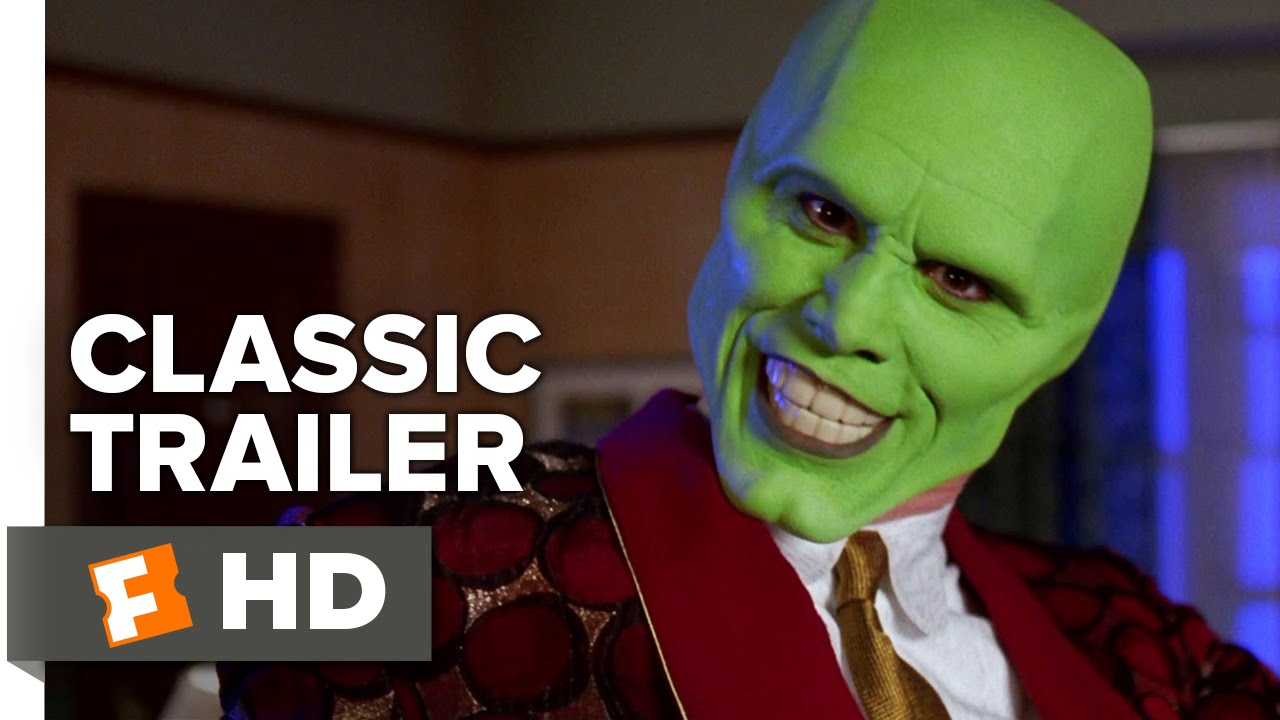
The Mask
Ssssmokin'! Stanley Ipkiss puts on a cursed green mask and becomes a zoot-suited cartoon come to life — eyes bugging out, heart pounding through his chest. The Mask turned Jim Carrey into a literal living Tex Avery gag and gave the world Cameron Diaz.