Super Mario Sunshine

A tropical vacation goes hilariously wrong when Mario arrives on Isle Delfino and is immediately framed for vandalism. Armed with a talking water-cannon backpack and a court order to clean the island, you chased 120 Shine Sprites across a bizarre, sun-soaked adventure. Divisive at launch — no castles, just a goofy water gun and a wrongfully convicted plumber — it's aged into a GameCube classic.
Super Mario Sunshine arrived in 2002 as the second 3D Super Mario adventure, a bold stylistic leap from Super Mario 64. Released in Japan in July and North America in August, it abandoned the castle formula for a vacation gone wrong: Mario, Peach, Toadsworth, and a handful of Toads arrive on the sunny Isle Delfino just as a doppelgänger called Shadow Mario trashes the place with graffiti. Mario gets pinned with the crime and sentenced to clean it all up — the premise is absurd, and the game knows it.
The water backpack FLUDD — the "Flash Liquidizer Ultra Dousing Device," and yes, it talks — becomes your sidekick and primary tool, letting you spray away goop and hover across gaps. It was a gimmick that split opinion immediately: some players loved the fresh take, others found a water gun in a Mario game faintly heretical. Behind it all, Bowser Jr. is revealed as the architect of the Shadow Mario frame-up, and the goal is deceptively simple: collect 120 Shine Sprites to bring light back to the island and prove your innocence.
The numbers told their own story — more than 400,000 copies sold in Japan within four days, and over five million worldwide by 2006, making it one of the best-selling GameCube games ever. The credits behind it were a Nintendo dream team: directed by Yoshiaki Koizumi and Kenta Usui, produced by Shigeru Miyamoto and Takashi Tezuka, with music by Koji Kondo and Shinobu Tanaka.
What felt odd and risky in 2002 — a resort island instead of a kingdom, a talking backpack, comedy over grandeur — now reads as charming and singular. The sun-drenched middle child of 3D Mario has been fully reclaimed: divisive then, adored now.
Similar items

Nintendo GameCube
The small cube-shaped Nintendo console with a built-in carry handle, released November 2001. Indigo or purple exterior, proprietary MINI-DVD discs, and an oversized green A button that defined its controller. Super Smash Bros. Melee, Mario Kart: Double Dash, Metroid Prime, and The Legend of Zelda: The Wind Waker were system-defining hits.
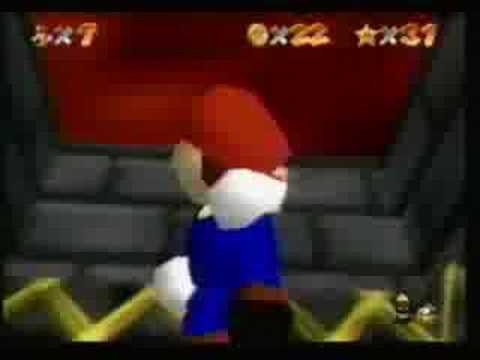
Super Mario 64
The game that showed the world what 3D could be. Super Mario 64 launched the Nintendo 64 by dropping Mario into an open, explorable castle, and its analog-stick control and swooping camera quietly wrote the rulebook every 3D platformer would follow.

Luigi's Mansion
Mario's brother finally got top billing—as the nervous lead of Nintendo's GameCube launch. Luigi wins a mansion in a contest he never entered, finds it haunted, loses Mario inside, and armed with a ghost-catching vacuum cleaner, nervously hums his way through rooms of poltergeists. The Poltergust 3000 was ingenious enough to spawn a franchise.

Animal Crossing
Nintendo's gentle life-simulation game that reached the US on the GameCube in 2002. You move to a village of animal neighbors, pay off a mortgage to raccoon shopkeeper Tom Nook, and fish, catch bugs, decorate your house, and run errands—all on a real-time clock synced to the console, so the game's day and night and seasons matched real life. No winning, no losing—just a cozy daily routine.