String Cheese

The lunchbox mozzarella log with one sacred rule: you peel it. Strip by satisfying strip, dangled and nibbled until the last stub — and everyone knew that one kid who just bit into it whole like a monster.
String cheese works because of actual science: heat mozzarella to about 140°F and stretch it, and the milk proteins line up in one direction — so instead of crumbling, the cheese pulls apart into long, satisfying strings. People have exploited that trick for centuries; stretched string cheeses are traditional everywhere from Armenia to Slovakia to Oaxaca's quesillo.
The American lunchbox version is much younger. Wisconsin's Baker family is credited with pioneering it — Frank Baker, in 1976, began producing mozzarella in the now-familiar snack form: a cylinder about six inches long and under an inch thick, sized for one kid, one recess. Made from low-moisture mozzarella (sometimes blended with cheddar), it was mild, mess-free, and didn't need a knife, a cracker, or an explanation. Individually wrapped sticks turned out to be the perfect grab for the brown bag and the after-school fridge raid, and by the 90s string cheese sat alongside juice boxes and fruit snacks as a default unit of the American school lunch.
What made it beloved, though, was never the cheese — it was the procedure. String cheese is the rare food with a built-in fidget: peel a thin ribbon, pull it slow, see how long a single string you can manage, drape it, gnaw it, repeat. The peel-versus-bite divide became genuine schoolyard doctrine, prosecuted at lunch tables everywhere. The stick has since gone global under many names and brands, but it remains what it was in 1976: the only cheese that comes with a toy inside — the toy being the cheese itself.
Similar items
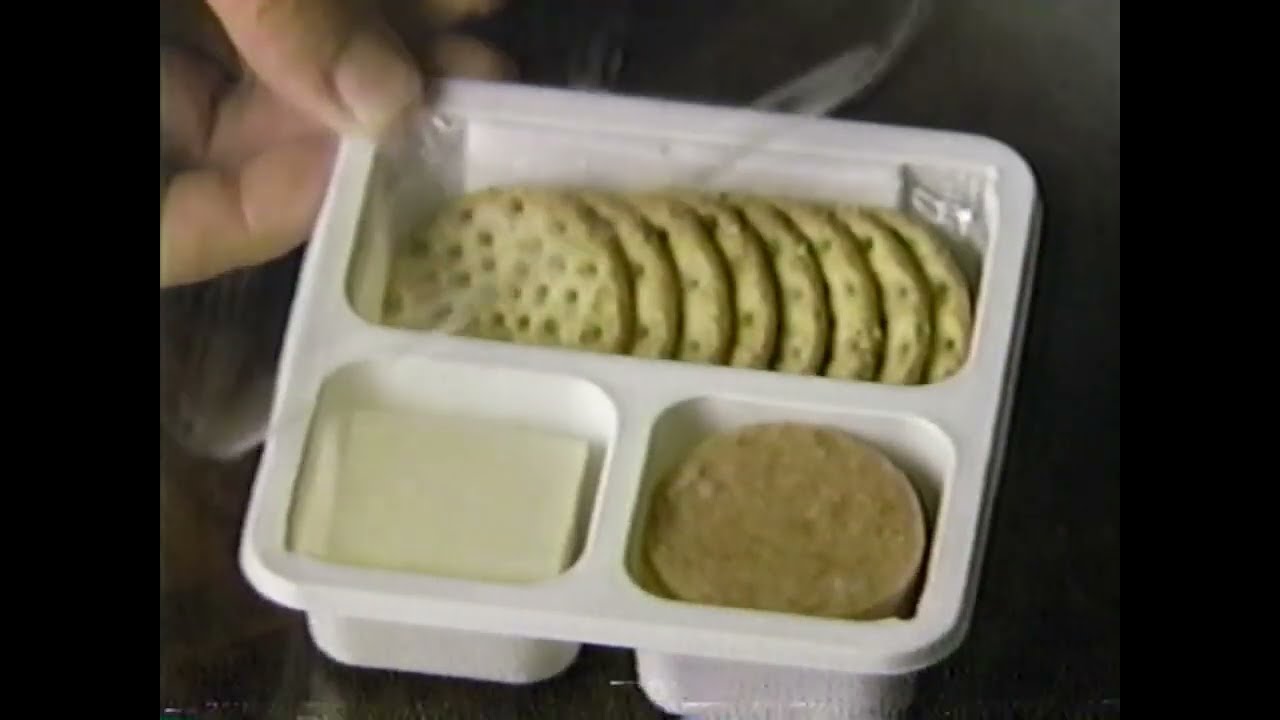
Lunchables
Prepackaged lunch trays where kids assembled their own mini-sandwiches from stackable crackers, meat slices, and cheese. The appeal was autonomy — you were in charge — making Lunchables a 1990s lunchbox status symbol that transformed eating from a chore into an activity.

Gushers
Chewy hexagonal fruit snacks with a liquid center that burst across your tongue when you bit down. Fruit Gushers made eating candy feel faintly dangerous — and its ads made kids' heads turn into giant fruit.

Dunkaroos
Betty Crocker's kangaroo snack pack: tiny cookies plus a frosting cup for dunking. The ultimate lunchbox flex of the mid-90s, Dunkaroos were so coveted they became playground currency—until parents killed the sugar craze.

Kudos
The 'granola bar' that fooled exactly no one — a slab of chocolate, fudge, and candy in a wrapper that let your mom feel okay about it. Finding a Kudos in your lunchbox instead of a plain granola bar was a good day; the M&M's version was a great one.