Sour Skittles

Regular Skittles under a grainy sour-sugar coating that genuinely shredded your tongue if you finished the bag — and everyone finished the bag. The green-and-yellow pouch turned the candy aisle's safest brand into a dare.
Skittles started in Britain in 1971 as a Mars, Incorporated candy and were widely distributed across the US by 1979. Through the 90s the brand became a gas-station fixture, its identity cemented by the "Taste the Rainbow" campaign that launched in 1994. Then the sour-candy arms race of the late 90s — the era of Warheads and playground face-puckering contests — came for the rainbow too.
Sour Skittles arrived in the US in 2000: the same chewy candy under a grainy sour-sugar coating that was genuinely abrasive if you worked through a whole bag in one sitting, which was of course the point. The distinctive green-and-yellow package became a staple of movie-theater runs and gas-station counters, the respectable mainstream option for kids who wanted their candy to fight back a little.
They never left. A quarter-century on, Sour Skittles remain one of the defining sour candies of the 2000s and the raw-tongue memory is a generational badge of honor.
Similar items
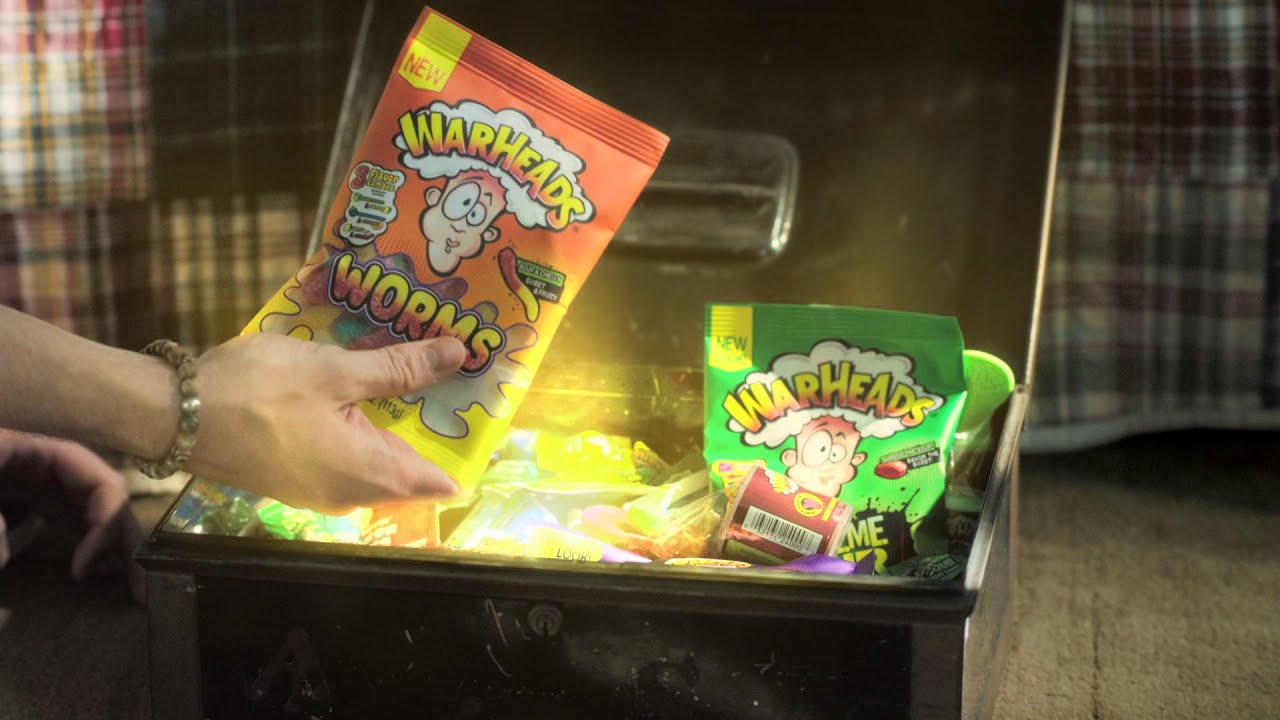
Warheads
The sour candy that burned your face off for five glorious seconds. Warheads turned the playground dare into a $40 million industry — keeping a straight face through the first ten seconds made you playground royalty.

Airheads
The stretchy, tangy taffy bar in the loud mylar wrapper — Blue Raspberry stained your tongue, and White Mystery was a gamble by design. Fifty cents of pure lunchbox status.

Gushers
Chewy hexagonal fruit snacks with a liquid center that burst across your tongue when you bit down. Fruit Gushers made eating candy feel faintly dangerous — and its ads made kids' heads turn into giant fruit.

Sour Patch Kids
Sour then sweet: a gritty coat of citric and tartaric acid that made your whole face pucker, then a soft gummy kid underneath as the apology. The 90s schoolyard sour-candy arms race arguably starts here.