SoBe

Glass bottles with an embossed lizard, promising mystery potions brewed from ginseng, guarana, and ginkgo — words that meant nothing and sounded exactly like what the future was supposed to taste like. SoBe owned the gas-station cooler at the turn of the millennium, proof you were clued into something cooler than Gatorade.
South Beach Beverage Company launched in 1995 in Norwalk, Connecticut — the name abbreviated the Miami Beach neighborhood, even if the company was pure Connecticut — co-founded by John Bello and Tom Schwalm. Their flagship product, SoBe Black Tea 3G, was built on a single marketing hook: the "3 G's" — ginseng, guarana, and ginkgo — herbal ingredients that rode the late-90s craze for "natural" wellness additives. The bottles were glass, embossed with a lizard mascot that became the brand's visual identity, and they arrived in gas-station and convenience-store coolers just as the drink aisle was shifting from pure sports drinks toward something with more mystique. The brand's whole identity rode on those three words and that lizard.
By the late 1990s and into the 2000s, SoBe was everywhere cold drinks were sold. The success didn't go unnoticed: in October 2000, PepsiCo acquired South Beach Beverage Company in a deal reported at about $370 million, with Bello staying on as CEO initially. PepsiCo accelerated the product line — the energy drink SoBe Adrenaline Rush launched in 2000, a soda called Mr. Green followed in 2002, and SoBe Lifewater later extended the brand into the enhanced-water aisle. For a stretch of the early 2000s, SoBe felt inevitable, the beverage equivalent of owning the right sneakers.
The 2010s weren't kind to the lizard. The herbal-additive mystique that made SoBe special gradually looked dated as the cooler filled with white-label energy drinks and coconut water, and the brand's presence shrank. As of the mid-2020s SoBe hasn't been formally discontinued, but availability has dwindled to essentially special orders — it exists mostly in memory, the kind of brand that makes you smile when you spot that lizard on an old glass bottle and remember when drinking one felt like being in on a secret.
Similar items

Snapple
The iced-tea and juice-drink brand that defined 1990s refreshment, served in a distinctive glass bottle with a metal cap (the famous "Real Facts" printed under the lid didn't arrive until 2002). That satisfying pop when you opened it, the quirky trivia, and flavors like peach and raspberry made Snapple a generational memory.

Fruitopia
Coca-Cola's psychedelic, tie-dyed fruit drink 'for the mind, body, and planet.' The trippy kaleidoscope vending machines and New-Age flavor names — Strawberry Passion Awareness — were peak-'90s marketing weirdness.
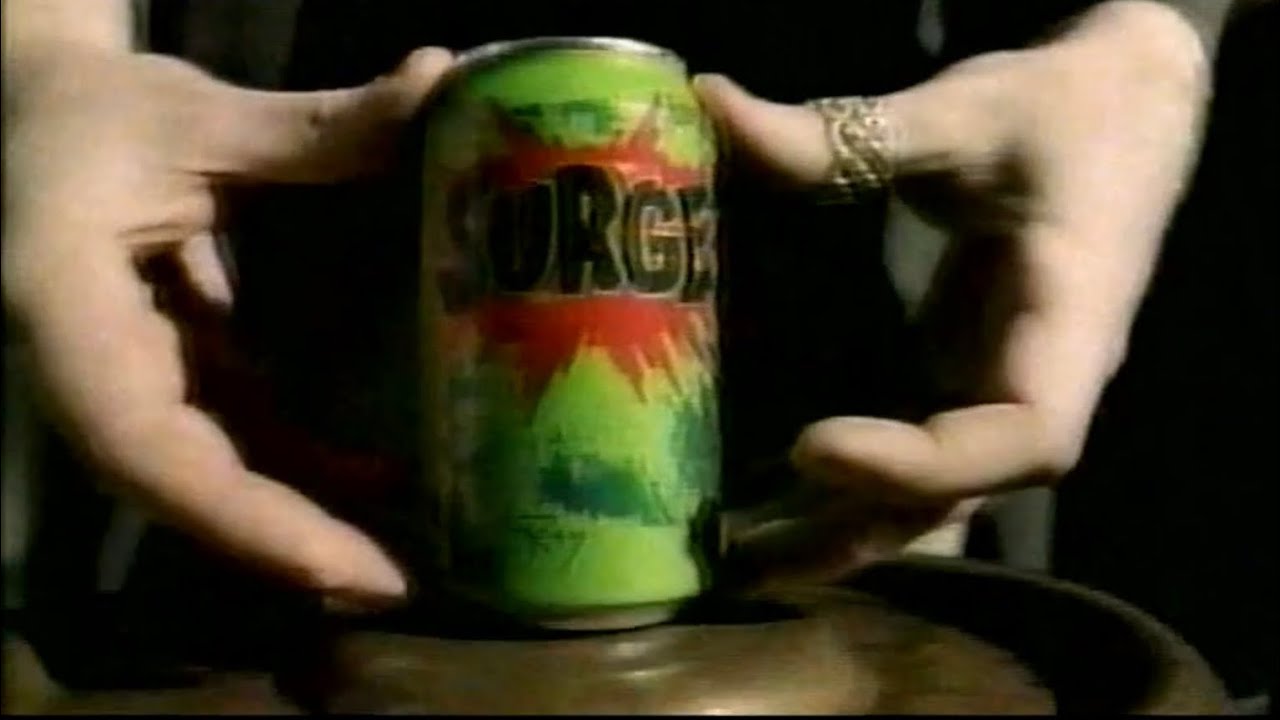
Surge
Coca-Cola's aggressively marketed neon-green citrus soda that positioned itself as the extreme-sports answer to Pepsi's Mountain Dew. Heavy on caffeine and attitude, Surge fueled the mayhem marketing of the late 90s before vanishing from shelves in 2003 — only to surge back after a passionate fan movement brought it to Amazon in 2014.

Vitaminwater
The pastel wall of the 2000s deli case: candy-bright bottles, lowercase labels full of jokes, and flavors named for what they promised to do for you. Vitaminwater made hydration a personality choice — and made 50 Cent a legend of business-deal folklore.