Screensavers

They weren't supposed to exist — they were meant to prevent screen burn. Instead, screensavers became entertainment, the reason you stopped moving your mouse on purpose and just watched.
Berkeley Systems released After Dark for the Macintosh in 1989 and brought it to Windows in 1991, and its flying toasters became the icon of the whole genre: 1940s-style chrome toasters with bird wings, flapping across a black screen with slices of toast in tow. The toasters were one of the main reasons After Dark got popular — iconic enough that Berkeley sold flying-toaster merchandise, including T-shirts, and iconic enough that Jefferson Airplane sued in 1994, claiming the design copied their 1973 album cover art. The case was dismissed because the art had never been registered as a trademark, but the lawsuit itself was a kind of compliment: the toasters had landed in the culture hard enough to look like theft.
On Windows, the screensaver that mattered was 3D Maze, an OpenGL screensaver present in Windows from Windows 95 until Windows ME. Every time the screen blanked, the computer generated a random brick-walled maze and then walked it in first person, solving it by the right-hand rule. You couldn't steer it — you just watched it work the corridors, waiting to see the exit. For office workers in beige cubicles, screensavers were the aquarium of the '90s: a window into something moving, something alive on the monitor while nobody was touching the machine. For a decade, "waiting for the screen to lock" was entertainment.
Similar items

Windows XP
The operating system with the rolling green hill wallpaper—Windows XP arrived in October 2001 with Luna's glossy blue taskbar, the green Start button, and the cheerful startup chime that defined a generation's relationship with computers. It was stable, beloved, and so enduring that users clung to it long after Microsoft stopped supporting it, making it the most iconic OS of the 2000s.

Windows Solitaire
The Klondike card game that shipped with virtually every Windows PC — and quietly taught a generation how to use a mouse. The real reward was winning: the whole deck cascading off the stacks and bouncing across the screen.

AIM & MSN Messenger
The after-school ritual: logging on to a dial-up modem, scanning your buddy list, typing AIM away messages packed with song lyrics and veiled drama, and knowing your 12-year-old screen name would haunt you forever. AIM and MSN Messenger were the social nervous system of the '90s and 2000s — instant, informal, and utterly addictive.
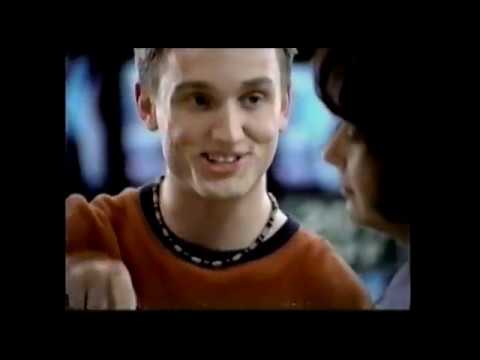
"Dude, You're Gettin' a Dell"
Dell's TV campaign starring Ben Curtis as Steven, the shaggy slacker who hyped desktops to hesitant buyers and sealed every spot with "Dude, you're getting a Dell!" For three years the line was a national catchphrase you couldn't escape.