Pilotwings 64

The Nintendo 64's launch-day counterweight to Super Mario 64: a flight sim that asked you to slow down. Hang glider, rocket belt, gyrocopter — drift through rings, snap photographs of the scenery, stick the landing. For a lot of households it was the second cartridge in the drawer, and secretly the most peaceful thing in the house.
On June 23, 1996, the Nintendo 64 launched in Japan with exactly three games: Super Mario 64, Saikyō Habu Shōgi, and Pilotwings 64. When the console hit North America on September 29, Pilotwings was on the launch line there too — the mellow half of a two-game vision of what 3D could be. It was co-developed by Nintendo's EAD and R&D3 teams with Paradigm Simulation, a Texas graphics company that had built military flight simulators but never a video game; that pedigree gave the flying a steadiness you could feel. Shigeru Miyamoto's brief for it was simple: let players experience free flight in realistic 3D environments.
A sequel to the SNES Pilotwings — the Mode 7 showpiece of the 16-bit era — it handed you three main events, each flown with the N64 controller's new analog stick. The hang glider was the heart of it: ride thermals, drift through rings, snap photographs of a particular piece of scenery, then thread the landing onto a target. The Rocket Belt let you hover, tilt and rotate through ring-runs and balloon-popping. The gyrocopter had you destroying targets with missiles before settling onto a runway. Bonus events — skydiving, a human-cannonball launch — ran on the same philosophy: line it up, execute, breathe. Dan Hess's soundtrack matched the pace, nothing urgent, nothing pulling you along faster than the thermals would take you.
Not everyone got it — a New York Times writer dismissed its E3 showing as "brain-dead" in its gameplay — but that missed the point kids found on their own. While Mario 64 dared you to do everything, Pilotwings 64 asked you to do one thing well: catch the thermal, hold the angle, take the picture, land on the strip. It never dominated the conversation that autumn; it didn't need to. It was the N64's proof that the new 3D worlds could be a place to be calm in, and the kids who loved it tended to keep that a little to themselves.
Similar items

Nintendo 64
Nintendo's leap into three dimensions, the N64 brought 3D polygon gaming into living rooms with its quirky three-pronged controller and a cartridge library anchored by Super Mario 64 and The Legend of Zelda: Ocarina of Time. Its rumble pak added tactile feedback, while its four controller ports made it the console of couch multiplayer legends.

Wave Race 64
Nintendo's Jet Ski racer, where the water was the real star. Slalom the buoys off Sunny Beach, read the swells like a surfer, soak in the funky Kazumi Totaka synth soundtrack. In 1996 nothing else had ever made video game water look and move like this — kids sat on the title screen just to watch it.
Super Mario 64
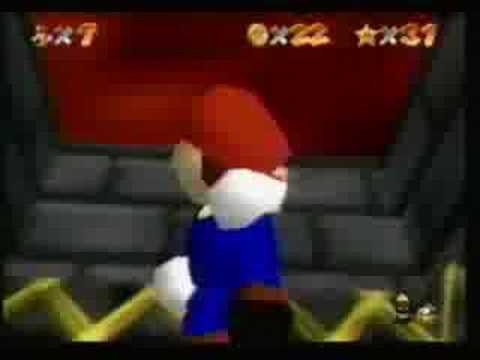
The game that showed the world what 3D could be. Super Mario 64 launched the Nintendo 64 by dropping Mario into an open, explorable castle, and its analog-stick control and swooping camera quietly wrote the rulebook every 3D platformer would follow.

1080° Snowboarding
"TEN-EIGHTY!" — the grunted title call said it all. Nintendo's own N64 snowboarding game played it straight: weighty, physics-driven boards, board-scraping sound design, and a namesake 1080-degree spin so hard it took nine distinct actions to land. You spent whole evenings just trying to beat the rival rider in Match Race.