Oakley
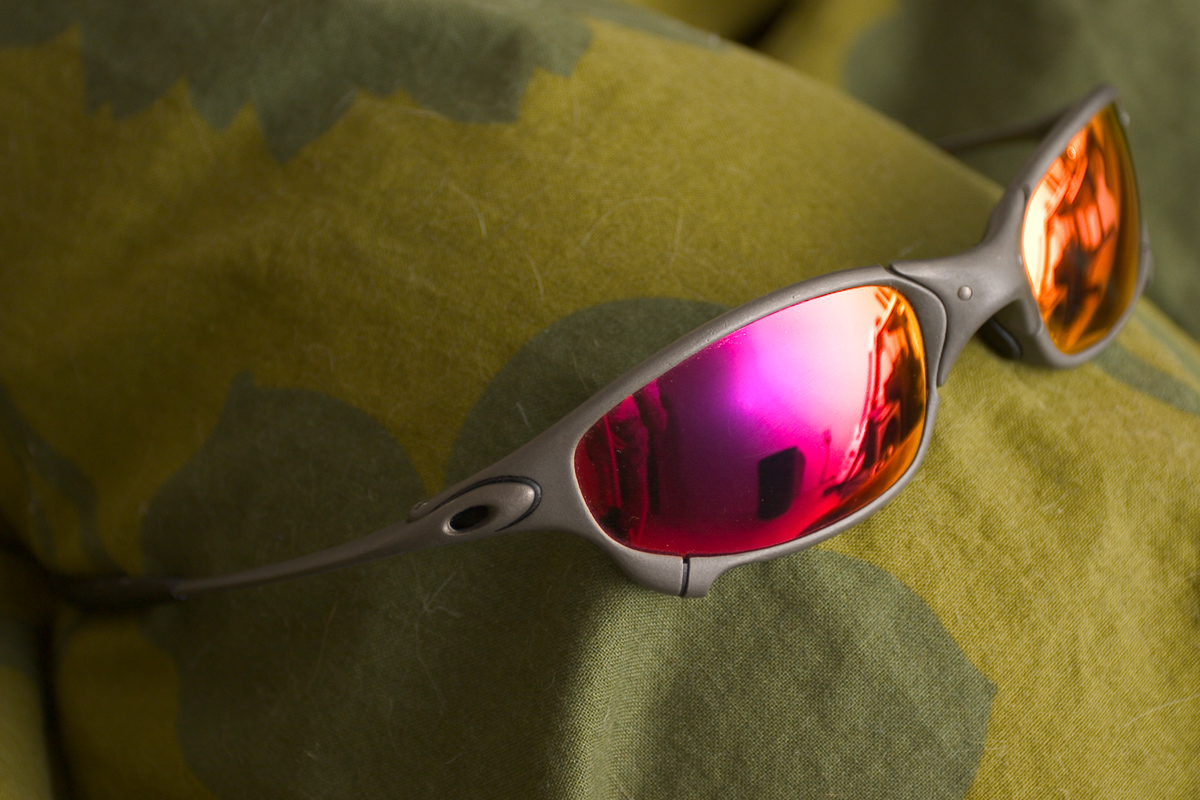
Photo credit: Photo: Oldman42, public domain, via Wikimedia Commons
The sunglasses company that started out making motorcycle grips. By the '90s, Oakley's wraparound shields and mirror-finish iridium lenses were the uniform of athletes everywhere — M Frames on ballfields, Eye Jackets in Michael Jordan's ad campaign, X-Metal sculpted from the company's own titanium alloy.
Jim Jannard founded Oakley in 1975 with about $300 and a memorable name — famously chosen after his English Setter, Oakley Anne. The first product wasn't eyewear at all: the Oakley Grip, a motorcycle handlebar grip, launched the company into the BMX and motocross world, where it built a devoted following selling grips, number plates, gloves, and goggles. The brand had swagger long before it had sunglasses.
The eyewear path ran through goggles: the O-Frame in 1980, ski goggles in 1983, and then the first Oakley sunglasses in 1984 — the Factory Pilot Eyeshades, part sunglasses, part goggles, built unapologetically for athletes. The casual Frogskins followed in 1985, carrying the look toward the mainstream without losing the athletic DNA.
The 1990s were the takeover. The M Frame arrived as the decade opened, and its wraparound shield became the default face of athletes for ten years. The Eye Jacket followed in 1994 — one of the first sunglasses designed entirely in CAD software and among the earliest products ever prototyped on a 3D printer — and it carried the brand mainstream: Michael Jordan posed for its ad campaign, and Dennis Rodman famously wore his. In 1996 Oakley unveiled the Romeo, first of the X-Metal line, sculpted from the company's own titanium alloy, with the brand's signature mirror-finish iridium-coated lenses completing the look. From ballparks to ski slopes to beach volleyball, the extreme-sports boom wore Oakleys. The company went public in 1995, raising $230 million.
The decade also brought the fight that foreshadowed the ending. In early 1996, a pricing dispute with Luxottica — the world's largest eyewear company — led Luxottica to pull Oakley products from its retail empire, including Sunglass Hut, and Oakley's stock-market value fell by a third. The eventual twist arrived in June 2007, when Luxottica announced it would acquire Oakley for $2.1 billion. The company that fought the industry's giant ended up part of it — a long way from a $300 garage operation selling motorcycle grips, with more than 600 patents for eyewear and materials picked up along the way.
Similar items

No Fear
The block-letter attitude brand of the '90s: bold white slogans about living hard and fearing nothing, splashed across black T-shirts, hoodies, and the rear windows of half the pickup trucks in the school parking lot. No Fear turned extreme-sports bravado into a middle-school uniform.
Starter Jackets
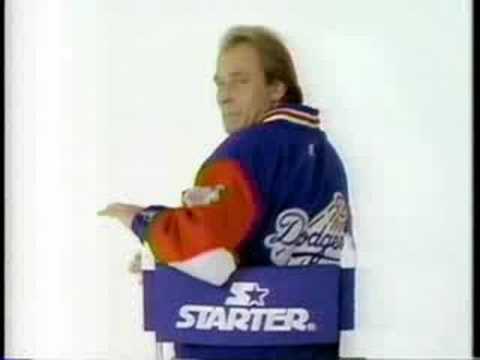
Starter's nylon and satin team jackets were the uniform of 90s cool — oversized windbreakers emblazoned with NBA and NFL team logos that transformed playground basketball courts and city streets into stadiums of style. Starter jackets became so coveted they sparked robberies, making them perhaps the decade's most dangerous fashion statement.

Stüssy
A surfboard shaper's marker-scrawled signature became the logo streetwear was built on. Shawn Stussy sold tees out of his car around Laguna Beach; within a decade the International Stussy Tribe was seeding the coolest closets in every city — the playbook streetwear brands still run.

Cross Colours
Color-blocked jeans, bold-lettered tees, and a message stitched into every garment: "Clothing Without Prejudice." Cross Colours dressed the Fresh Prince, half of early-90s hip-hop, and every kid who wanted to look like MTV — then vanished almost overnight when its biggest retailer went bankrupt.