Krispy Kreme Craze
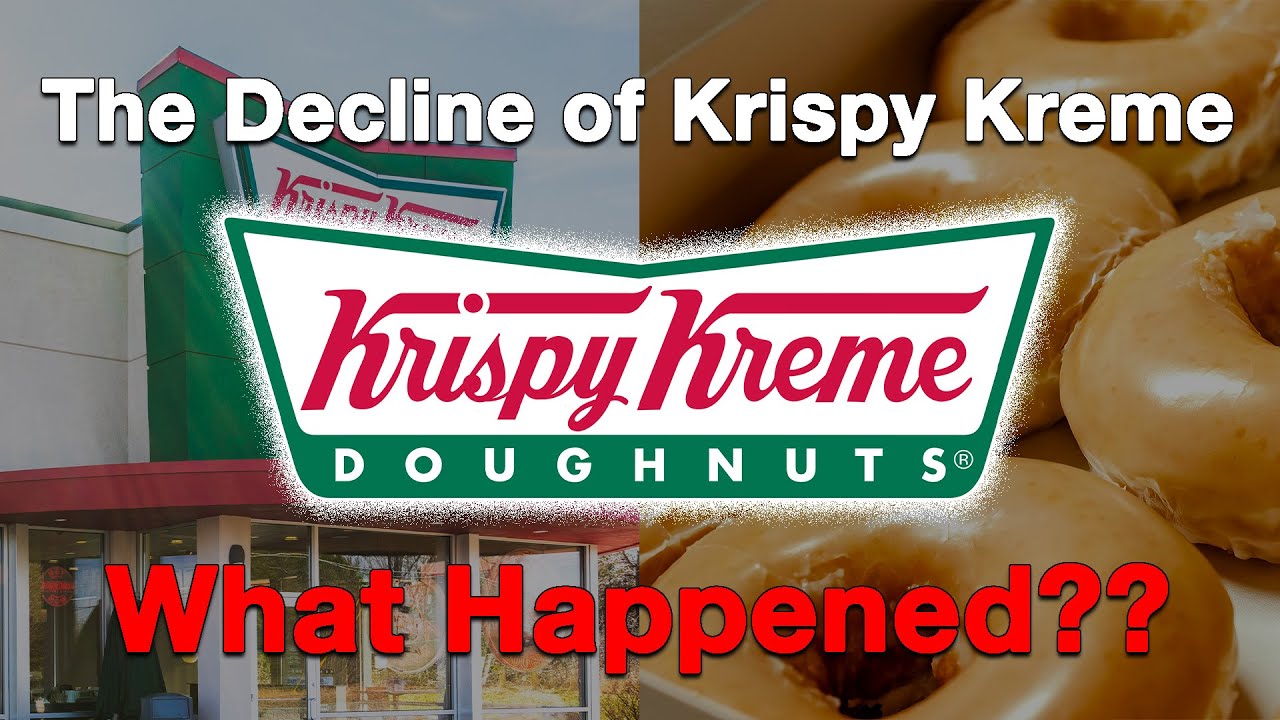
The "Hot Doughnuts Now" neon sign meant fresh Original Glazed were rolling off the line right now, and you pulled the car over. In the early 2000s that ritual became a full national mania — lines around the block at every new store, a soaring stock, local news trucks at doughnut openings — until the bubble burst spectacularly. The doughnuts were always good; the craze was the stock.
Krispy Kreme goes back to July 13, 1937, when Vernon Rudolph bought a yeast-raised doughnut recipe from a New Orleans chef and set up shop in Winston-Salem, North Carolina. The magic was never just the recipe — it was the ritual of the "Hot Doughnuts Now" neon sign, lit whenever a fresh batch was coming off the line, a promise that worked on everyone who drove past.
On April 5, 2000, Krispy Kreme went public at $21 a share, and the doughnut chain became a momentum stock. Openings in new cities drew hours-long lines and local-news coverage — the lines themselves were the story — and the stock hit an all-time high of $50 in August 2003, a 135% gain from the IPO price. Then came May 2004: the company's first quarterly loss since going public, $24.4 million, which management blamed on the low-carb Atkins-diet craze — an excuse that had analysts scratching their heads. The SEC began investigating that July, franchisees alleged "channel stuffing" (double shipments at quarter-end to pad the numbers), the stock fell 66% during 2004, and in January 2005 the company said it would restate its fiscal-2004 earnings.
The brand survived its bubble: JAB Holding agreed to buy the company for $1.35 billion in 2016, and Krispy Kreme returned to the Nasdaq on July 1, 2021. The glazed doughnut never got worse — the stock story just stopped being part of breakfast. The HOT NOW sign still works on anyone who lived through it.
Similar items
Dippin' Dots
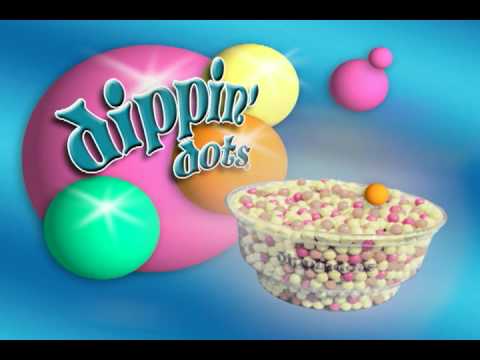
Beaded "ice cream of the future" invented in 1988 by microbiologist Curt Jones, who flash-froze ice cream mix in liquid nitrogen into tiny spheres. Served in a cup and eaten with a spoon, Dippin' Dots became a quintessential 1990s amusement park and mall treat — a novelty that felt futuristic and tasted like the 90s.

Rainforest Café
A jungle-themed restaurant chain founded by Steven Schussler, with the first location opening in October 1994 at the Mall of America in Minnesota. Diners ate surrounded by animatronic animals, aquariums, fake tropical rainstorms with thunder and lightning, and the constant squawk of electronic birds. Rainforest Café epitomized 1990s themed entertainment and the mall culture experience.

Burger King Burger Buddies
Burger King's mini-burger saga: first Burger Bundles, whose tiny patties fell through the flame-broiler, then Burger Buddies — a single figure-eight patty on conjoined buns, made to be torn into two little cheeseburgers for 99 cents. A novelty born from an engineering failure.

Burger King Chicken Fries
Chicken shaped like french fries, sold in a fry box with a hole for sauce — a dumb idea so perfect it built a cult. When Burger King killed them in 2012, the internet staged a years-long resurrection campaign. The internet won.