Koosh Ball
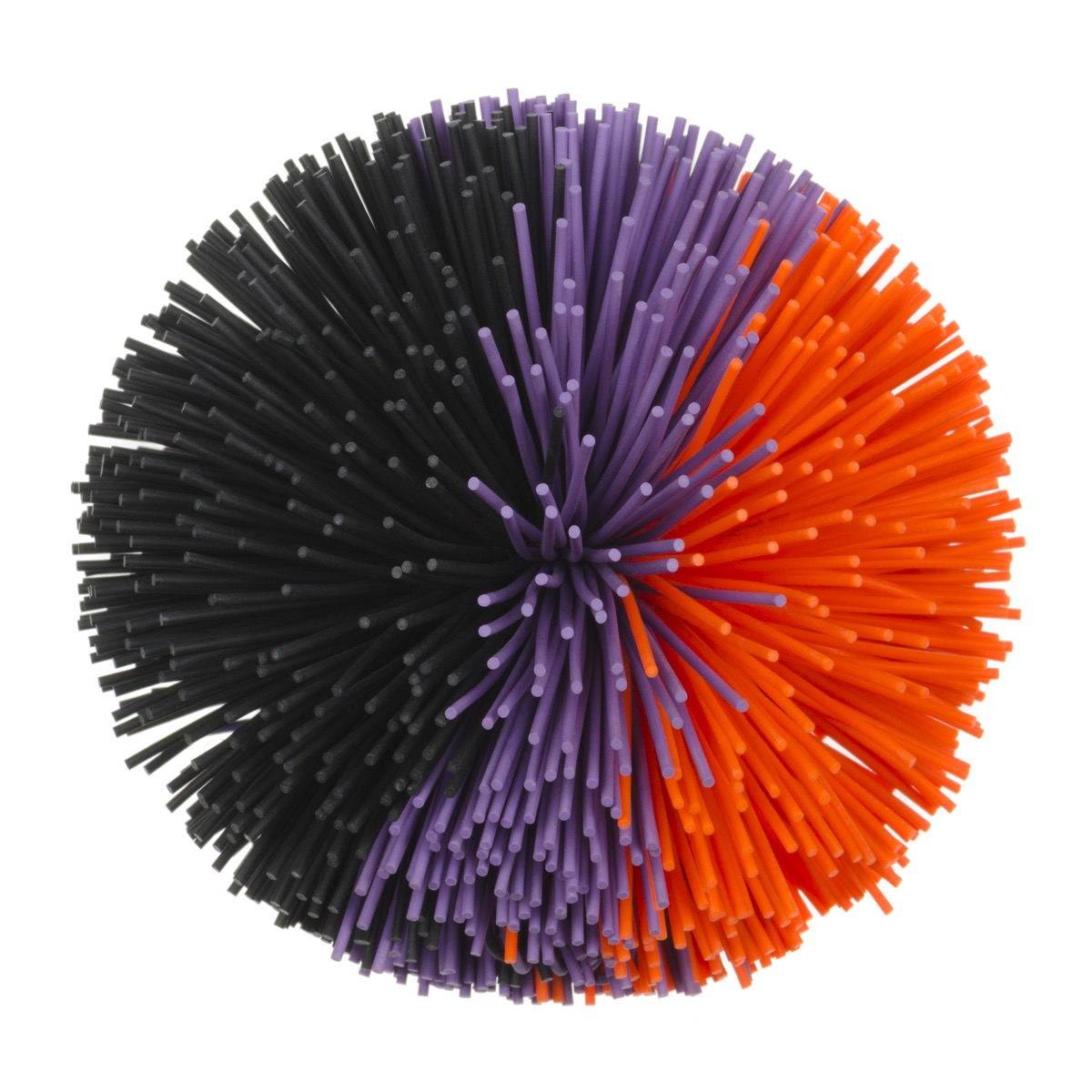
Photo credit: Photo: Evan-Amos, Public Domain, via Wikimedia Commons
A fuzzy sphere of rubber spines that looked like a sea urchin and felt impossible to throw wrong — you couldn't miss a catch, no matter how bad your hand-eye coordination. Invented by engineer Scott Stillinger and launched by OddzOn Products in the late 1980s, the Koosh Ball was the perfect fidget toy before fidget toys were a category.
Engineer Scott Stillinger came up with the Koosh Ball while teaching his young kids to catch—tying rubber bands together evolved into a ball of soft filaments—and co-founded OddzOn Products to bring it to market in the late 1980s, with the ball becoming a Christmas-season hit in 1988. The design was deceptively simple: thousands of rubber strands bound at a core, creating a soft, spiky texture that felt good to squeeze and threw predictably even when handled clumsily. Kids immediately embraced it because missing a throw became nearly impossible — the rubber filaments helped the ball slow and settle into your hands.
The Koosh Ball peaked in the late 1980s and early 1990s, sold primarily at toy stores and mall kiosks. It was nonthreatening, impossible to lose because it didn't roll away, and weirdly satisfying to hold and manipulate. Production and interest declined by the mid-90s, but the Koosh Ball became iconic as the quintessential stress toy of the era — a precursor to the fidget spinners and pop-its that would dominate 20 years later.
Similar items

Skip-It
A neon ankle hoop with a ball on a tether and a mechanical counter that kept score — the ultimate playground flex of the early 90s. Loop it around one ankle, swing it, hop the tether with your other leg, and chase your personal best. A deceptively simple toy that sparked a generation's skinned knees and fierce competition.
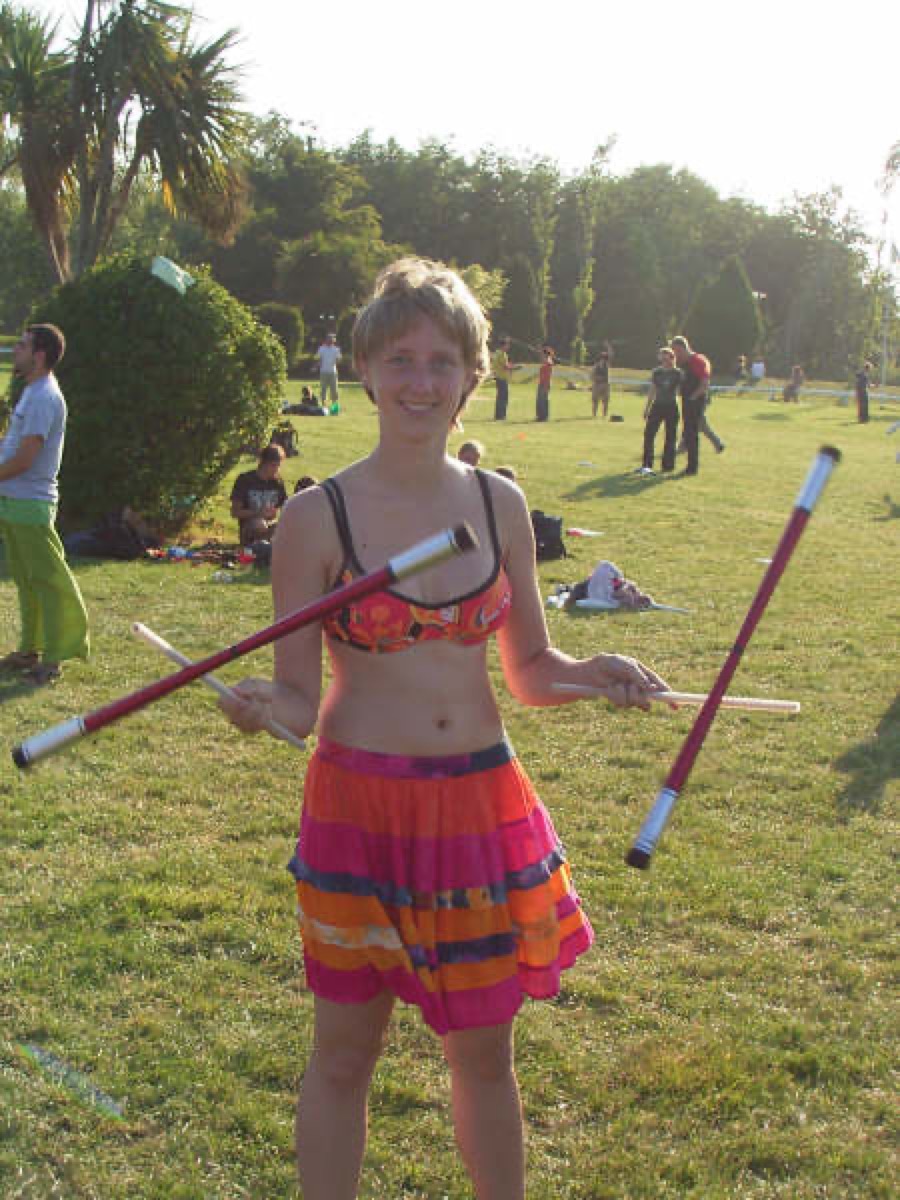
Devil Sticks
A centuries-old juggling prop — a tapered center stick twirled between two hand sticks — exploded as a US schoolyard and festival craze in the 1990s. Vendors at mall kiosks sold neon-taped and rubber-tipped versions to kids who spent recess mastering the mesmerizing spin alongside hacky sacks and classic yo-yos.

Duncan Yo-Yos
The brand that made the yo-yo an American institution — and then nearly lost it all in court. In 1963 alone, Duncan sold a reported 33 million units, but a legal fight over the word 'yo-yo' sent the company into bankruptcy. The brand recovered, and by the 1990s, every kid's entry yo-yo was still a Duncan Butterfly or Imperial.

Yomega Brain
The yo-yo that thought for you. A centrifugal clutch inside meant a sleeper that worked on day one, even if you'd never held a yo-yo before. It wasn't about finesse — it was about giving your hand a fighting chance.