Hacky Sack

The crocheted bean bag kicked around a circle outside every 90s high school and on every college quad, with its own etiquette: no hands, and a "hack" when everyone touches it before it hits the ground. Hacky Sack is a Wham-O brand name that became the word for the whole thing.
The footbag has ancestors all over the world, from Japanese kemari to the Southeast Asian kicking games sepak takraw and chinlone, but the version Americans know was invented in 1972 in Oregon City, Oregon, by Mike Marshall and John Stalberger, who named their small handmade bag the Hacky Sack. Marshall died in 1975 and Stalberger carried the business on, and the game caught its first national wave in the early 1980s, mostly among teenage boys standing in circles. In 1983 Stalberger sold the trademark to Wham-O, the company that had already turned the Frisbee and the Hula Hoop into household words, and Hacky Sack went the same way, a brand name that became the generic term.
The 90s were the game's second and bigger life. The basic circle game needed nothing but a bag and a patch of grass or asphalt, so it turned up wherever teenagers had ten minutes to kill: the school parking lot before first bell, the quad between classes, the summer-camp field, the edge of the skate park. The sack itself was usually a crocheted ball filled with plastic beads, or a sand-filled "dirt bag" for players who wanted it to stall on the foot. The rules were mostly manners: no hands, keep it moving, and when every player in the circle has touched it before it drops, that is a hack. The scene it belonged to was the era's loose alliance of skaters, jam-band kids and anyone with a Baja hoodie, which is why the sack became shorthand for a certain kind of laid-back 90s teenager.
Under the schoolyard game there was a real sport, footbag, with freestyle and net disciplines and an annual world championship, and that is where Hacky Sack went when the fad faded in the early 2000s. The competitive scene is small now, a hundred or so players at a world championship and a core of regulars in their thirties, but every so often a college circle starts up again, and the etiquette is exactly the same.
Similar items
Devil Sticks
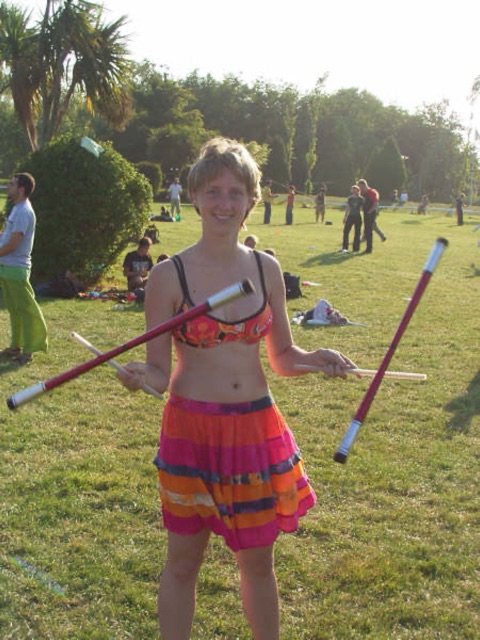
A centuries-old juggling prop — a tapered center stick twirled between two hand sticks — exploded as a US schoolyard and festival craze in the 1990s. Vendors at mall kiosks sold neon-taped and rubber-tipped versions to kids who spent recess mastering the mesmerizing spin alongside hacky sacks and classic yo-yos.
Koosh Ball
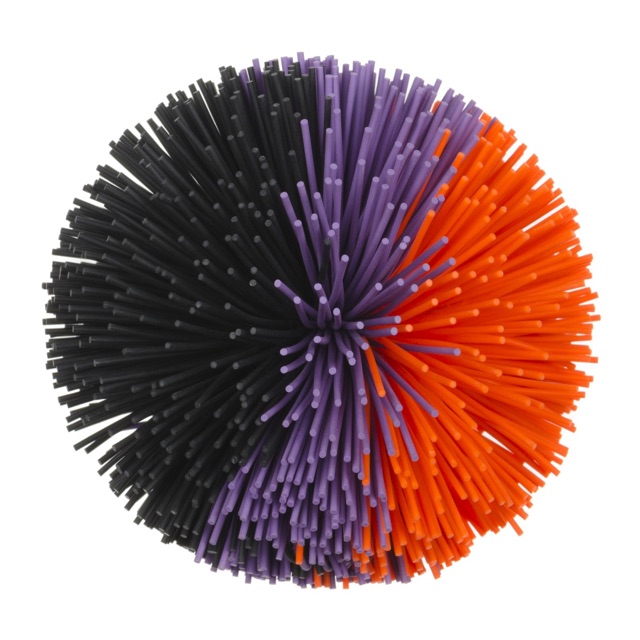
A fuzzy sphere of rubber spines that looked like a sea urchin and felt impossible to throw wrong — you couldn't miss a catch, no matter how bad your hand-eye coordination. Invented by engineer Scott Stillinger and launched by OddzOn Products in the late 1980s, the Koosh Ball was the perfect fidget toy before fidget toys were a category.
Baja Hoodie
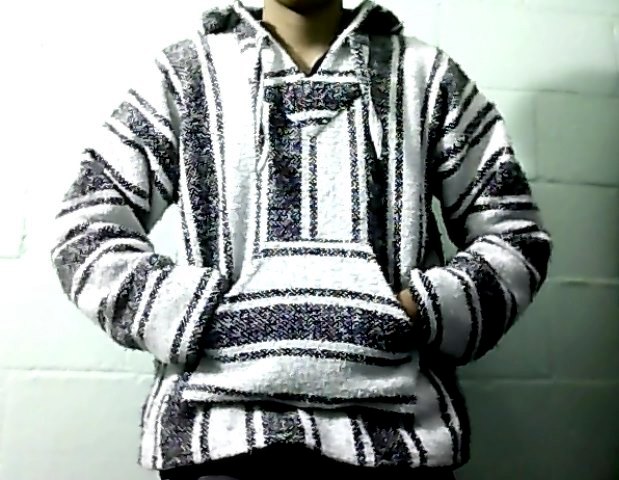
The striped, scratchy Mexican pullover with the big front pocket and the flat drawstrings, worn by every skater, surfer and Deadhead of the 90s and known, not entirely kindly, as the drug rug. Landlocked teenagers wore it to look like they lived near a beach.

Phish
The Vermont jam band that never had a hit single and never needed one. While the radio played everyone else, Phish built an empire out of marathon two-set shows, fan-taped cassettes traded hand to hand, and festivals so big they were briefly the largest concerts in America.