Baja Hoodie
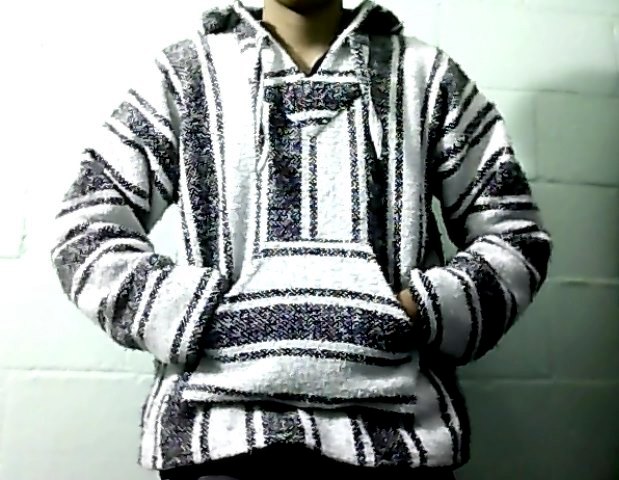
Photo credit: Photo: Goose friend, CC0, via Wikimedia Commons
The striped, scratchy Mexican pullover with the big front pocket and the flat drawstrings, worn by every skater, surfer and Deadhead of the 90s and known, not entirely kindly, as the drug rug. Landlocked teenagers wore it to look like they lived near a beach.
In Mexico it is a sudadera de jerga, a sweatshirt made from jerga, a coarse woven fabric, with a hood, a single big pouch pocket across the front, vents at the sides and the flat, rectangular drawstrings cut from the same cloth. The stripes run horizontally on the sleeves and hood and vertically down the body, echoing serape blankets. It was everyday wear for Mexican and Mexican-American youth long before it was a fashion statement north of the border.
American surfers found it in Baja California and brought it home, and by the 1970s it was part of the California counterculture uniform, along with the VW van, and it picked up the drug-rug nickname there. From there it spread with the hippie movement and stuck hardest to Deadheads, who still wear them. Pop culture made the association permanent: Sean Penn's Jeff Spicoli wore one in Fast Times at Ridgemont High, and Luke Perry's character wore them on Beverly Hills, 90210. Stüssy was putting its logo on Baja-style pullovers by the 1980s.
The 90s were when the drug rug went suburban. It hung on the racks at every beach-town souvenir stand and skate shop, usually in acrylic and recycled cotton rather than wool, and it became an aspirational piece for teenagers stuck a thousand miles from a coast, a way to dress like the laid-back surf-and-skate kid of the era alongside a hacky sack, a hemp necklace and a Sublime shirt. Adults saw it as the outfit of a stoner; the kids wearing it mostly saw a cheap, warm hoodie. It has never really gone away, and by the 2010s designers were selling cashmere versions for more than two thousand dollars, which would have gotten you laughed out of a 1995 skate park.
Similar items
Hacky Sack
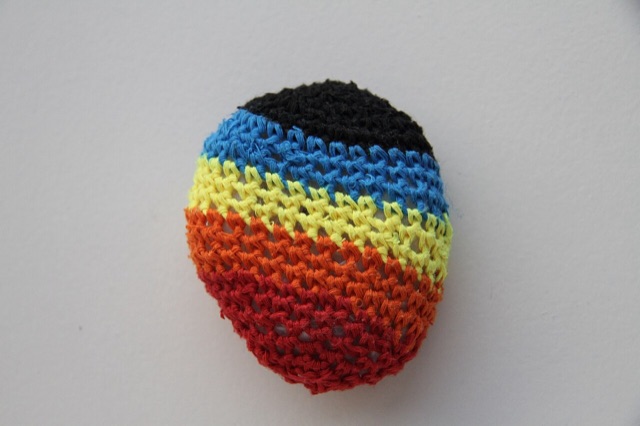
The crocheted bean bag kicked around a circle outside every 90s high school and on every college quad, with its own etiquette: no hands, and a "hack" when everyone touches it before it hits the ground. Hacky Sack is a Wham-O brand name that became the word for the whole thing.

Stüssy
A surfboard shaper's marker-scrawled signature became the logo streetwear was built on. Shawn Stussy sold tees out of his car around Laguna Beach; within a decade the International Stussy Tribe was seeding the coolest closets in every city — the playbook streetwear brands still run.

Beverly Hills, 90210
Brandon and Brenda Walsh move from Minneapolis into a zip code where everyone is gorgeous and every episode is a very special one. Fox's decade-long teen soap made Jason Priestley and Luke Perry into locker-poster royalty and built the genre every later teen drama moved into.

JNCO Jeans
JNCO jeans were the uniform of 90s youth rebellion: outrageously baggy denim with cavernous pockets so deep you could lose a Walkman, decorated with zipper details and an attitude that rejected traditional fit. If you weren't tripping over your cuffs or making those pockets jingle, you weren't dressed for the decade.