GameShark

The cheat device of the PlayStation and N64 years: impossibly long hexadecimal codes, thumbed in one character at a time with the d-pad, in exchange for infinite everything. Codes came from magazines, a members-only newsletter, and a 1-900 number that charged you $1.29 a minute.
GameShark came out of Datel, a British firm that had been building cheat hardware for years before anyone in America heard the name. Datel's own brand was Action Replay, and it had a full Genesis and Mega Drive line long before the GameShark existed: Action Replay, then Pro Action Replay in 1992, then Pro Action Replay 2 in 1994, which could hold a hundred codes at once. Those carts already worked the way the GameShark later would, taking long hexadecimal addresses rather than the short letter strings of the rival Game Genie.
That prehistory explains a very common false memory. There was never a Genesis GameShark — the brand didn't exist yet. But there absolutely was a hex-code Datel cheat cart for the Genesis, made by the company that would go on to make the GameShark, and Datel kept the Action Replay line running all the way to the sixth console generation, where its US devices sometimes carried the Game Shark name instead. So a kid who cheated on a Genesis with long hex codes and later did the same on a PlayStation was using one continuous family of products wearing two different labels. That memory has the console right, the codes right, and the company right. Only the name is wrong.
The GameShark proper arrived in January 1996, for the Sega Saturn and the Sony PlayStation. InterAct Accessories, an American accessory company founded by Todd Hays, took exclusive North American distribution rights that year and trademarked the name, rebranding Datel's hardware for the US market. A Nintendo 64 version followed in 1997. On cartridge consoles it was a pass-through — the GameShark went into the console and your game pushed down into a socket on its top. The PlayStation was the exception, and only because a disc console gave it nowhere else to go; there it plugged into a port on the back of the machine instead.
What separated it from the Game Genie was not shape but method. The Game Genie sat between cartridge and console and intercepted the game's own data on its way to being read, swapping in different values. The GameShark went after the console's memory while the game was running, and kept doing it. That is why it could hold a number in place — infinite health that stayed infinite, not just a value set once at load — and it is why the codes were so much longer and uglier. You were writing addresses.
The codes themselves became a small economy, and the product's own manual lays out exactly how it worked. There were four sanctioned ways to get them: a members-only newsletter called Dangerous Waters, the gameshark.com website, your favorite video game magazines, and — the detail nobody who lived it forgets — a premium phone line, 1-900-773-SHARK, at $1.29 per minute. Prima published official code books alongside all of it. Codes went in through the d-pad, highlighting each letter and number one at a time, and were saved to the unit's own flash memory, so at least you only had to suffer through a given string once. On some systems the cart doubled as a memory card.
The brand outlived its era but not by much, and its ending is routinely told backwards. Recoton, InterAct's parent, shut down its video game operations on 30 September 2002. On 23 January 2003, Mad Catz bought the GameShark brand and gameshark.com for five million dollars, with the proceeds going to pay down Recoton's debt. Recoton filed for Chapter 11 on 8 April 2003 — two and a half months after the sale, not before it. Mad Catz was not picking the brand up out of bankruptcy; the sale was one of the things that preceded it. GameShark carried on across the PS2, Xbox, and Game Boy Advance, and no new official products appeared after 2012. By then the whole apparatus it was built on — the newsletter, the code books, the dollar-a-minute phone line — had been replaced by websites that gave the codes away.
Similar items
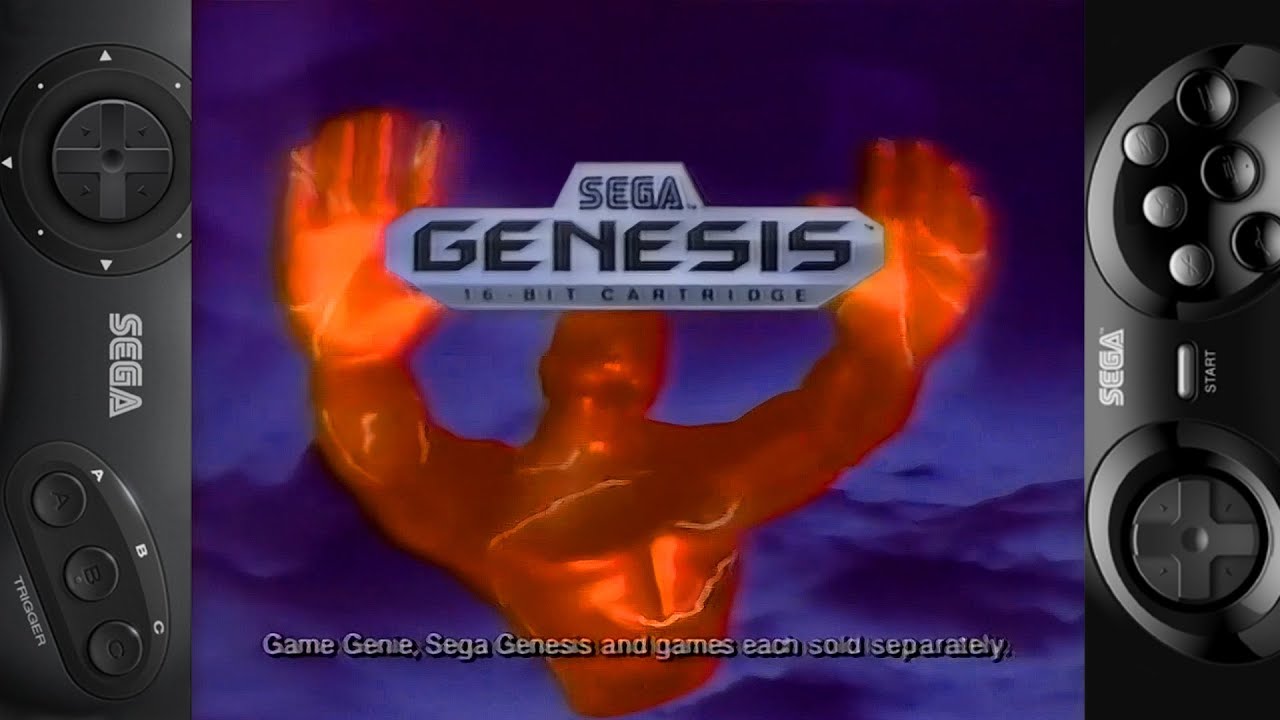
Game Genie
Slot your game into the Game Genie, slot the Game Genie into the console, thumb in a code from the booklet, and play with unlimited lives. Nintendo went to court to kill it, lost, and was ordered to pay Galoob the entire $15 million bond it had posted — a landmark copyright fight waged over a plastic cheat cart. It was never a Nintendo product, and it wasn't Nintendo-only: Sega gave the Genesis version its official approval while Nintendo was still in court.
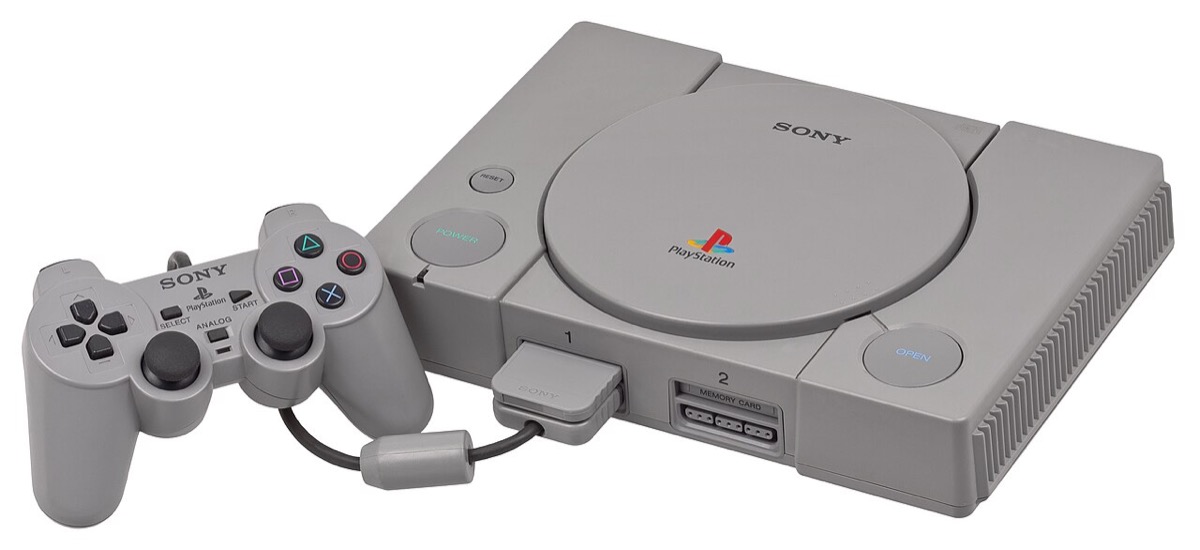
PlayStation
The grey box that took gaming off the cartridge and onto the CD — and took it away from Nintendo and Sega while it was at it. Sony's first console arrived in Japan at the end of 1994 and in America the following September, and it made a generation fluent in memory cards, load screens, and demo discs. It started as a Nintendo project that Nintendo walked away from.

Nintendo 64
Nintendo's leap into three dimensions, the N64 brought 3D polygon gaming into living rooms with its quirky three-pronged controller and a cartridge library anchored by Super Mario 64 and The Legend of Zelda: Ocarina of Time. Its rumble pak added tactile feedback, while its four controller ports made it the console of couch multiplayer legends.
![Video thumbnail — Sega Saturn - It's Out There (1995 Launch Commercial) [HD]](https://i.ytimg.com/vi/cyv6ZehQyTQ/hqdefault.jpg)
Sega Saturn
Sega's answer to the PlayStation: a cartridge-free arcade powerhouse with dual processors, a CD-ROM drive, and a cult library of 3D fighters and dreamers. The Saturn dominated Japan but stumbled spectacularly in the West after Sega's infamous E3 surprise launch—a retailer and developer betrayal that became business-school legend.