EyeToy
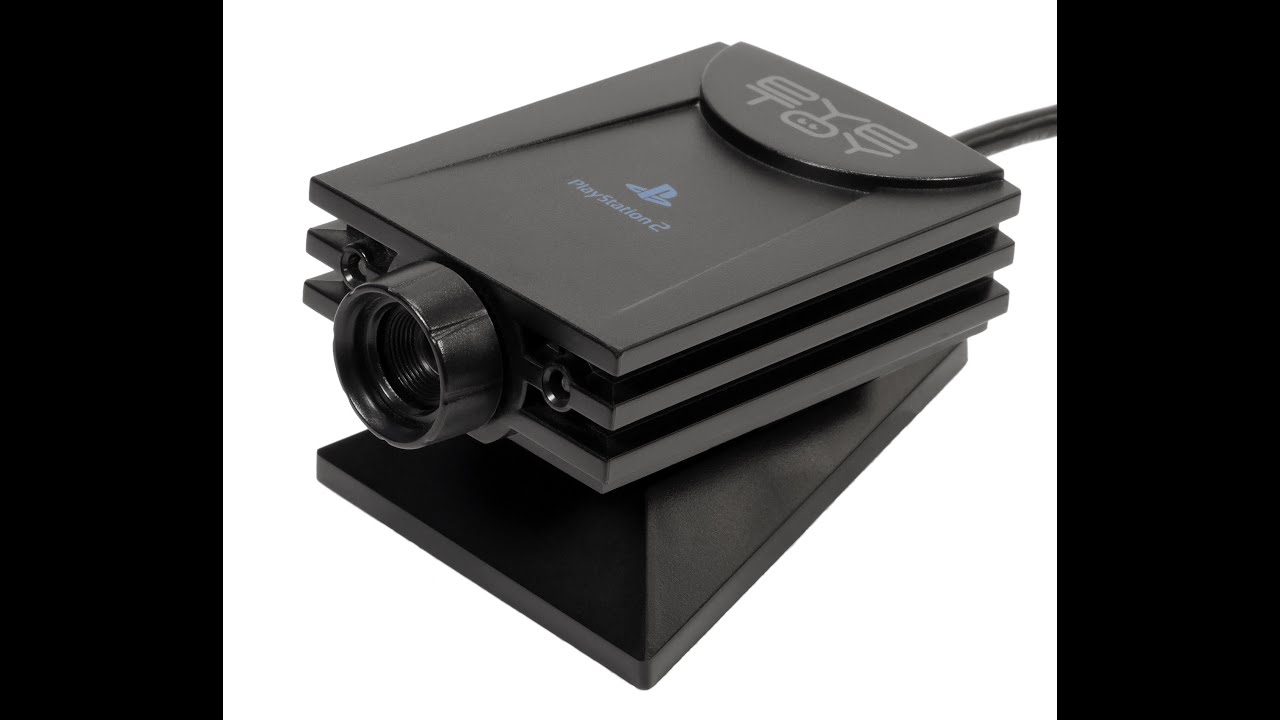
A little silver camera perched on the TV, and suddenly YOU were in the game — flailing at ninjas, washing virtual windows, waving both arms like you were landing a plane. The EyeToy turned the PlayStation 2 into a mirror that fought back, and turned every living room into a very sweaty arcade.
The EyeToy started with a researcher's hunch. Richard Marks conceived the idea in 1999 after seeing a PlayStation 2 demonstration at the Game Developers Conference, then joined Sony to develop it — a USB color camera that used computer vision and gesture recognition so players could control games with their bodies instead of a controller. With backing from Sony executive Phil Harrison, Marks worked with London-based developers to build the software that would prove the concept.
That software was EyeToy: Play, bundled with the camera when it launched in Europe on July 4, 2003 and in North America that November 4. Its minigames were instantly legible to anyone standing in front of the TV: chop flying objects, scrub grimy windows with your hands, dance, box, keep the beat. Grandparents who had never touched a DualShock could be waving their arms at the screen within seconds, which made the EyeToy the rare console peripheral that worked at birthday parties. It sold fast — over 2 million units in Europe plus 400,000 in the U.S. by the end of 2003 — and follow-ups like EyeToy: Groove, the fitness-focused EyeToy: Kinetic, and EyeToy: AntiGrav kept the camera pointed at players. By November 2008 the EyeToy had sold 10.5 million units worldwide.
Its real legacy showed up in other people's hardware. The EyeToy put mainstream motion control in living rooms three years before the Wii turned it into a phenomenon, and Sony's own PlayStation Eye and the camera-driven Kinect walked the trail it blazed. The EyeToy era itself stayed charmingly low-fi — a webcam, a lamp turned on so the tracking would work, and a family taking turns making fools of themselves in front of the television.
Similar items
![Video thumbnail — Playstation 9 - 2000 PS2 Commercial [High Quality]](https://i.ytimg.com/vi/NyvD_IC9QNw/maxresdefault.jpg)
PlayStation 2
The black rectangle that invaded living rooms worldwide as an affordable DVD player and happened to pack the best game library ever assembled. With over 155 million sold—the best-selling console of all time—the PlayStation 2 didn't just dominate gaming; it became the era's default home entertainment hub.

Wii Sports
The pack-in game that turned the Nintendo Wii into a living-room phenomenon — tennis, bowling, boxing, baseball, and golf played by swinging the remote. Grandparents, house parties, and flying Wii-motes; it got everyone off the couch.

Dance Dance Revolution
Konami's iconic rhythm game where players step on a four-arrow dance pad in time with on-screen cues and music. Debuting in Japanese arcades in 1998, DDR became a global phenomenon—from arcade halls to living rooms—defining an entire genre of music-timing games.

Call of Duty 4: Modern Warfare
The game that changed multiplayer shooters forever. Call of Duty 4 ditched WWII for the modern day and invented the template everyone has copied since — killstreaks, custom loadouts, Prestige mode. By 2008, every Xbox 360 household was living in its lobbies.