Die Hard
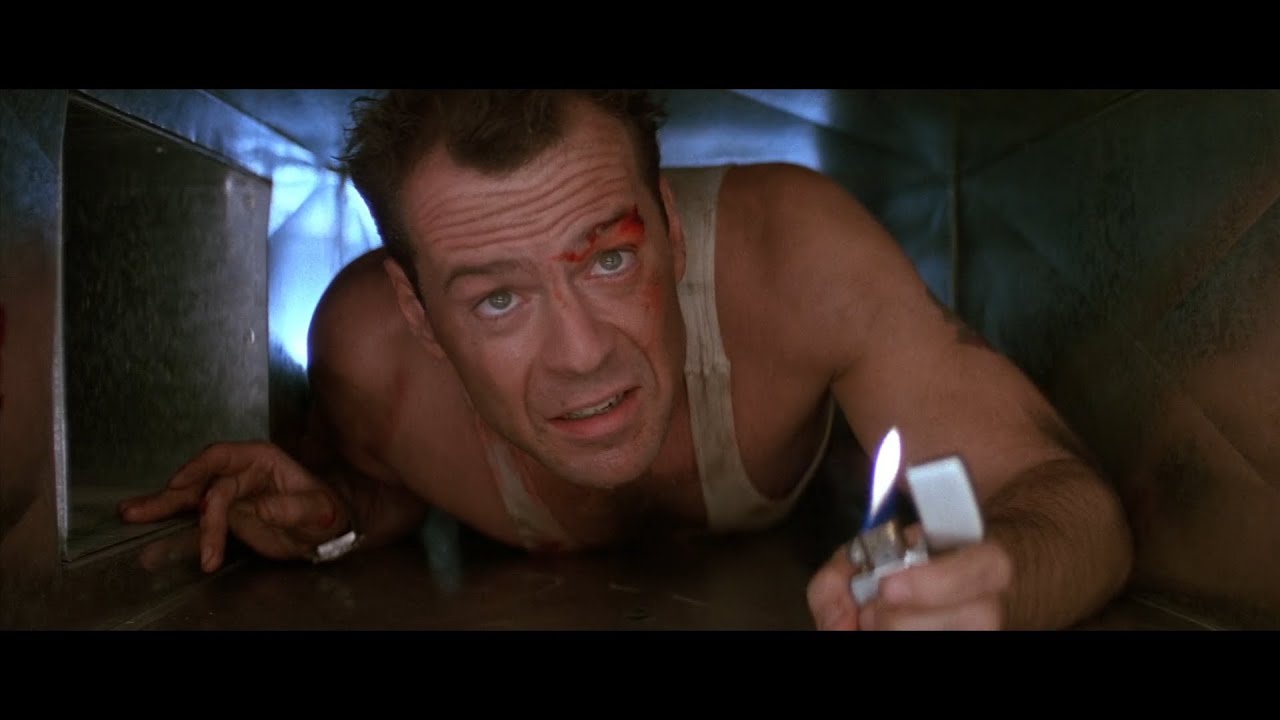
The film that made 'yippee-ki-yay' a holiday tradition and launched an endless argument: is it a Christmas movie? Spoiler: yes, and also no—but watching it in December became genuinely ingrained.
Die Hard was released July 15, 1988, directed by John McTiernan and adapted from Roderick Thorp's 1979 novel Nothing Lasts Forever. Bruce Willis played off-duty NYPD cop John McClane facing off against Alan Rickman's thief Hans Gruber in the Nakatomi Plaza tower—actually Fox Plaza, the real building in Los Angeles. Filmed on a reported $28 million budget, it grossed roughly $140 million worldwide and redefined the action hero archetype around ordinariness and wit rather than invulnerability.
Die Hard 2 arrived July 4, 1990, directed by Renny Harlin and also set at Christmas, grossing $240 million worldwide. Die Hard with a Vengeance (May 19, 1995) brought back McTiernan and added Samuel L. Jackson as Zeus, erupting to $366.1 million worldwide—the highest-grossing film of 1995 worldwide. Later entries followed: Live Free or Die Hard (2007) and A Good Day to Die Hard (2013), extending the franchise across two and a half decades of action cinema.
The eternal argument—"Is Die Hard a Christmas movie?"—reignites every December like clockwork. The answer depends on your definition, but the cultural fact is unambiguous: watching Die Hard in December became a genuine tradition. The first film is literally set on Christmas Eve, the second at Christmastime again, grounding the debate in text. Whether you argue it's an action film that happens to take place at Christmas or a Christmas film dressed in gunfire and explosions, the point is that millions of viewers made it a seasonal ritual.
Similar items

Bruce Willis
The everyman action hero who proved you didn't need muscles the size of tree trunks to save the day. Bruce Willis went from TV comedy to Die Hard's John McClane, rewriting what a blockbuster lead could be—and spent the next decade proving it with an eclectic run of '90s classics that kept him in the conversation.
![Video thumbnail — Home Alone - Official® Trailer [HD]](https://i.ytimg.com/vi/Fmih-zWIjGY/maxresdefault.jpg)
Home Alone
Kevin McCallister is accidentally left behind when his family flies out for the holidays — and when two bumbling burglars invade, the eight-year-old's creative defenses (ice, tar, paint cans, and a very hot doorknob) turn the house into a gauntlet of booby traps. It became the defining Christmas movie of a generation, making Macaulay Culkin the most famous kid on the planet.
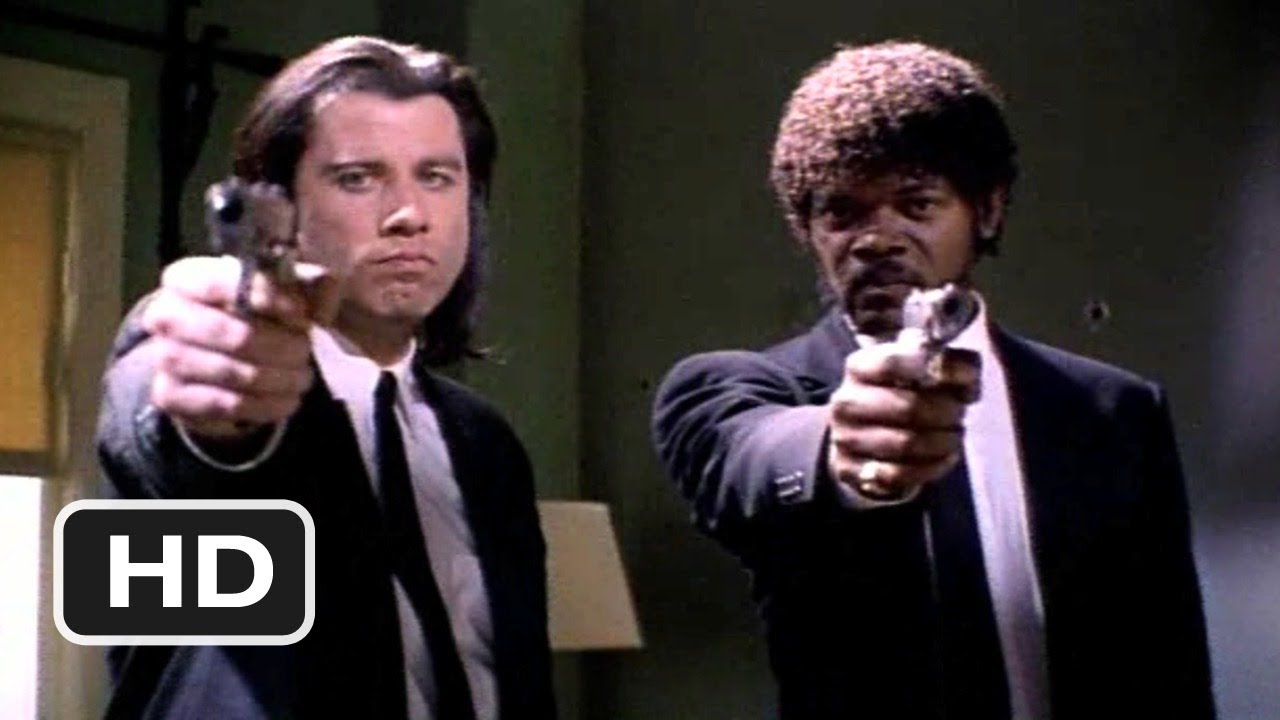
Pulp Fiction
Quentin Tarantino's nonlinear crime epic rewrote the rules of what indie films could be. Released October 1994 with a Palme d'Or win at Cannes, a $200 million global gross, and career resurrections for John Travolta and a breakthrough for Samuel L. Jackson, Pulp Fiction became the defining film of a generation hungry for something different.

The Bourne Identity
A man is pulled from the Mediterranean with two bullets in his back and no memory — but his hands remember everything. Matt Damon's amnesiac assassin made spy movies fast, grounded, and paranoid — and the decade's action cinema followed his lead.