Code Lyoko

Four boarding-school kids, a supercomputer in an abandoned factory, and a virtual world under attack by a rogue AI. The French import where every episode could end with a 'Return to the Past' — and only the heroes remembered any of it.
Code Lyoko was created by Thomas Romain and Tania Palumbo and produced by French studio MoonScoop (Antefilms in its first season), premiering on France 3 on September 3, 2003, and reaching American kids on Cartoon Network starting April 19, 2004. The premise was pure after-school wish fulfillment: Jeremy, a boy-genius boarder at Kadic Academy, discovers a quantum supercomputer humming in an abandoned factory near campus. Inside it lives Lyoko, a virtual world inhabited by a mysterious girl named Aelita — and X.A.N.A., a malevolent artificial intelligence that possesses electronics and machinery in the real world to attack them.
The show's signature was its split visual identity. Scenes at school were traditional animation over hand-painted backgrounds; the moment Odd, Ulrich, and Yumi stepped into the scanners and virtualized onto Lyoko, everything switched to full 3D CGI, where the team fought X.A.N.A.'s monsters while escorting Aelita to deactivate glowing towers. Then came the reset button that every fan remembers: the 'Return to the Past' program rewound time to before the attack, wiping everyone's memory — except anyone who had ever been scanned into the supercomputer. The series ran four seasons and 97 episodes through November 2007, though Cartoon Network broadcast only 89 of them — one season-four episode never aired at all, and the final seven went out online instead.
It ended the way little else in kids' TV did: the heroes actually won, destroying X.A.N.A. for good — at the cost of Aelita's father — and then, reluctant and openly nostalgic, shutting the supercomputer down themselves. A follow-up, Code Lyoko: Evolution, arrived in 2012 with live-action real-world scenes, but lasted a single cliffhanger-ending season before MoonScoop went bankrupt. For the kids who raced home to catch it, the original remains the show that made 'transfer, scanner, virtualization' sound like a magic spell.
Similar items
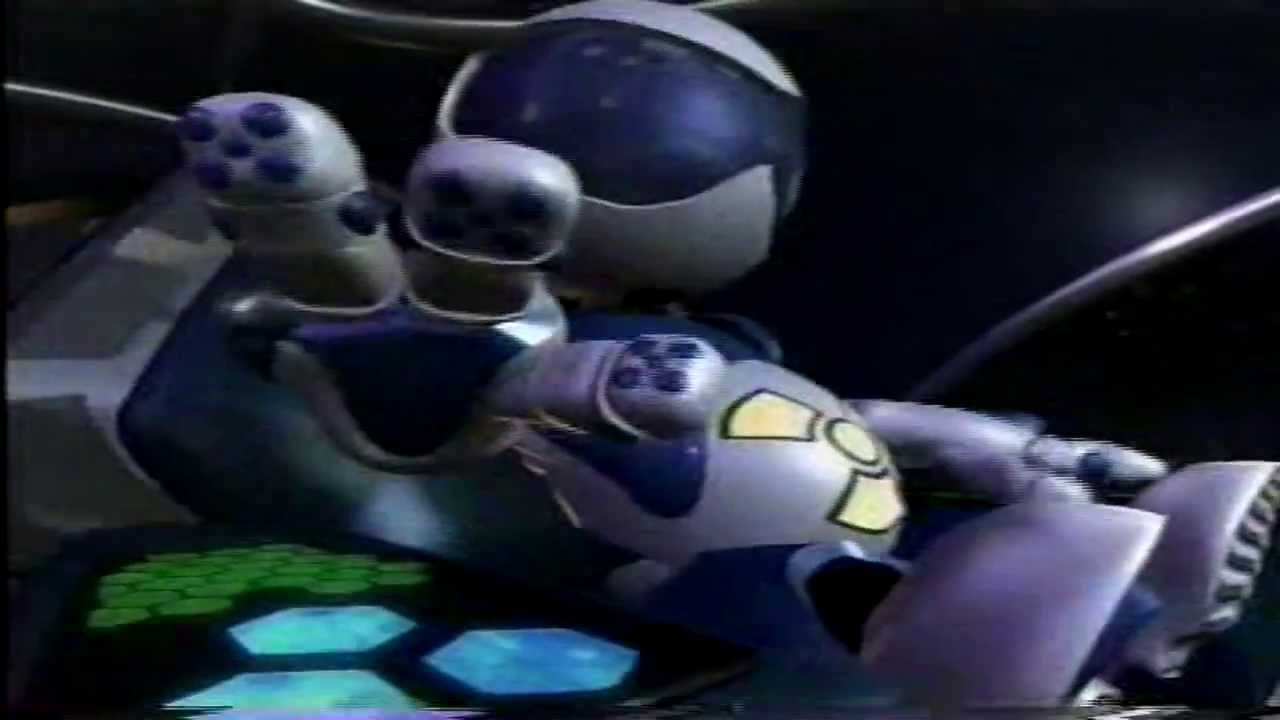
Toonami
Cartoon Network's action block where a generation of American kids met anime. Hosted first by Moltar, then by TOM — the robot captain of the Absolution — it made Dragon Ball Z and Sailor Moon after-school rituals and treated its young audience like the stories mattered.

Dragon Ball Z
The after-school anime that taught a generation of American kids the words "Super Saiyan." Adapted from Akira Toriyama's manga and animated by Toei, Dragon Ball Z turned multi-episode power-ups, screaming energy charges, and glowing gold hair into appointment television — most of all on Cartoon Network's Toonami block.

Animaniacs
The manic variety cartoon that slipped jokes for adults past kids and a geography lesson past everyone. Yakko, Wakko and Dot burst out of the Warner Bros. water tower alongside Pinky and the Brain, Slappy Squirrel, and a cast of oddballs — fast, smart, and endlessly quotable.
Aqua Teen Hunger Force
Adult Swim's gleefully nonsensical cartoon about three anthropomorphic fast-food items — a milkshake, a box of fries, and a wad of meat — sharing a house in New Jersey. It made no sense on purpose, and it accidentally shut down Boston.