Samurai Jack
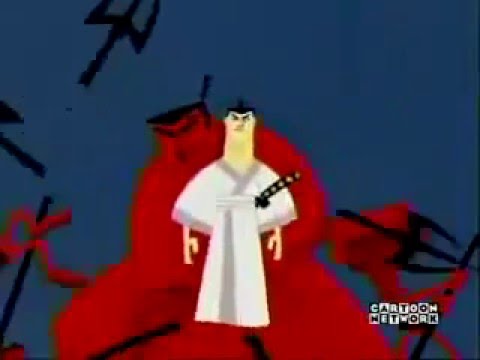
A feudal swordmaster flung into a dystopian future wages a quest to return home — wielding a magical katana against a shapeshifting demon in near-silent, gorgeously cinematic episodes that borrowed from '70s film and manga masters. Tartakovsky's samurai epic ran four seasons without ending its story — a cliffhanger that wouldn't resolve until 2017.
When Samurai Jack premiered on Cartoon Network in August 2001, creator Genndy Tartakovsky was already the architect of the network's subversive Dexter's Laboratory — but this show was something else entirely. Drawing on his childhood fascination with samurai culture and a deep well of influences (Kurosawa, Frank Miller's Rōnin, Lone Wolf and Cub, Ben-Hur, Lawrence of Arabia), Tartakovsky made a show that treated animation like cinema. Episodes often unfolded with minimal dialogue, letting the visuals and action speak; you watched it the way you'd watch a widescreen '70s epic, color-saturated and formally composed.
Phil LaMarr's voice as the unnamed Jack (that's just what people in the future called him, and he kept it) anchored the show, with Mako's sinister Aku as the dark mirror across four seasons of thirteen episodes each. The premise was simple but perfect: you get flung into a dystopian future, you have a magical sword, you're trying to get home, and the demon who sent you there rules everything. The show would eventually rack up eight Primetime Emmys and six Annie Awards across its two runs — a rare feat for what was ostensibly a kids' cartoon.
Then it ended in 2004 without resolving the quest, and the cliffhanger hung in the air for thirteen years. When Adult Swim's Toonami block finally aired a fifth season in 2017 — darker and more mature — it at last wrapped up the arc the original run never finished. The show's influence rippled through animation and beyond, proof that a kids' network could serve something as artfully ambitious as it was entertaining.
Similar items

Dexter's Laboratory
A pint-sized boy genius with a secret laboratory hidden in his bedroom, a fake scientist's accent, and one recurring problem: his fun-loving sister Dee Dee, who breezes in and wrecks everything by pushing the wrong button.
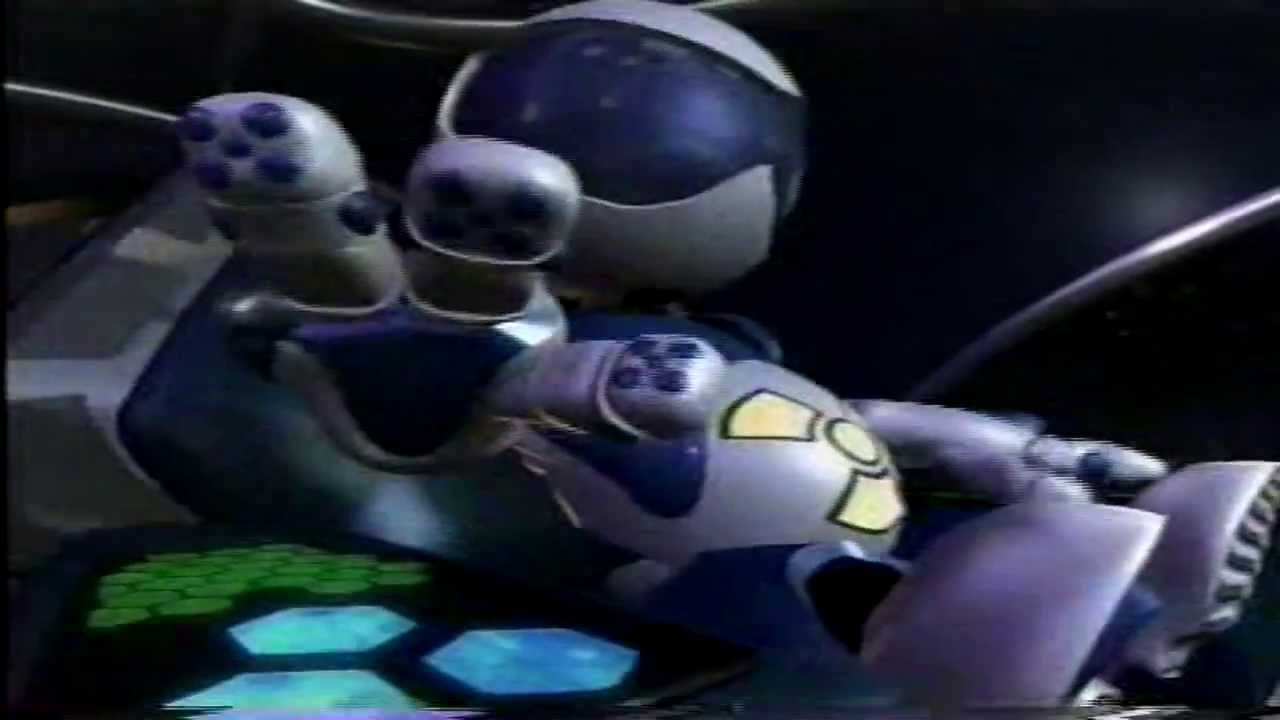
Toonami
Cartoon Network's action block where a generation of American kids met anime. Hosted first by Moltar, then by TOM — the robot captain of the Absolution — it made Dragon Ball Z and Sailor Moon after-school rituals and treated its young audience like the stories mattered.
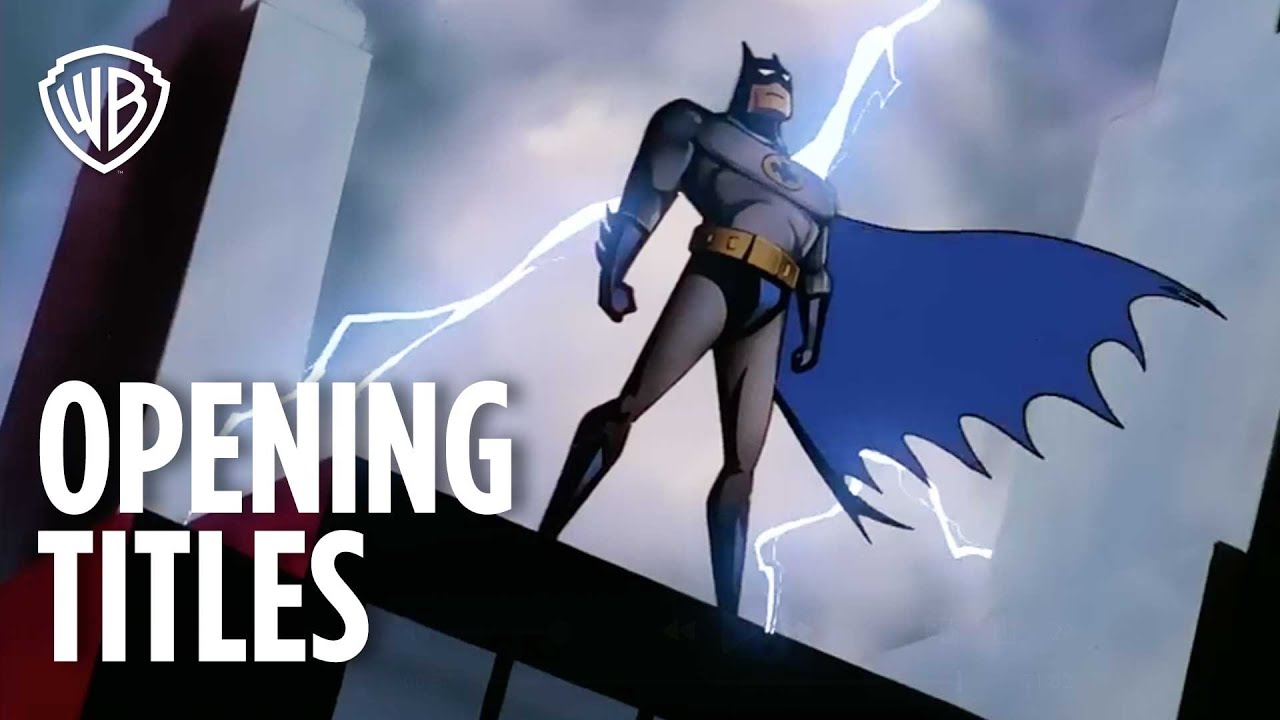
Batman: The Animated Series
The moody, art-deco afternoon cartoon that gave a generation its definitive Batman — and its definitive Joker. Painted skies on black paper, a full orchestra, and stories that never talked down to the kids racing home to catch it.

Codename: Kids Next Door
Five ten-year-olds with code numbers, a high-tech treehouse, and an arsenal built from household junk: Sector V spent six seasons on Cartoon Network waging glorious war on adult tyranny. And it was the show the viewers themselves voted onto the air.