Chinese Jump Rope

A big loop of elastic stretched around two kids' ankles while a third hopped through a chanted in-and-out pattern — and every time she cleared it, the rope went up: ankles, then knees, then thighs, until nobody could reach. All you needed was three friends and a length of stretchy cord, or a chain of knotted rubber bands in a pinch.
Chinese jump rope is usually traced to China, though the game's true origin is thinly recorded; it spread through the United States and the rest of the West around the 1960s. Part hopscotch and part double dutch, it turned a single loop of stretch into a whole recess.
The mechanics were simple and self-escalating. Two players stood inside the loop and held it taut around their ankles while a third performed a set sequence of jumps — in, out, on the cord, across it — often to a chant. Clear the pattern and the holders raised the elastic to their knees, then their thighs or waist, each level harder than the last until the jumper finally missed and traded places. The chants that went with it varied from playground to playground; the singsong 'England, Ireland, Scotland, Wales' was one widely-heard version, but there was never one fixed set of words.
Because the whole game folded up into a pocket and cost almost nothing, it became a recess and sleepover fixture — and it never really disappeared. The elastic loops are still manufactured and sold today, half as retro nostalgia and half as a genuinely good way to wear kids out with nothing but a bit of stretchy cord.
Similar items

Hand-Clapping Games
Two kids facing off, hands flying through a clapping pattern too fast to follow, chanting 'Miss Mary Mack, Mack, Mack' or 'Down down baby' until somebody fumbled and cracked up. Passed friend to friend on playgrounds, no equipment required — just a partner and a rhyme everybody somehow already knew.
Four Square
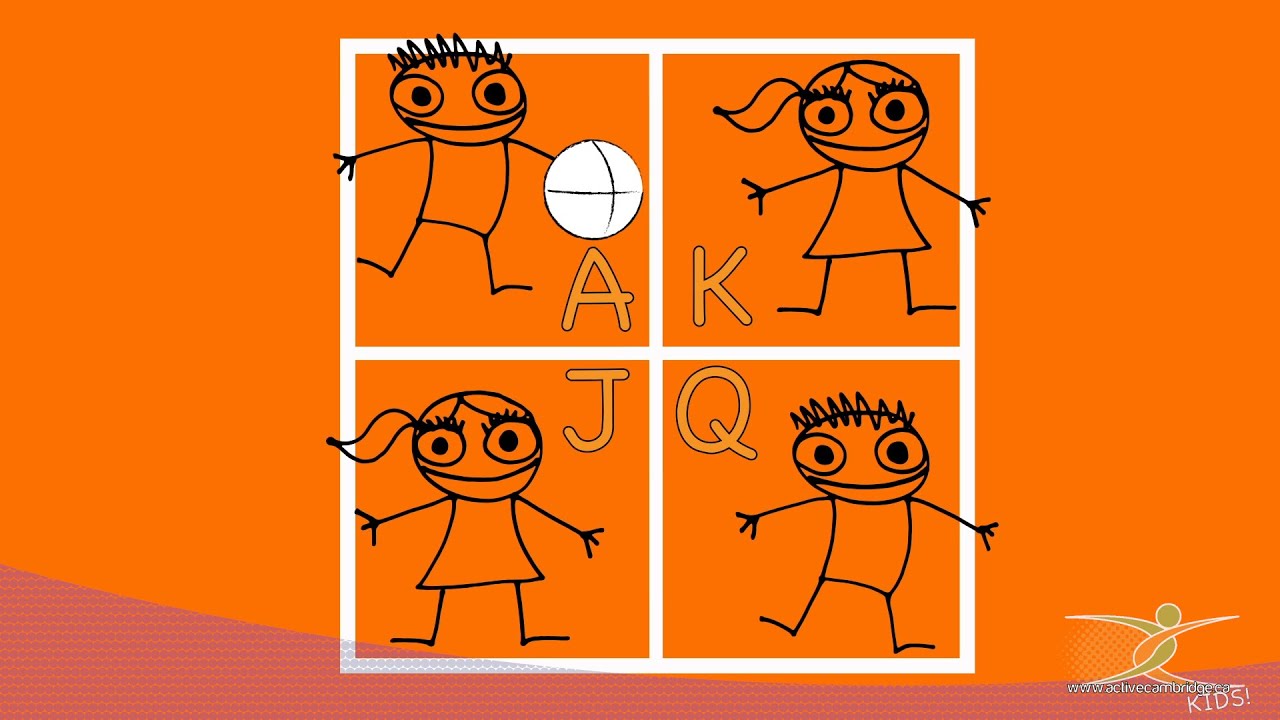
The recess court painted in four big squares, ruled by whoever held the top square and whatever house rules they felt like declaring that day. Bounce the rubber ball into someone else's square, they had to hit it on before it bounced twice, and one blown return sent you to the back of the line while everybody moved up.
Heads Up, Seven Up
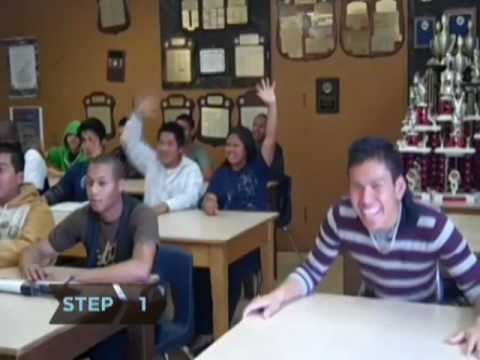
The rainy-day classroom game where seven kids crept up and down the aisles while everyone else put their heads down, eyes closed, one thumb up. Get your thumb pressed and you stood to guess who did it — a correct call and you took their place at the front. It was less a game than a way to survive an indoor recess.
Kickball
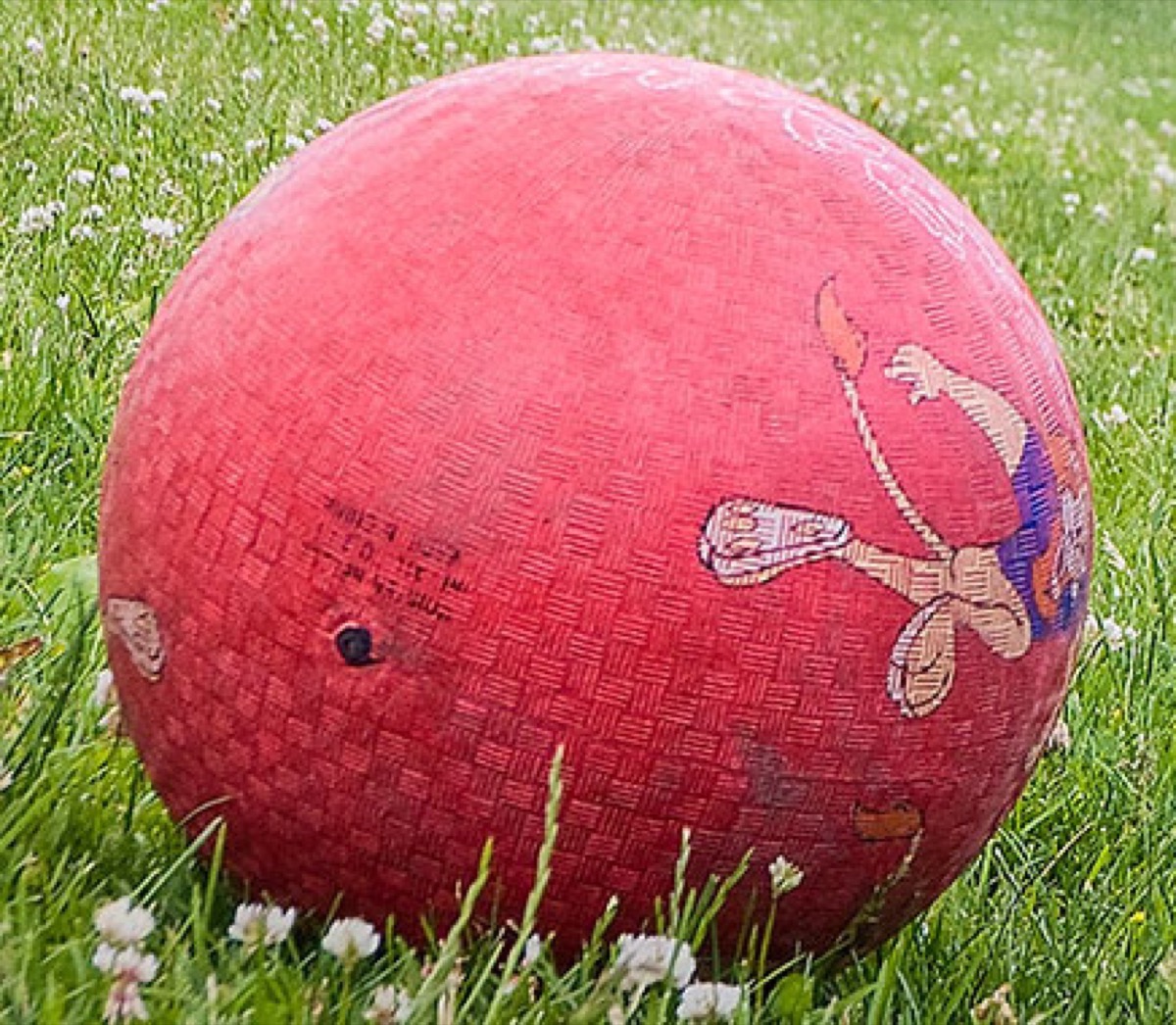
The great equalizer of elementary recess: a big red rubber ball, a diamond scuffed into the grass, and a game of baseball you played with your feet. The same ball did double duty for four-square and dodgeball.