Chef Boyardee ABC's & 123's

Spelling your name in pasta before you were allowed to eat it — alphabet letters and numbers in tomato sauce, a literacy game masquerading as lunch. It arrived around 1980, and behind the goofy can sits one of the great immigrant success stories in American food.
Around 1980, Chef Boyardee introduced ABC's & 123's: alphabet letters and number shapes in tomato sauce, sold with or without mini meatballs. The product invited play by design — trace your initials in the bowl, spell your name before you ate it, fish out your own age. A mid-1980s spinoff, Tic Tac Toe's, pushed the dinner-as-game idea even further. (And if you remember it as "soup": it's canned pasta, like its rival SpaghettiOs, though the sauce-to-shape ratio makes the confusion understandable.)
The brand behind the letters carries a better story than the letters themselves. In 1924, an Italian immigrant named Ettore "Hector" Boiardi opened the restaurant Il Giardino d'Italia in Cleveland. By 1928 he was selling a canned "ready-to-heat spaghetti kit," and to help Americans pronounce his name, he spelled it out phonetically on the label: Boy-Ar-Dee. The real chef on the can wasn't a marketing invention — he was the actual cook, and the phonetic spelling was a practical fix that became one of the most recognizable brand names in the grocery store.
ABC's & 123's live on today as "Mini ABC's & 123's," still promising kids the same small thrill: dinner you're allowed to read first. For everyone who grew up on it, the alphabet can sits in the same memory drawer as spelling tests and after-school cartoons — a food that did double duty as a toy.
Similar items

SpaghettiOs
Neon-orange pasta rings eaten straight from a bowl with a spoon — a 1965 invention that every 90s kid assumes belongs to their own childhood. The ring beat out cowboys, astronauts, and stars for the job, and the jingle promised exactly what it delivered: the neat round spaghetti you can eat with a spoon.

Kid Cuisine
The frozen dinner built for kids: a compartmented tray with fried chicken or nuggets, corn, and a gooey brownie or pudding in its own well, fronted by a cartoon penguin. ConAgra's answer to the Happy Meal, minus the drive-thru.
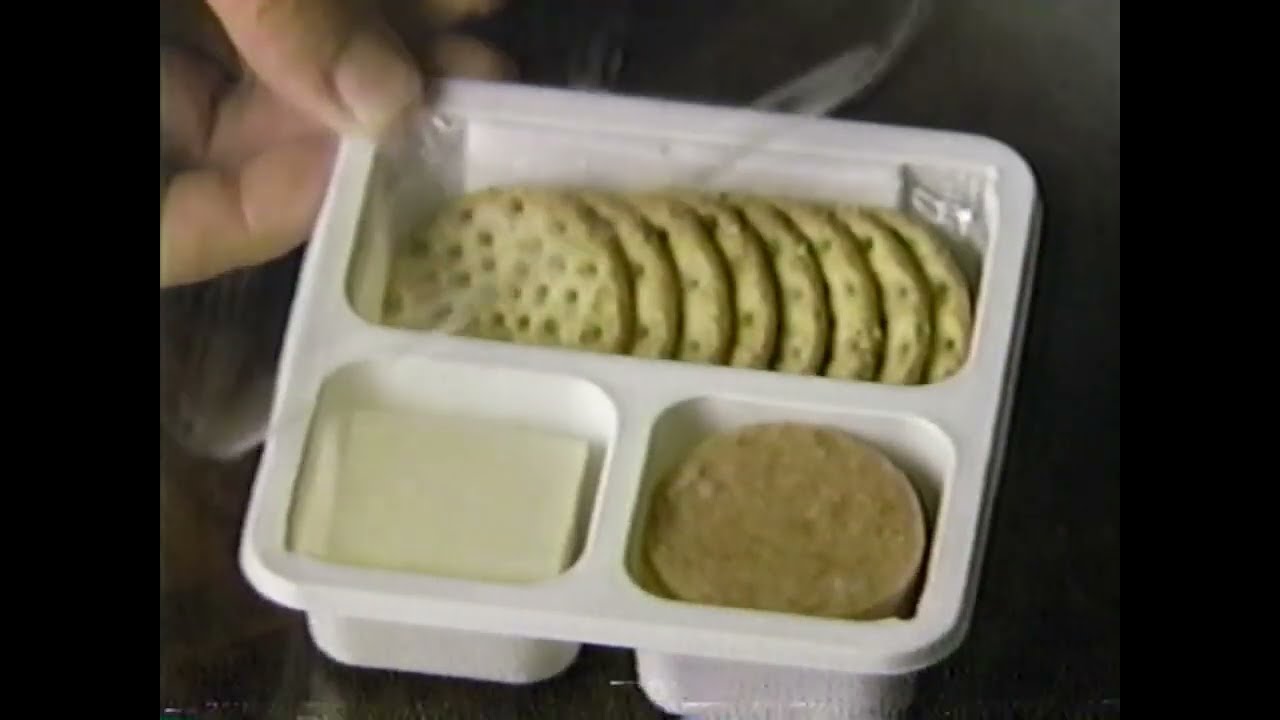
Lunchables
Prepackaged lunch trays where kids assembled their own mini-sandwiches from stackable crackers, meat slices, and cheese. The appeal was autonomy — you were in charge — making Lunchables a 1990s lunchbox status symbol that transformed eating from a chore into an activity.

Burger King Kids Club
Burger King's animated kids-meal gang, launched 1990: Kid Vid, I.Q., Boomer, Snaps, Wheels, Lingo, Jaws, and J.D. the dog. They lived on tray liners, toy packaging, and Saturday morning TV — except there was no show. The characters were the marketing.