BioShock

A plane crash, a lighthouse, and a descent into Rapture — a ruined Art Deco utopia at the bottom of the sea. Ken Levine's 2007 shooter gave players plasmids, Big Daddies, one devastating twist, and the era's best argument that video games could be art. Would you kindly?
BioShock was developed by 2K Boston — the studio soon renamed Irrational Games — under creative lead Ken Levine, as a spiritual successor to the System Shock games many of the team had built. Released August 21, 2007 for Xbox 360 and Windows (a PlayStation 3 port followed in October 2008), it dropped players into Rapture, an underwater city founded in the 1940s by business magnate Andrew Ryan as a utopia beyond government reach. Levine built the setting from the ideas of dystopian and utopian thinkers — Ayn Rand above all, whose name Wired noted lurks in the near-anagram "Andrew Ryan" — and by the time you arrive, the experiment has eaten itself: a genetic material called ADAM grants superhuman powers, and the city is a war zone of mutated Splicers, hulking Big Daddies, and the eerie Little Sisters they protect.
The game's signature moment is its twist: the friendly voice guiding you, Atlas, has been controlling you all along with the polite trigger phrase "would you kindly" — a gut-punch about the illusion of player choice that is still cited as one of the strongest narrative turns in the medium. Levine stumbled onto the phrase while writing the game's own marketing copy. Even Atlas's accent was a late fix: focus testers distrusted his original Southern drawl — one called him a "lecherous Colonel Sanders" — so he became Irish.
The reception was thunderous. The demo was so popular it crashed Xbox Live's servers; the game averaged 96 on Metacritic, won the 2007 Spike Video Game Awards Game of the Year and the BAFTA for Best Game, and sold roughly three million copies by mid-2009 and four million by early 2010. Critics reached past the gaming press for it — Vox later called it the first game to demonstrate that video games could be a work of art, and the public voted it into the Smithsonian's Art of Video Games exhibit. Two sequels followed in 2010 and 2013, and Black Mirror's gaming episode "Playtest" tucked in a "would you kindly" of its own.
Similar items

Xbox 360
Microsoft's console that beat the PS3 to market by a year and defined HD-era online gaming. Unified Achievements, party chat, a matured Xbox Live — and the Red Ring of Death, the three flashing lights that taught a generation the meaning of hardware failure.

Halo 2
When Bungie's sequel launched on Xbox in November 2004, 1.5 million people had pre-ordered it. Midnight launches erupted at 7,000 stores across North America. And its matchmaking system became the template that online shooters copied for years afterward.
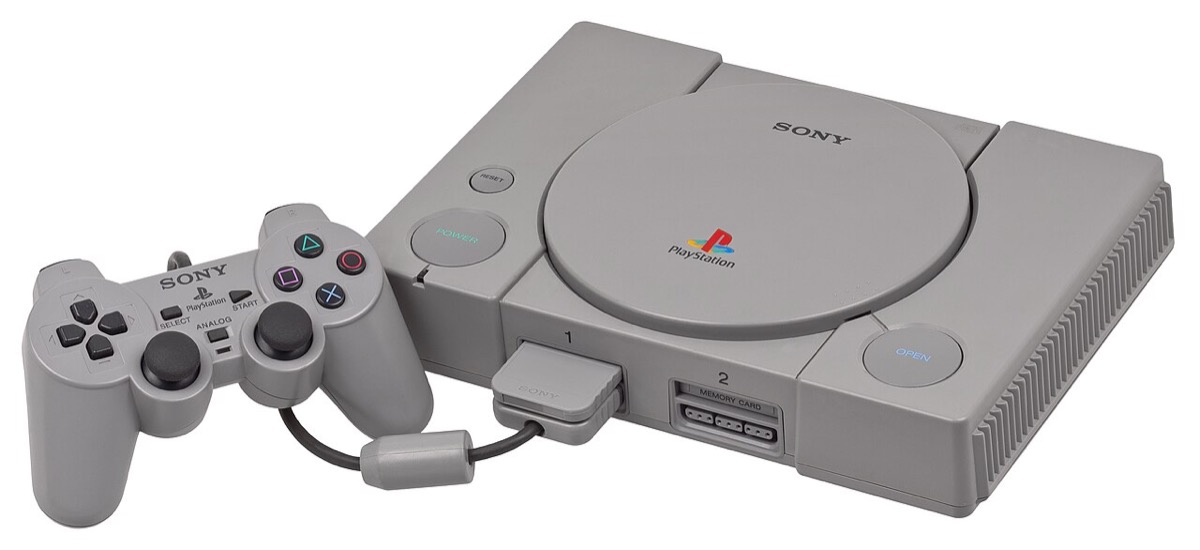
Resident Evil
The PlayStation shocker that dropped you inside a zombie-infested mansion with too few bullets and a save ribbon to ration. It didn't just scare a generation — it named the whole survival-horror genre.

Call of Duty 4: Modern Warfare
The game that changed multiplayer shooters forever. Call of Duty 4 ditched WWII for the modern day and invented the template everyone has copied since — killstreaks, custom loadouts, Prestige mode. By 2008, every Xbox 360 household was living in its lobbies.