Ab Roller

The tubular rocking cradle with the headrest that promised perfect crunches without the neck strain — rock forward, feel the burn, order now. Flip channels late at night in the mid-'90s and the Ab Roller infomercial was simply there, somewhere, always.
The Ab Roller was invented in 1994 by Don Brown, who owned a small chain of New Jersey health clubs and kept watching members crank on their necks doing crunches. His fix was almost comically simple: a bent-tube frame that arced over your head as you lay down — in the 1995 infomercial's signature look, a black tubular frame rocking on a purple mat — with a pad to rest your head against. Grab the bar, rock forward, and the frame guided you through a crunch with your neck supported the whole way. No electronics, no resistance settings, just geometry.
What turned a gym gadget into a cultural fixture was the infomercial. From 1995 on, the Ab Roller pitch ran relentlessly across late-night and weekend cable — demonstrations, testimonials, close-ups of the rocking motion — right in the golden age of the TV-order fitness gadget. It worked staggeringly well as television: the Ab Roller became, by its maker's own accounting, one of the best-selling fitness products ever — lifetime sales past the billion-dollar mark — and the distinctive frame started showing up in garages, spare bedrooms, and yard sales across America. It also spawned a whole ecosystem of look-alike rocking ab cradles under other names, to the point that "the ab thing you rock on" needed no brand at all.
The craze cooled the way infomercial crazes do — the gadgets migrated from living room to closet to curb — but the six-pack-by-television dream just kept regenerating into new shapes for decades. Brown himself stayed in the abs business, later inventing the Ab Coaster and founding The Abs Company in 2006. The original device remains one of the era's most instantly recognizable silhouettes: if you were anywhere near a TV in 1996, you can still hear the pitch.
Similar items

P90X
Twelve DVDs, ninety days, a pull-up bar wedged in the doorframe, and a magic phrase — "muscle confusion." Tony Horton's basement bootcamp was the infomercial phenomenon of the late 2000s, and for a while it seemed like every dad, coworker, and college roommate in America was "doing P90X."

Billy Mays
The black beard, the blue shirt and khakis, and the friendly bellow that opened every pitch: "Hi, Billy Mays here!" He was the face and voice of the entire As-Seen-On-TV universe — the man who made OxiClean a household word by sheer force of enthusiasm.
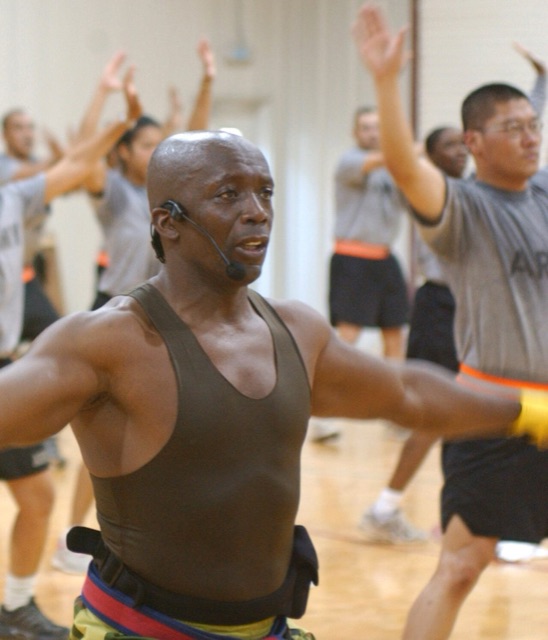
Tae Bo
Billy Blanks in the headset mic, punching and kicking the air in front of a room of glistening people, and the infomercial promising that Tae Bo would do the rest. From late 1998 the four-tape set was in every living room: the VHS that turned taekwondo and boxing into aerobics and had your mom throwing jabs at the TV.

ThighMaster
Suzanne Somers in a leotard, squeezing a blue-and-white spring between her knees, and the promise that you could squeeze your way to shapely hips and thighs. The ThighMaster infomercial ran so often in the early 90s that the thing was a punchline before most people owned one, and then they bought one anyway: more than 10 million of them.