Winona Ryder

The dark-eyed patron saint of Gen X — Beetlejuice's goth kid, Heathers' reluctant mean girl, Reality Bites' adrift twentysomething. From 1988 to 1999 Winona Ryder was in seemingly every movie that mattered to anyone under 30, collecting two Oscar nominations along the way.
Born Winona Laura Horowitz in 1971 — named after Winona, Minnesota, the city closest to the rural farmhouse where she was born — Winona Ryder broke through as Lydia Deetz, the deadpan goth teenager of Beetlejuice (1988), and followed it with Heathers (1989), the pitch-black high-school satire that made her the face of adolescent disaffection. Tim Burton came back for her in Edward Scissorhands (1990), pairing her with Johnny Depp — by then also her famously tabloid-covered fiancé — and with Mermaids (1990) and Bram Stoker's Dracula (1992) she entered the '90s as one of the most distinctive young actresses in Hollywood.
Then she did something teen idols rarely manage: she got prestigious. Martin Scorsese's The Age of Innocence (1993) brought a Golden Globe and an Academy Award nomination for Best Supporting Actress; Little Women (1994) brought a second nomination, this time for Best Actress, as Jo March. In between, Reality Bites (1994) fixed her image for a generation — a recent college graduate searching for direction, the on-screen shorthand for Gen X itself. She kept stretching: Abigail Williams in The Crucible (1996), an android in Alien Resurrection (1997), and Girl, Interrupted (1999), which she also executive-produced, closing the decade the way she'd spent it — at the center of the frame.
The run ended abruptly. A 2001 shoplifting arrest — and the conviction that followed in 2002 — became a tabloid circus, and Ryder largely stepped back from leading roles for years — a long quiet stretch for someone who had defined two decades of cool. The story got its coda in 2016, when Stranger Things made her the emotional anchor of a series built from the very era she ruled, introducing Joyce Byers to kids whose parents had crushes on Lydia Deetz. But the heyday is the thing: for anyone who came of age in the '90s, Winona was simply it.
Similar items

Beetlejuice
A sweetly dead young couple, stuck haunting their own house, hire a raunchy "bio-exorcist" to scare off the living — say his name three times and chaos answers. It's a 1988 film, but between the VHS shelf, October cable reruns, and the Saturday-morning cartoon, Beetlejuice belonged to 90s kids too.

The Crucible
Daniel Day-Lewis shouting "Because it is my name!" and Winona Ryder leading the girls in shrieking fits — for a generation, this was the movie the teacher wheeled in after you finished reading the play. Arthur Miller himself adapted his own 1953 classic — and earned an Oscar nomination for it, more than four decades after the play premiered.

Adam Sandler
The SNL goofball who became a box-office machine — Billy Madison, Happy Gilmore, The Wedding Singer, The Waterboy. In the '90s his man-child comedies and shouty voices made him one of the most bankable comedians alive.
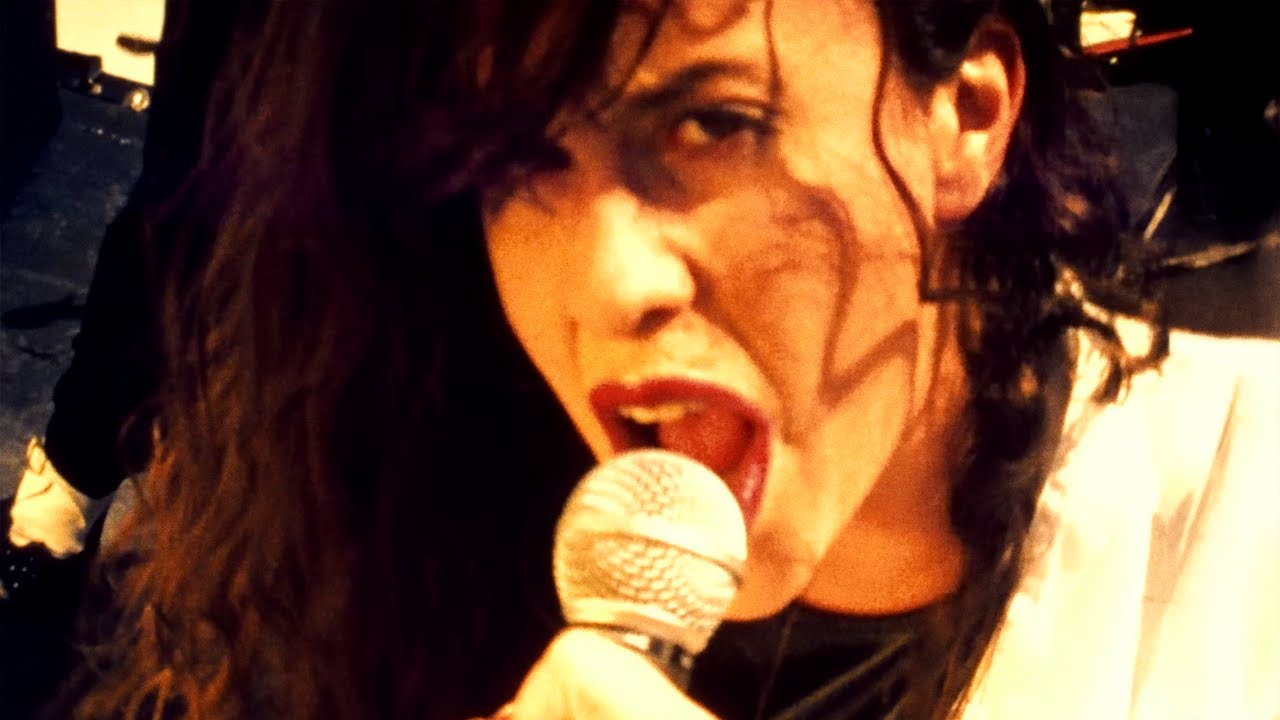
Alanis Morissette
The Canadian teen-pop star who reinvented herself as the voice of 90s female rage. Raw, oversharing, absolutely unapologetic about her feelings—she gave the decade permission to be a mess and call it art.