Venus & Serena Williams

Two sisters coached by their dad on Compton's courts, taking turns winning everything. For four straight majors in 2002 and 2003 the final was Williams versus Williams, and the first prime-time U.S. Open women's final outdrew college football.
Richard Williams learned tennis from books and from watching matches, moved his family to Compton when Venus was three on the theory that a rough neighborhood would toughen his daughters, and home-schooled and coached them with their mother, Oracene Price. Venus, born in 1980, turned pro in 1994 and reached the U.S. Open final at seventeen in 1997. Serena, fifteen months younger, beat her sister to a Grand Slam title at the 1999 U.S. Open. Their first professional meeting had come in the second round of the 1998 Australian Open; the first all-sister final on tour, at Key Biscayne in 1999, was described by their father as a "bullfight."
Venus's year was 2000: she beat Serena in the Wimbledon semifinal, won the title, won the U.S. Open, and took Olympic singles gold in Sydney, where the two also won the doubles. On September 8, 2001, they met in the U.S. Open final, the first the tournament had ever put in Saturday prime time on CBS and the first Grand Slam final between sisters since 1884. Venus won 6–2, 6–4; nearly 23 million people watched at least part of it, more than any program on television that night, including a Nebraska–Notre Dame football game.
Then the younger sister took over. Serena beat Venus in the 2002 French Open final, the 2002 Wimbledon final, which made her number one in the world the day after Venus's last week at the top, the 2002 U.S. Open final, and the 2003 Australian Open final, a 7–6, 3–6, 6–4 match that completed the "Serena Slam," all four majors held at once for the first time since Steffi Graf. No two players had ever contested four consecutive major finals; the sisters started the run at twenty and twenty-one. Serena won their 2003 Wimbledon final too, giving the family the last four Wimbledon titles and seven of the previous nine majors.
Injuries and the death of their older half-sister, Yetunde, who was shot in Compton in 2003, broke the streak, and they would not meet in another major final for five years. They played 31 times in all between 1998 and 2020, Serena leading 19–12 and 7–2 in major finals, and they never lost a major doubles final together, fourteen of them, plus three Olympic golds. Between 2000 and 2019 a Williams sister played the Wimbledon final in all but four years; Venus won five of them and Serena seven.
Similar items
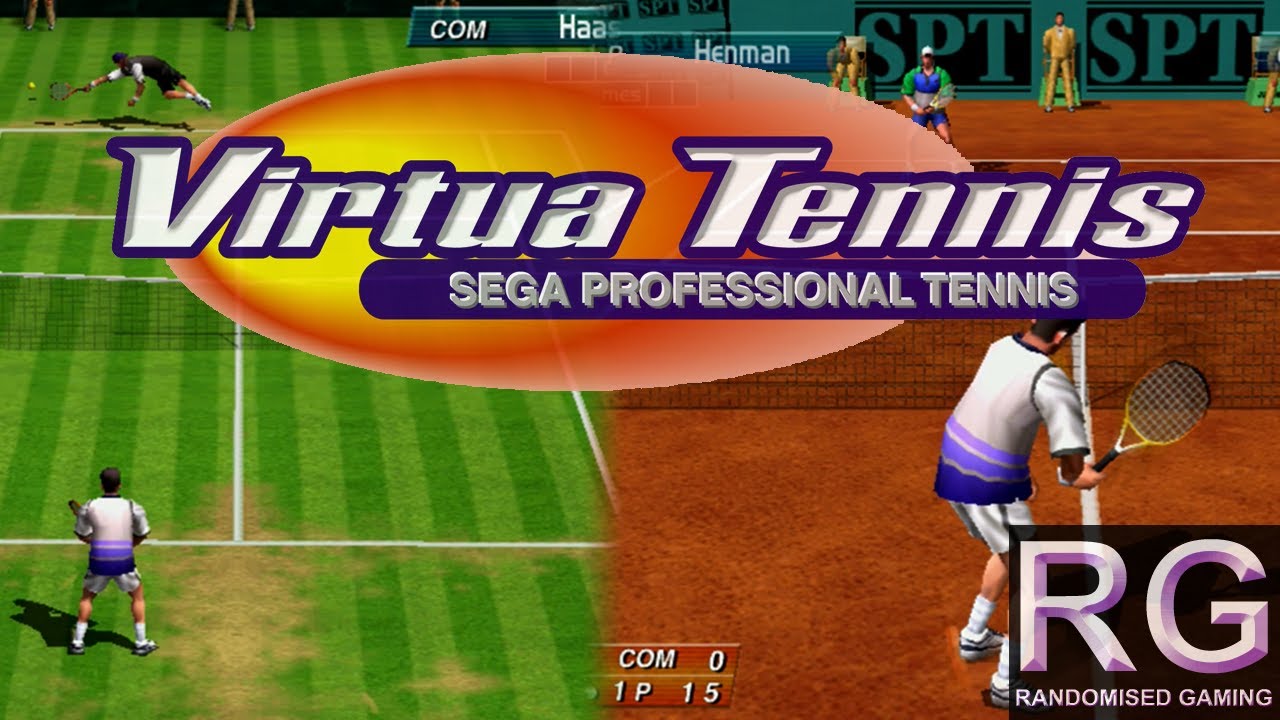
Virtua Tennis
Two buttons: one to hit, one to lob. Sega's tennis game asked almost nothing of you and gave back the best rallies on the console — an arcade cabinet's worth of instant playability on a Dreamcast disc. It remains one of the machine's most fondly remembered games a quarter-century later.

Tiger Woods
The kid who turned pro in a Nike ad that said "Hello World," won the 1997 Masters by twelve shots, and spent the 2000s making the rest of golf play for second. Sunday meant the red shirt, the fist pump, and a lead nobody was going to catch.

Sports Illustrated
The magazine that turned every week into an event—full-color photographs of the biggest sports moments, waiting in your mailbox. From the swimsuit issue to SI for Kids in the classroom, Sports Illustrated was how America looked at sports in the pre-internet era. Each weekly delivery was the moment the season's story officially arrived.

Shaun White
The red-haired "Flying Tomato" who won Olympic halfpipe gold in Turin in 2006, won again in Vancouver in 2010 with a victory-lap Double McTwist 1260, and piled up X Games medals in between. He had his own Ubisoft video games too.