Time Crisis

The arcade gun game with a foot pedal: step on it to pop out and shoot, let go to duck behind a crate and reload while the clock ran down. Namco's 1995 cabinet made everyone in the arcade look like they were stomping a bug.
Light-gun games had been in arcades for years when Namco released Time Crisis in December 1995, and its one addition changed how the genre felt. The cabinet had a pedal. Hold it down and agent Richard Miller stood up from cover to shoot; release it and he ducked back down, safe from fire and reloading. A countdown timer on each area, extended only by clearing the current fight, meant hiding had a cost, so players learned to stand, fire in bursts and drop again in a rhythm the whole arcade could hear. The gun itself kicked, with a blowback mechanism that simulated recoil. The plot sent Miller, a "One Man Army" for an agency called the V.S.S.E., to a castle on an island in the fictional republic of Sercia to rescue the president's daughter Rachel from the last heir of the old regime and his head of security, Wild Dog.
It ran on Namco's Super System 22 board and became a hit fast: the Japanese trade magazine Game Machine listed it as the most successful arcade game of the month in April 1996, and Next Generation judged it better than Sega's Virtua Cop 2 on the strength of the pedal alone. The 1997 PlayStation port shipped bundled with Namco's GunCon light gun at that peripheral's launch, and a separate Namco team, working without the arcade staff, halved the frame rate and trimmed the polygons to fit it onto the console. In place of a pedal, players stepped on a controller or pressed a button on the gun, and Electronic Gaming Monthly named it the Light Gun Game of the Year for 1997.
The console version's real gift was an entire extra mission set in a hotel that was secretly an arms factory, with branching paths depending on how fast you cleared each room. Time Crisis II reached Japanese arcades at the end of 1997 and added a second player with a second screen, and the series has continued since. But the original is the one people remember by their feet: a pedal, a plastic gun, and a crate that stopped every bullet.
Similar items
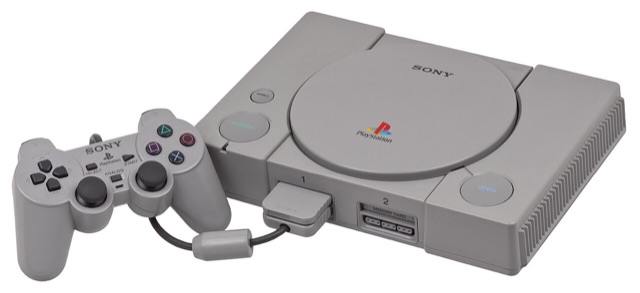
PlayStation
The grey box that took gaming off the cartridge and onto the CD — and took it away from Nintendo and Sega while it was at it. Sony's first console arrived in Japan at the end of 1994 and in America the following September, and it made a generation fluent in memory cards, load screens, and demo discs. It started as a Nintendo project that Nintendo walked away from.
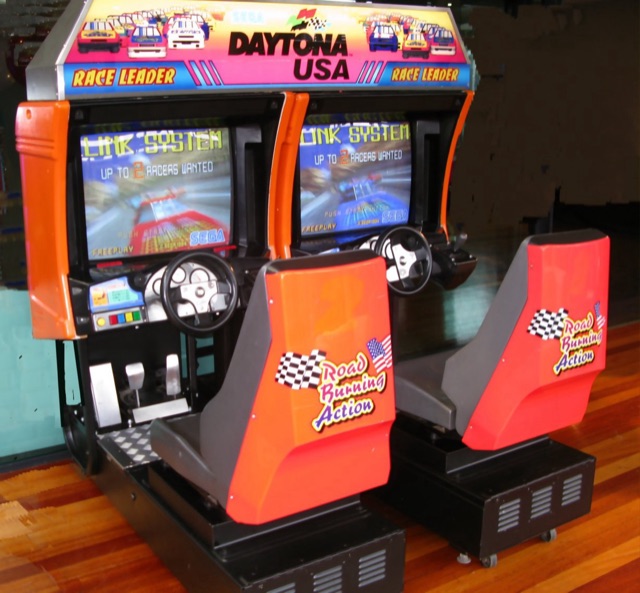
Daytona USA
The twin-seat cabinets, the No. 41 Hornet, and a Sega composer belting "DAYTONAAAA" himself because it was the fastest way to get vocals into the game. The arcade racer that defined the mid-90s arcade.
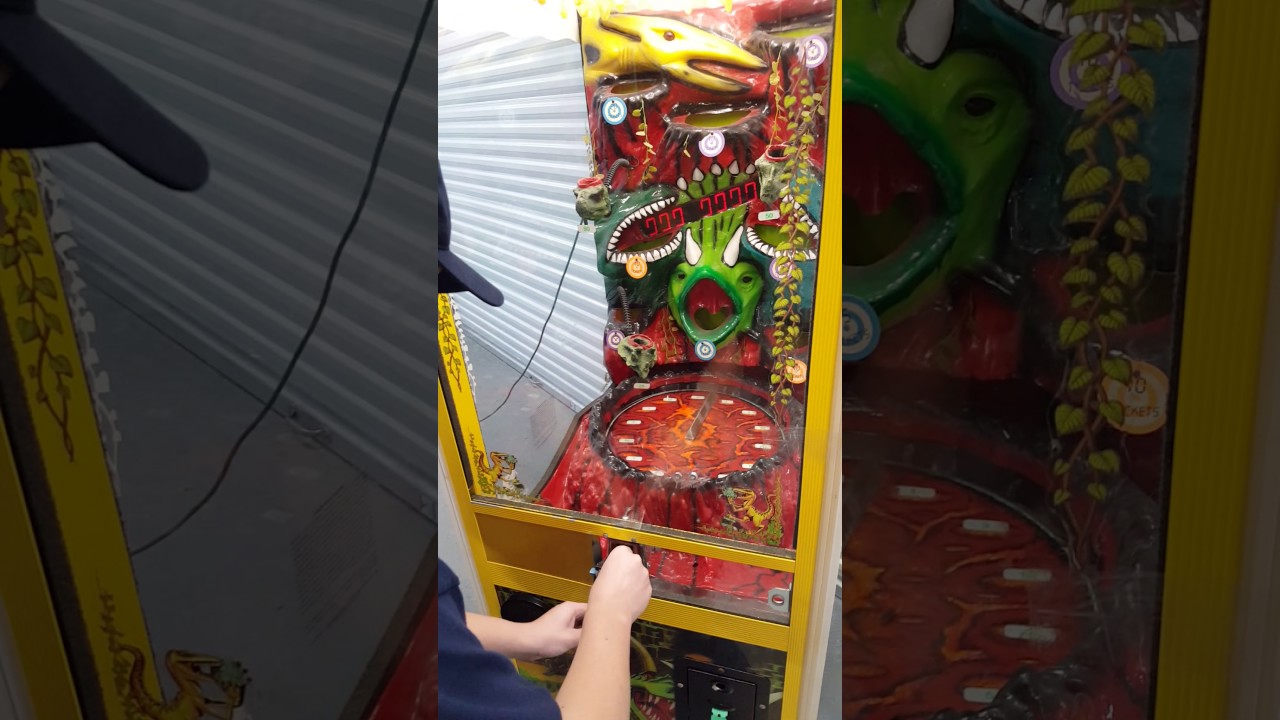
Arcade Redemption Games
Drop in a token, play a game of skill, and win a stream of paper tickets — then trade the crumpled wad at the glass prize counter for cheap plastic junk. Rock 'N Bowl, Skee-Ball, Wheel 'Em In, Dinoscore: the ticket-frenzy floor of every '90s arcade.

Dance Dance Revolution
Konami's iconic rhythm game where players step on a four-arrow dance pad in time with on-screen cues and music. Debuting in Japanese arcades in 1998, DDR became a global phenomenon—from arcade halls to living rooms—defining an entire genre of music-timing games.