TCBY

"The Country's Best Yogurt," the strip-mall frozen-yogurt counter that sold the '90s on "all of the pleasure, none of the guilt" and grew from one Little Rock shop in 1981 to nearly 3,000 stores. The initials originally stood for something else.
Frank D. Hickingbotham opened the first store in Little Rock, Arkansas in 1981 and named it after his own reaction to tasting frozen yogurt: "This Can't Be Yogurt." Franchising began in 1982 with twenty franchises by the end of the year, and in 1984 a lawsuit from a Texas competitor forced a new reading of the initials, "The Country's Best Yogurt." The company went public in May 1984, a year in which the count went from 41 stores to 102; it had 242 by the end of 1985, 500 shops in nearly every state by 1987 and 1,582 by 1989, with the stock at $28 a share.
The pitch was health. The advertising ran on "All of the pleasure, none of the guilt," and on the arithmetic that frozen yogurt was about four percent fat against ice cream's ten or more. The 1990s were harder than the numbers suggest: no new franchises opened in 1990, the start of a consolidation that lasted two more years as the field crowded and the economy slumped, though TCBY still held about 45 percent of the frozen-yogurt segment in 1992. It began co-branding with Taco Bell, McDonald's, Subway and Burger King in 1995 and with A&W restaurants and CITGO convenience stores in 1996, and by 1997 it counted 2,782 stores in 65 nations, with more than 3,000 franchises and 1999 sales of $109 million by the time it was sold.
Capricorn, the owner of Mrs. Fields, bought TCBY in 2000 for about $140 million, moved the headquarters to Salt Lake City and became Mrs. Fields Famous Brands. There were still 1,777 American locations in 2001, but the self-serve frozen-yogurt wave that followed, Pinkberry in 2005, Red Mango in 2006, Menchie's in 2007, belonged to other chains: the count fell to roughly 900 by 2008 and 405 by 2011, the combined company moved to Broomfield, Colorado in 2012, and a few hundred TCBYs remain.
Similar items

Orange Julius
A frothy orange drink in a paper cup, sipped while your mom shopped. Orange Julius was a 1920s Los Angeles sidewalk invention that spent its later decades meaning exactly one thing: the mall food court.

Slush Puppie
Neon syrup and soft pellet ice from the countertop machine at the convenience store, the skating rink, the community pool — anywhere a kid had a dollar. The cup had a puppy in a knit hat on it, and if you saved enough of them, prizes.
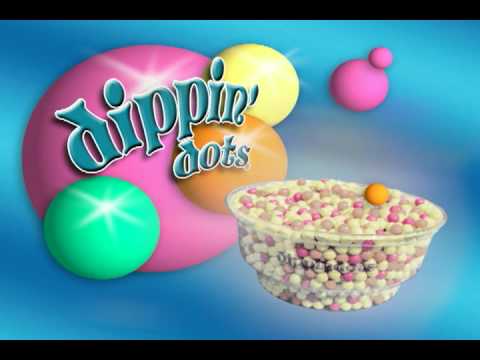
Dippin' Dots
Beaded "ice cream of the future" invented in 1988 by microbiologist Curt Jones, who flash-froze ice cream mix in liquid nitrogen into tiny spheres. Served in a cup and eaten with a spoon, Dippin' Dots became a quintessential 1990s amusement park and mall treat — a novelty that felt futuristic and tasted like the 90s.

Cinnabon
A cinnamon roll the size of a dinner plate, buried under cream cheese frosting that pooled in the box. You could smell the counter from the other end of the mall, which was not an accident. Nobody ever finished one alone and everybody ordered one anyway.