Taz-Mania

The Tasmanian Devil moved into a suburban house with a dad who did Bing Crosby, a job as a hotel bellhop, and a sky that was always yellow, rain or shine. Warner's Saturday-morning sitcom turned a whirlwind into a big brother.
Taz-Mania premiered on Fox Kids on September 7, 1991, from Warner Bros. Animation, with Art Vitello developing and producing and Jean MacCurdy and Tom Ruegger as executive producers. Ruegger had created Tiny Toon Adventures and would go on to Animaniacs, and Taz-Mania shared their tone on a smaller budget: CBR notes the score was played by a half-dozen musicians rather than a full orchestra. Vitello took a co-writing credit on most episodes, and Jim Cummings and Jess Harnell sang the Richard Stone theme, which established the one rule of the fictional land of Tazmania: the sky is always yellow, rain or shine.
The joke was to take the spinning, snarling creature from the 1954 short "Devil May Hare" and make him the eldest son of, in CBR's phrase, a startlingly conventional family. Taz could now talk, reason, and break the fourth wall. His father Hugh was Maurice LaMarche doing Bing Crosby, an orange-juice enthusiast who over-explained everything; Uncle Drew was LaMarche doing Bob Hope, and the two dragged Taz on "Road to" spoofs. Miriam Flynn voiced his list-making mother Jean, Kellie Martin his teenage sister Molly, and Debi Derryberry his hyperactive little brother Jake, who idolized him. The pet turtle was named Dog, because it acted like one.
Taz also held a job, as bellhop at the Hotel Tazmania under Bushwhacker Bob, whom Cummings played as a John Cleese impression in the Basil Fawlty mold. The outback around the hotel filled up with recurring foils: the conceited scavenger Digeri Dingo, the neurotic Wendal T. Wolf, the aboriginal boy Francis X. Bushlad who hunted Taz as a rite of manhood, the alligators Bull Gator and Axl, the do-it-yourself Platypus Brothers, and the Kee-Wee, a silent bird Taz chased in the manner of Wile E. Coyote. Bugs, Daffy, Foghorn Leghorn and Marvin the Martian dropped in for cameos.
Sixty-five episodes were produced between 1991 and 1993, enough to carry the show through four seasons until May 22, 1995, with reruns following on TBS and Cartoon Network. Sunsoft published the Nintendo games in the tie-in wave of 1992 to 1994, three VHS tapes appeared in 1993, and the DVD sets arrived in the 2010s.
Similar items

Tiny Toon Adventures
Buster and Babs Bunny — no relation — headlined Steven Spielberg's class of next-generation Looney Tunes, studying under Bugs and Daffy at Acme Looniversity. It only produced new episodes for a couple of years, but those 98 episodes reran into the ground on after-school TV and burned the theme song into an entire generation. We're tiny, we're toony, we're all a little loony.

Animaniacs
The manic variety cartoon that slipped jokes for adults past kids and a geography lesson past everyone. Yakko, Wakko and Dot burst out of the Warner Bros. water tower alongside Pinky and the Brain, Slappy Squirrel, and a cast of oddballs — fast, smart, and endlessly quotable.

Life with Louie
Louie Anderson turned his own Minnesota childhood into a Saturday-morning cartoon, moved it to Cedar Knoll, Wisconsin, and gave his war-story-telling dad the best lines. Fox Kids ran it for three seasons and Anderson won two Daytime Emmys for voicing both himself and his father.
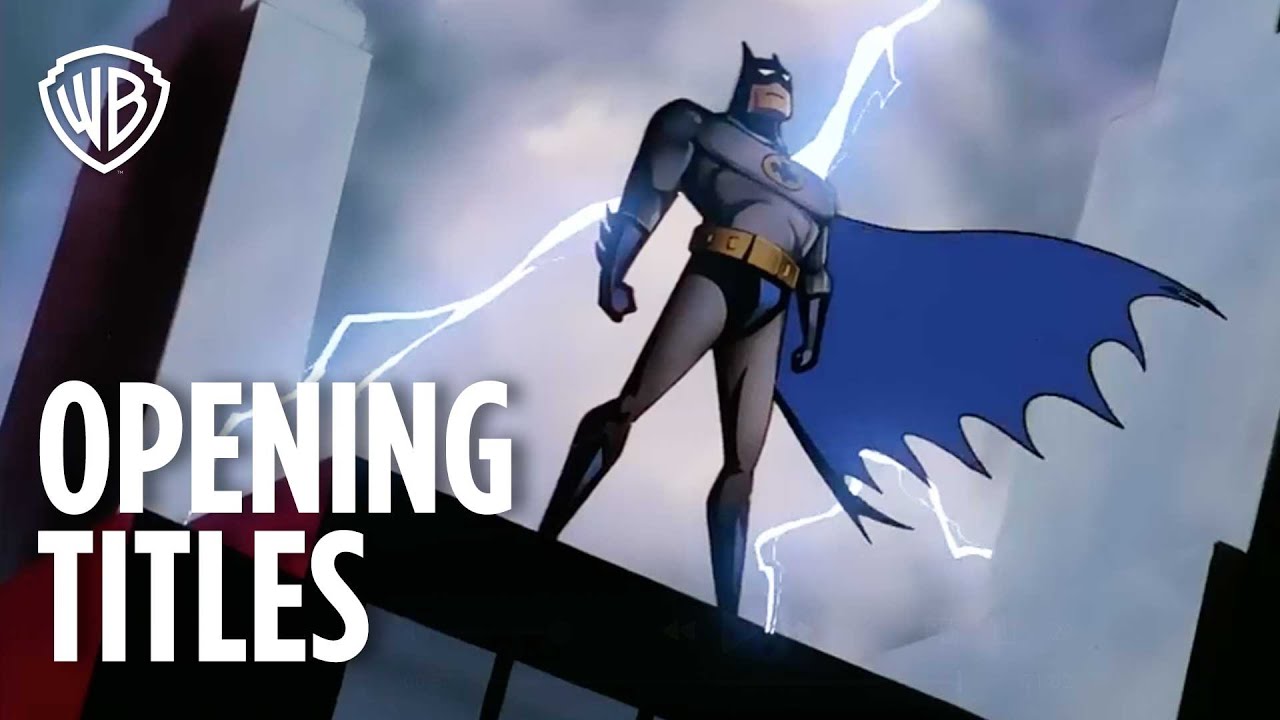
Batman: The Animated Series
The moody, art-deco afternoon cartoon that gave a generation its definitive Batman — and its definitive Joker. Painted skies on black paper, a full orchestra, and stories that never talked down to the kids racing home to catch it.