
Californication
David Duchovny returned to TV as Hank Moody, a washed-up novelist spiraling through LA hedonism. Showtime's 2007 comedy-drama was cynical, sexy, and won him a Golden Globe.
20 items
David Duchovny returned to TV as Hank Moody, a washed-up novelist spiraling through LA hedonism. Showtime's 2007 comedy-drama was cynical, sexy, and won him a Golden Globe.
![Video thumbnail — CSI: Crime Scene Investigation [Intro] - The Who - Who are you](https://i.ytimg.com/vi/yt4sM0eRPSE/hqdefault.jpg)
The Vegas crime lab that took over primetime. CSI premiered on CBS in 2000 and turned forensic science into television's dominant formula — William Petersen's Gil Grissom, The Who's "Who Are You" over the credits, and spinoffs from Miami to New York. It got so big that real juries started expecting what the show delivered every week.

Mike Rowe in a sewer, cheerfully. Discovery's ode to the people who do the work nobody wants — and the host who spent a full day doing every job right alongside them, badly, gratefully, and narrating the whole time.
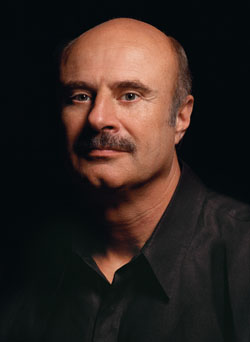
Television's tough-love Texan — the bald psychologist Oprah discovered in a courtroom and turned loose on daytime TV in 2002. For 21 seasons he grilled feuding families and troubled teens with folksy bluntness, until 'getting sent to Dr. Phil' became the culture's shorthand for an intervention.

A profane, darkly funny HBO series about a washed-up baseball pitcher who returns to his hometown with nothing but a mullet and monumental delusions. Created by Danny McBride (who also stars), it turned small-town mediocrity into comedy gold.

One movie star, his three guys from Queens, and the super-agent screaming them all toward the top. Entourage was HBO's mid-2000s fantasy of Hollywood — Maseratis, premieres, Malibu — and Jeremy Piven's Ari Gold turned "let's hug it out" into the decade's boardroom catchphrase. Aspiration as entertainment, and for a few years it absolutely worked.

The Griffin family of Quahog, Rhode Island—led by bumbling dad Peter, his wife Lois, and their motley crew of kids and pets—became a Fox phenomenon after its Super Bowl XXXIII premiere in 1999. A sharp departure from typical sitcom fare, Family Guy was built on rapid-fire cutaway gags and irreverent humor. Though Fox canceled it after just three seasons, a DVD renaissance in 2003 became so successful it sparked a network reversal—the show's comeback is considered television's first revival based on DVD sales.

Flight of the Conchords stars Bret McKenzie and Jemaine Clement as fictionalized versions of themselves—a deadpan New Zealand musical-comedy duo struggling to break into the NYC music scene while writing and performing original songs. Created by James Bobin, Jemaine Clement, and Bret McKenzie, the show aired on HBO from 2007 to 2009 with a small but devoted cult following. Their oddball manager Murray Hewitt (Rhys Darby) and their lone superfan Mel (Kristen Schaal) round out their world. Signature songs like 'Business Time' and 'Hiphopopotamus vs. Rhymenoceros' became instant cult classics.

Delivery boy Fry cryogenically freezes and wakes in the year 3000 to join a space-shipping crew led by the sardonic Leela and foul-mouthed robot Bender. Created by Matt Groening, this sci-fi comedy was staffed with Ph.D.s—the writers brought genuine math-smart humor and surprising emotional depth. Fox premiered it in 1999, but it became a cult phenomenon on Comedy Central; episodes like 'Jurassic Bark' showed its tearjerking side, and it won six Emmy Awards over its life.
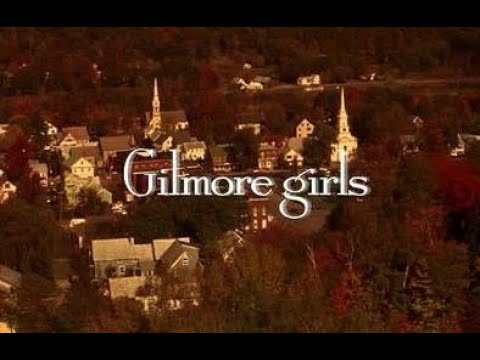
The mother-daughter show that talked faster than anything else on television. Lorelai and Rory Gilmore, a small Connecticut town full of lovable cranks, Luke's coffee, Friday-night dinners — Gilmore Girls premiered on The WB in 2000 as an underdog and became the comfort-watch a whole generation never stopped rewatching.

Bear Grylls gets dropped somewhere terrible, finds the one thing no human should eat, and eats it on camera. Discovery's late-2000s survival hit — equal parts genuine expertise and irresistible showmanship.

Maury Povich opening an envelope while the studio holds its breath, then delivering the line that launched a thousand memes: "You are NOT the father!" Cue the victory dance, the backstage sprint, the audience losing its mind — an entire genre of internet humor was born on this stage.

Adam Savage and Jamie Hyneman, two special-effects veterans and a crash-test dummy named Buster, testing urban legends with real experiments and — whenever remotely possible — explosions. MythBusters was every 2000s science class's reward day, and it convinced a generation that engineering was cooler than anything in the textbook.

A handheld COPS parody that never broke character. The hapless deputies of a fictional Reno Sheriff's Department stumbled through investigations with the deadpan energy of a mockumentary, mixing inspired improvisation with the comfort of a familiar ensemble—short-shorts, bad judgment, and the weird alchemy of characters who felt like actual people. Six seasons of controlled chaos.

Four single women navigate New York nightlife, relationships, and Manolo Blahnik shoes. HBO's June 1998 breakout became the defining show of female friendship and the cosmopolitan—literally.

Basketball played on trampolines, with body checks. For two glorious seasons on TNN-turned-Spike-TV, guys in helmets launched off spring beds and dunked on each other from ten feet in the air — and every kid who saw it wanted a backyard version immediately.
![Video thumbnail — Smallville Official Opening Credits: Seasons 1-10 [1080p]](https://i.ytimg.com/vi/Iuqtz_9JMfc/maxresdefault.jpg)
Ten seasons of Clark Kent before the cape — a teenager learning to hide superpowers in small-town Kansas, one kryptonite freak-of-the-week at a time. It was The WB's biggest series debut ever, and its real long game was watching Clark and Lex Luthor's friendship curdle into destiny.
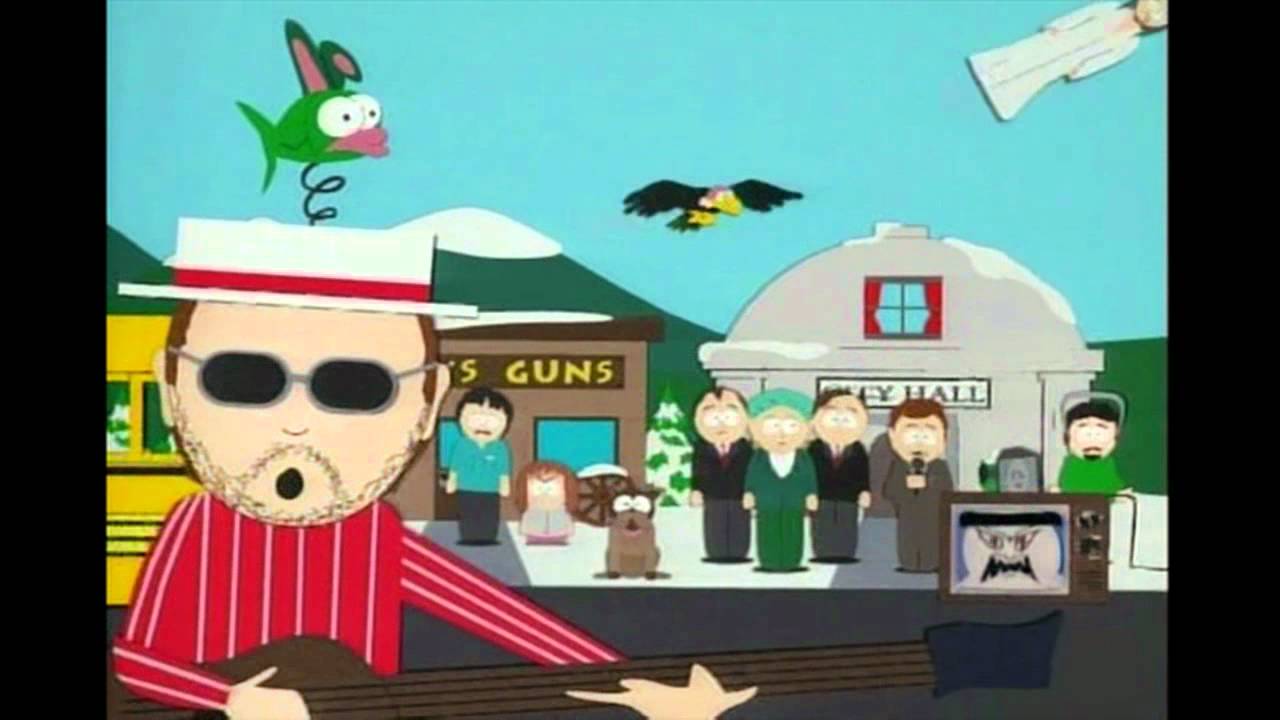
The construction-paper kids from Colorado who never stopped talking. South Park arrived in 1997 as basic cable's biggest shock — then spent the 2000s proving it was television's fastest satire machine, with episodes built in days so it could mock the news while it was still news.

Three contestants, one Howie Schwab, and no realistic chance. ESPN's sports-trivia gauntlet dared fans to out-know the network's famously encyclopedic first statistician — a guy in an untucked jersey who knew every stat that ever mattered. Losing to the Schwab was the expected outcome, and that was exactly the fun.

Tony Soprano walks into a psychiatrist's office with panic attacks—and changed television forever. HBO's landmark 1999 drama paired mob violence with suburban therapy, making prestige TV a thing.