Slouch Socks

The thick, floppy white socks scrunched down in folds around the ankle, worn over leggings and stirrup pants with a pair of Keds. They came out of the 80s aerobics craze and hung on through the mid-90s, on every cheerleader and every girl in a school photo.
A slouch sock is a sock with a heavy upper and no elastic, so instead of standing up straight it collapses into thick folds at the ankle, or can be pulled all the way to the knee. In the United States the style rode in on the 1980s fitness boom, when leg warmers and aerobics tights made bulky ankle layers look athletic, and from around 1984 it crossed over into everyday wear for kids, teenagers and adults alike. The two big names were Wigwam and E.G. Smith, whose thick ribbed socks became the brand to have; department stores like JCPenney sold their own versions in white and a rainbow of pastels.
The look that defines the era is the early-90s one: white slouch socks over black or lime-green leggings, an oversized T-shirt or sweatshirt on top, and white Keds or aerobics sneakers underneath, with the socks scrunched just so. Girls doubled them up in two colors, pink over white, and wore them under babydoll dresses and over opaque tights with rolled or cuffed mom jeans to show them off. Cheer squads wore them with Keds, and boys wore them too, with boat shoes and cross-trainers, jeans cuffed to display the sock. The best pairs had a thin foot and a thick, squared-off ribbed upper, and the pushing-down was a skill: too neat and it looked like a tube sock, too loose and it slid into the shoe.
By the late 90s the slouch was over, replaced by low crew socks and then the no-show ankle sock, and it stayed out of fashion long enough to become a costume. Japan had its own parallel version, the loose socks worn by high-school girls in the 90s and glued to the calf to keep them from sliding, and the American style has drifted back in and out on trend cycles ever since, worn by people who never had to wait for a fresh pair to come out of the dryer.
Similar items
Scrunchies
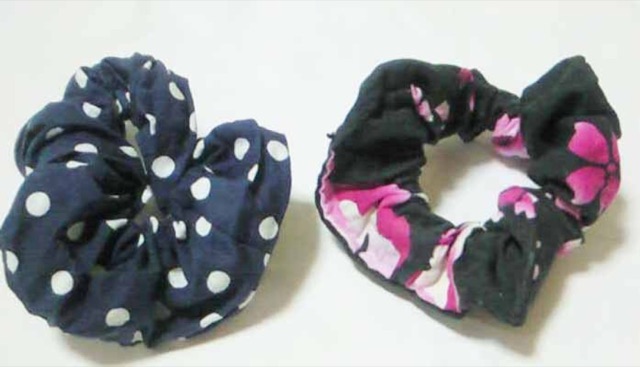
The elastic hair tie wrapped in fabric that came in every color, pattern, and fabric texture imaginable — velvet, neon, holographic, gingham. Patented by Rommy Revson in 1987 and sold as Scünci, scrunchies were the ubiquitous hair staple that defined how an entire generation held up their ponytails and side-swept bangs.
Jelly Shoes
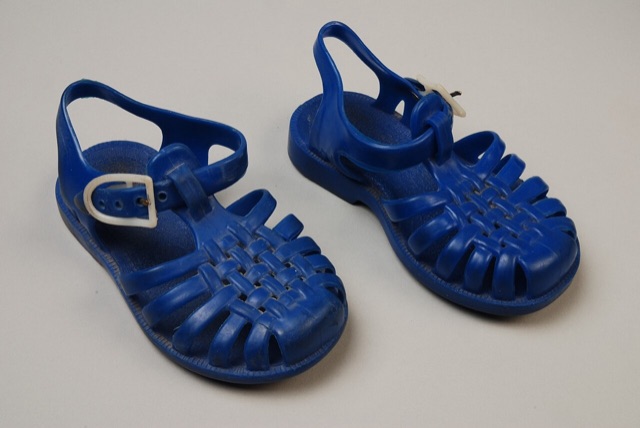
Translucent plastic sandals in candy colors, often with glitter suspended inside like a treat you could wear. Jellies squeaked, pinched, and blistered every summer foot in America — and everybody just kept wearing them, because they were cheap and they sparkled.

L.A. Gear Light-Up Sneakers
Red lights flashing in your heels with every step — L.A. Gear's light-up sneakers were playground royalty in the '90s. Parents couldn't resist the pitch, and kids couldn't stop stomping.

Reebok Pump
The shoe that made you pump yourself up—an inflatable basketball sneaker that arrived at $170 and instantly became a playground legend. Press the orange button on the tongue and air chambers swelled around your ankle; every kid in the shoe store pressed it whether their mom was buying or not.