Sizzler

The family steakhouse where the salad bar became the meal: cheap steak, all-you-can-eat shrimp, the Buffet Court, and hundreds of locations across the West by the early nineties. Then a 1991 corporate promo film full of sailors, cowboys and "Sizzler is the choice of America!" resurfaced online in 2015 and made it immortal.
Del and Helen Johnson opened the first Sizzler Family Steak House in Culver City, California, in 1958, and the chain grew into hundreds of restaurants, most of them west of the Rockies. Its formula in the late seventies and early eighties was a steak dinner with an optional salad bar, meant to feel like a full-service restaurant at a price only a little above fast food; to keep costs down, many locations had their own meat cutters grinding beef and cutting steaks in the back. When Ponderosa and Bonanza crowded in, Sizzler answered with promotions like all-you-can-eat fried shrimp and then expanded the salad bar into a full buffet it called the Buffet Court. Customers started treating the buffet as the whole meal, the chain cut quality elsewhere to compensate, and diners noticed.
That was the state of things in 1991, when Sizzler produced a nearly five-minute promotional film for its annual meeting and franchise sales pitches. It is an anthem: a construction worker, kids playing baseball, cowboys, a sailor with his girl, middle-aged joggers, and dead-eyed diners grinning over shrimp, while a chorus sings "Reaching out across the USA each and every day, get a little freedom in your life. Sizzler gives you choices every day" and lands on "Sizzler is the choice of America!" By one later count the word choice appears a dozen times; the tagline was "Sizzler for the '90s. Exactly what America wants!" Sizzler at the time, an industry analyst told the Washington Post, "had kind of come and gone, and was trying to rebound" against Outback, Chili's and Fuddruckers. A woman named Rachel Redhouse, who appears in it as a little girl in a sailor hat on a scooter, uploaded it to YouTube in September 2012, and in April 2015 it went viral as a patriotic fever dream.
The nineties were unkind. An E. coli outbreak in Washington and Oregon in 1993 was traced to meat that cross-contaminated salad-bar items, a pattern repeated in Milwaukee in 2000, when more than sixty people fell ill and one died and Sizzler closed its remaining Midwestern restaurants. The company filed for Chapter 11 in 1996 to escape leases on unprofitable locations, shutting more than 130 restaurants, and emerged in 1997 with higher prices and better food. A 2002 makeover returned it to steak, seafood and the salad bar. An Australian investment firm bought it in 2005, U.S. management bought back the 178 American restaurants in 2011, the pandemic put it into Chapter 11 again in 2020, and by late 2025 there were 74 Sizzlers left, in six western states and Puerto Rico, still serving the people who remember the song.
Similar items
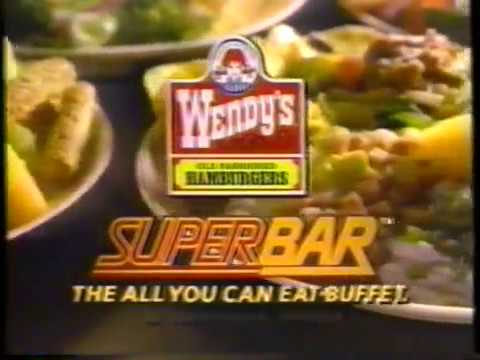
Wendy's SuperBar
Wendy's all-you-can-eat buffet for $2.99: the Garden Spot, the Mexican Fiesta, and Pasta Pasta, three stations of self-serve freedom inside a burger chain. Popular with customers, brutal on the stores that had to keep it stocked — it was gone by 1998.

Sbarro
The enormous rectangular slab of pizza under the heat lamp, sold by the slice from a counter with a guy waving you over. It was the food court's default answer to "what do you want," and the slice was always bigger than the paper plate it came on.
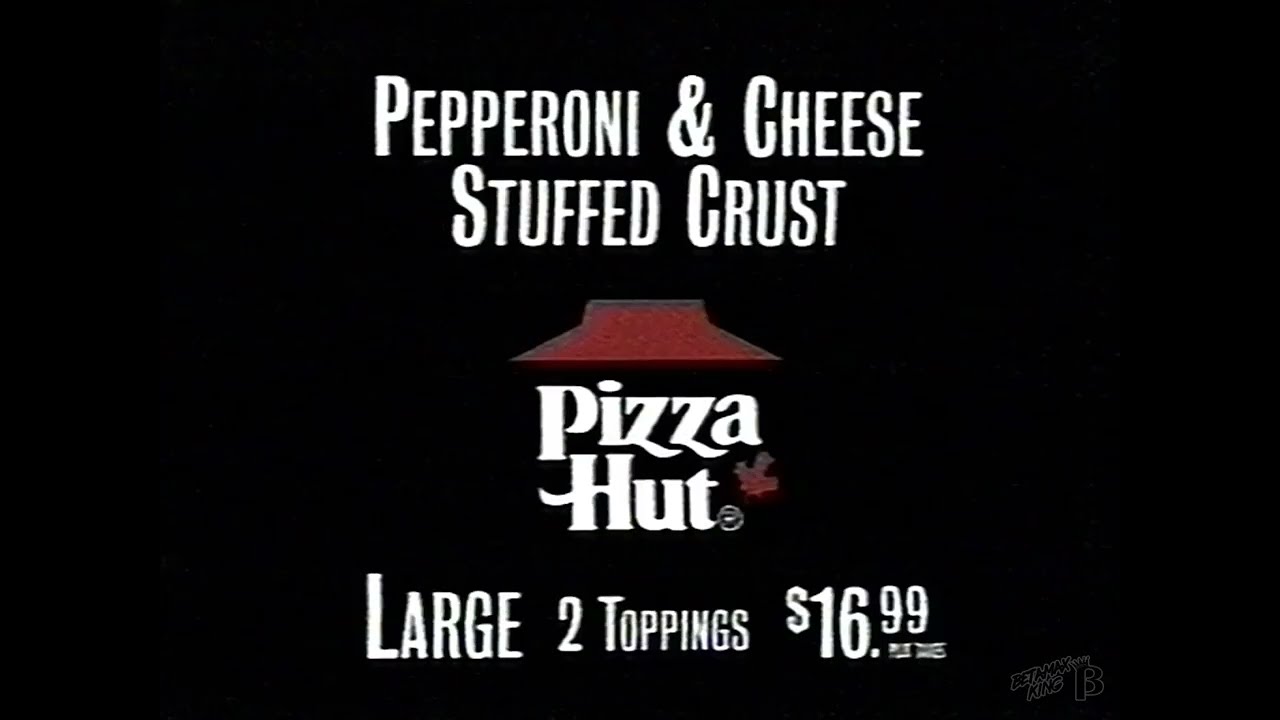
Pizza Hut (Dine-In Era)
The red-roof restaurant where you sat in a booth under Tiffany lamps, ordered a Personal Pan Pizza, and cashed in your Book It! certificate for a free one — Pizza Hut was where childhood occasions happened. The dine-in empire nearly disappeared as the chain pivoted to delivery.
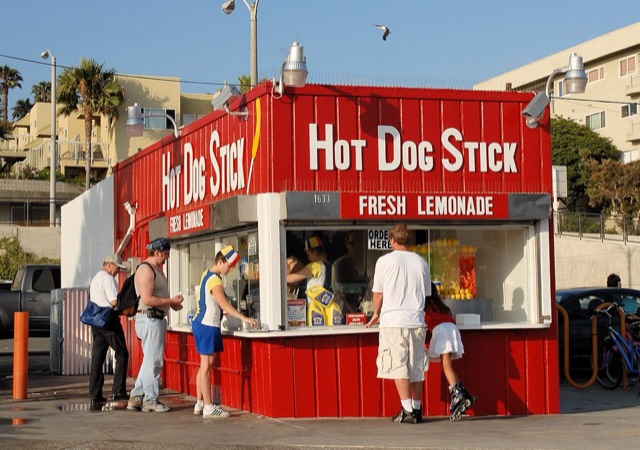
Hot Dog on a Stick
The red, white, blue and yellow striped counter in the mall food court, where teenagers in tall striped hats stomped lemons in a bucket and handed you a corn dog on a stick. It started on Muscle Beach in 1946, but for anyone who grew up in a mall in the 90s it is the food court itself.