Primal Rage

The dinosaur fighting game in every mid-90s pizza-place arcade: seven stop-motion clay monsters worshipped as gods, tiny cavemen you could eat for health, and one finishing move that got it pulled from Best Buy.
Primal Rage came from Atari Games and was released to arcades by Time Warner Interactive in August 1994, in standard and 33-inch deluxe cabinets. Animator Jason Leong had pitched a head-to-head dinosaur fighter at one of the company's annual brainstorming sessions, with the twist that the beasts were gods; someone else had pitched two T. rexes fighting the same day. The setting was "Urth," a post-apocalyptic Earth where a meteor strike had knocked humanity back to the Stone Age and seven creatures had risen from the crust to be worshipped: the ape Blizzard, the raptor Talon, the tyrannosaur Sauron, and four more.
The look was the hook. Model maker Dan Platt built clay figures of each fighter over flexible metal armatures, airbrushed to Leong's drawings, and they were filmed in stop motion, roughly 400 frames per fighter, then turned into sprites. It arrived a year after Mortal Kombat II, and Primal Rage borrowed the gore, the special moves and the finishing moves, but it used four buttons instead of six and had players hold a button and then move the stick, a scheme production coordinator Stephen Riesenberger said was meant to be easier for novices. Human worshippers wandered the arena during fights, and eating them restored health.
It was a major hit, selling more than 1.5 million copies across arcades and home systems, and Atari reportedly made more from the merchandising than from the game. Playmates put out five-inch action figures of the seven gods in 1996, packed with accessories like lava rocks and tiny humans, and there was a comic mini-series and a 1997 novel. Ports landed on almost everything: Genesis, Super NES, Game Boy, Game Gear, 3DO, 32X, Jaguar CD, PlayStation in November 1995 and Saturn in 1996, and Time Warner staged a national tournament at Six Flags Over Texas in October 1995 to promote them.
In 1996 an Arizona mother launched a campaign against the game after her 11-year-old son performed the character Chaos's urination fatality on the Genesis version; Best Buy pulled it from 251 stores, and the publisher pointed out the game was rated T and past its sales peak anyway. A sequel with human avatars was cancelled in development, leaving only two boards, one of them playable at a suburban Chicago arcade since 2014. The arcade original's unusual copy protection defeated perfect emulation for decades, which is part of why the memory stayed tied to the cabinet.
Similar items
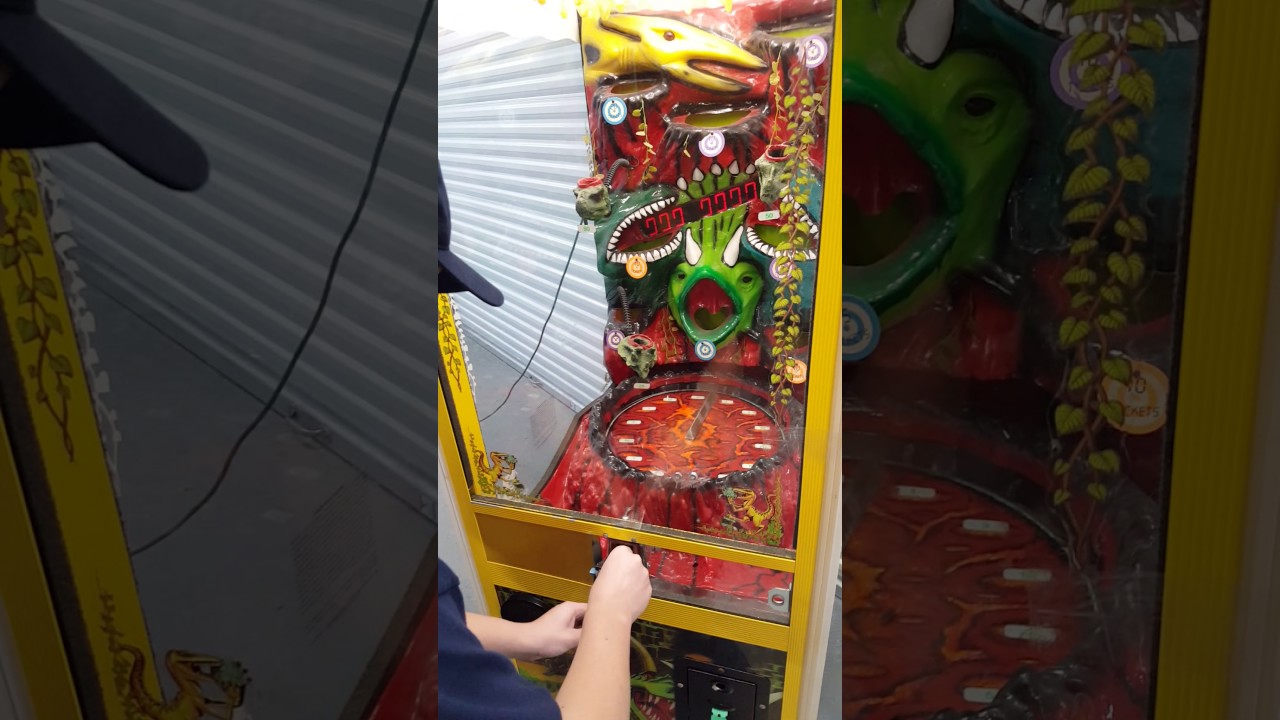
Arcade Redemption Games
Drop in a token, play a game of skill, and win a stream of paper tickets — then trade the crumpled wad at the glass prize counter for cheap plastic junk. Rock 'N Bowl, Skee-Ball, Wheel 'Em In, Dinoscore: the ticket-frenzy floor of every '90s arcade.

Killer Instinct
The loudest cabinet in the arcade. Rare's 1994 fighter had pre-rendered graphics and a double health bar, but what everyone remembers is the announcer roaring "C-C-C-COMBO BREAKER!" — the line a whole generation learned to yell at each other.

Sega Genesis
Sega's 16-bit home console arrived in 1989 and dominated the early 90s with its attitude, speed, and Sonic the Hedgehog. The Genesis ('Mega Drive' everywhere else) promised 'Blast Processing' and delivered games that felt faster and edgier than what Nintendo offered, winning hearts — and quarters — across a generation.
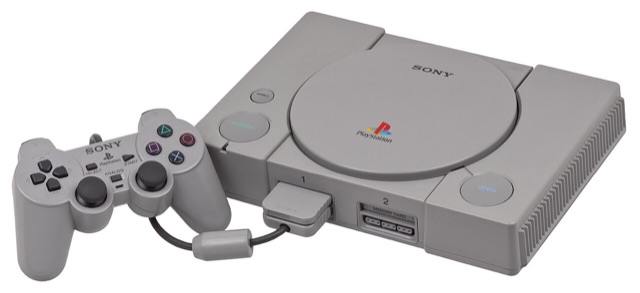
PlayStation
The grey box that took gaming off the cartridge and onto the CD — and took it away from Nintendo and Sega while it was at it. Sony's first console arrived in Japan at the end of 1994 and in America the following September, and it made a generation fluent in memory cards, load screens, and demo discs. It started as a Nintendo project that Nintendo walked away from.