Pin Art
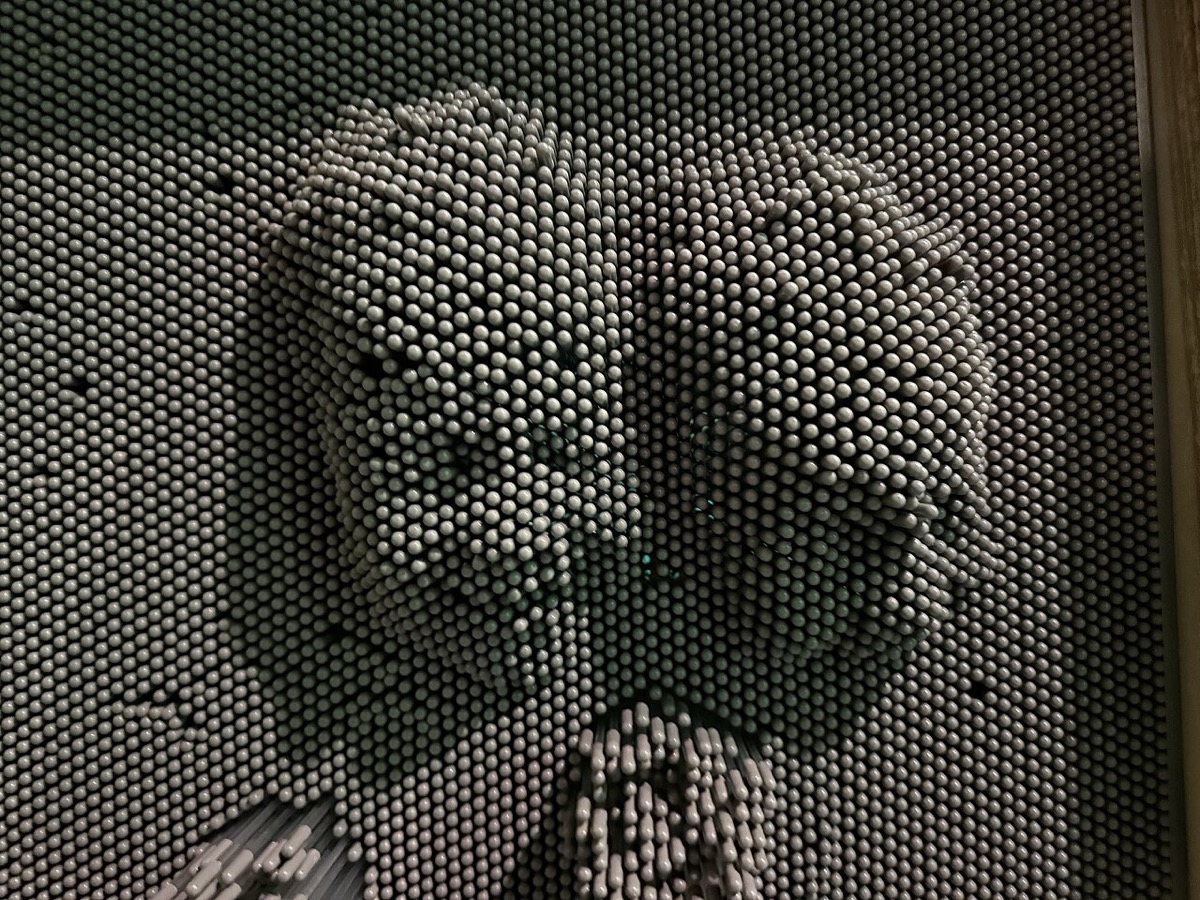
Photo credit: Photo: Famartin, CC BY-SA 4.0, via Wikimedia Commons
The boxed grid of thousands of sliding metal pins — press your hand, or your whole face, into one side and a shiny 3D relief pops out the other. The desk toy that lived on every science-museum gift-shop shelf and dared you not to make an impression of your face.
Pin Art — also sold as Pinpressions, or simply a pinscreen — was created by the American artist Ward Fleming. It grew out of his pin-array work connected to San Francisco's Exploratorium science museum around 1980, and the vertical three-dimensional image screen that became the commercial toy was patented, with its U.S. patent issued in 1987.
The mechanism is beautifully simple: thousands of thin pins sit in a grid, each free to slide independently, held in place only by friction against its neighbors. Push any object against one side — a hand, a fist, a face — and the pins displace to trace its exact contour, holding a crisp 3D relief on the opposite side until you flatten them and start again. The original toys used metal pins, which gave that signature silvery shimmer (and bent if you were too rough); later versions switched to sturdier plastic.
Through the late '80s and '90s it was a staple of museum gift shops, gadget stores like Sharper Image, and novelty-shop shelves everywhere — an "executive" desk toy that was really just an excuse for every kid to squish their face into it. It's often confused with a separate, older device: the 1930s pinscreen used for animation by Alexandre Alexeieff and Claire Parker. That's a different lineage entirely — the desk toy is Ward Fleming's, and it's still sold as a classic science-store novelty today.
Similar items
Plasma Ball
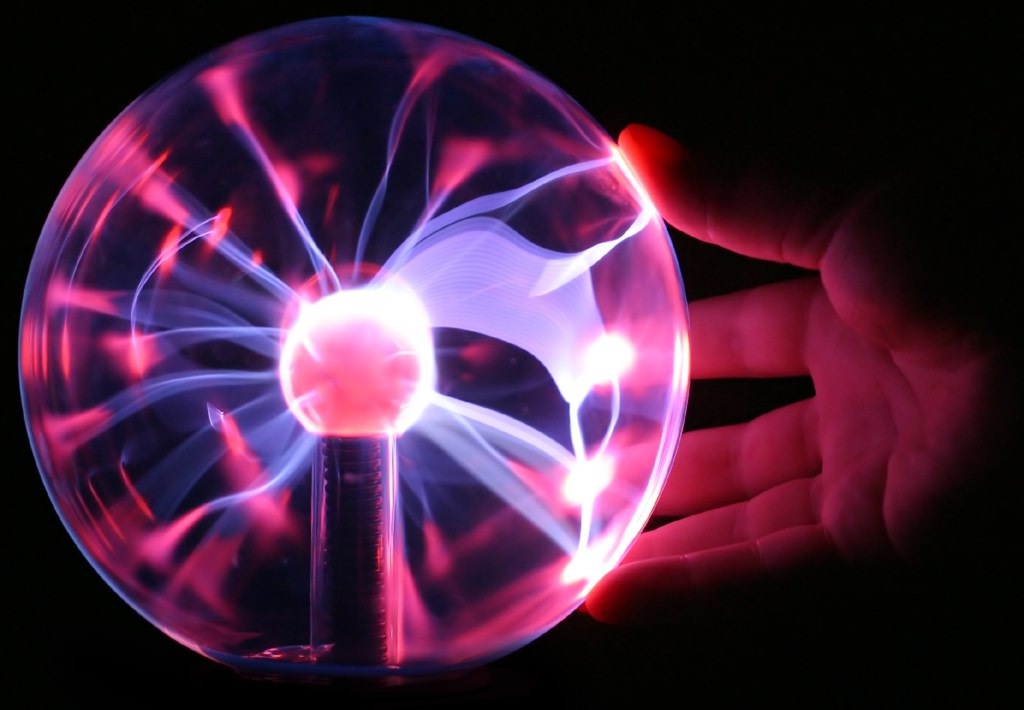
The glass sphere full of purple-pink lightning that reached out to follow your hand across the glass — half science exhibit, half bedroom mood light. A fixture of Spencer's Gifts, museum shops, and every desk that wanted to look a little bit like a mad scientist's.

Sharper Image
The mall store where you'd test-nap in a $400 massage chair while pretending to shop. Sharper Image was a playground of high-end gadgets, gizmos, and dubious contraptions—air purifiers, personal robots, noise machines, and the infamous Ionic Breeze, which looked futuristic but barely worked.

Blurp Balls
Squeeze the grinning monster head and it spat a ball across the room. ERTL's 1991 Blurp Balls were the gross-out toy in the Madballs mold — a squishy creature you loaded through the mouth and fired at your friends.
![Video thumbnail — Groan tube sfx [1 Hour]](https://i.ytimg.com/vi/VxoK96OLUpM/hqdefault.jpg)
Groan Tubes
The neon plastic tube that let out a long, mournful groan every time you tipped it over. A birthday goody-bag and pizza-party staple — flip it end over end and the sound came from a weighted reed sliding down inside.