Muzzy
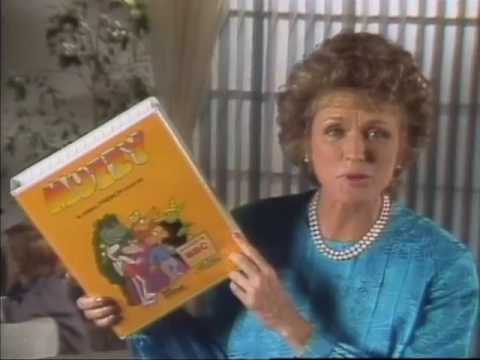
The big furry alien who ate clocks — the mascot of a language course your parents saw advertised on TV. Muzzy came as a set of VHS tapes (and cassettes and workbooks) that promised to teach kids French, Spanish, German, or another language the way they'd learned their first one: by watching a cartoon. Whether it worked or not, that green clock-munching creature is unforgettable.
Muzzy began at the BBC in 1986 as "Muzzy in Gondoland," an animated program built to teach language to children. It was directed by Richard Taylor and set in the storybook kingdom of Gondoland, where the title character — a large, greenish-blue, bear-like extraterrestrial who eats clocks and other metal objects — lands and gets tangled up in a simple palace story of a king, a queen, a princess, and a gardener. A sequel, "Muzzy Comes Back," followed in 1989. The BBC originally created it to teach English as a foreign language, but the course was produced and distributed in a long list of languages — French, Spanish, German, Italian, Russian, and more.
For American families, Muzzy arrived not through schools but through television and the mail. It was marketed hard as a home course — a boxed set of videotapes, audio cassettes, and workbooks — pitched to parents who wanted to give their kids a head start on a foreign language. The idea was immersion by cartoon: kids would absorb vocabulary and phrases by watching Muzzy's adventures the same natural way they'd picked up their native tongue, without drills or grammar lessons. The green alien and the Gondoland cast became the friendly face of that promise on a generation of TV screens.
How much anyone actually learned from Muzzy is up for debate, and the program leaned on charm as much as method. But the mascot did its job: the clock-eating creature, the jingle, and the boxed set on the shelf lodged permanently in the memories of kids who grew up in the '80s, '90s, and 2000s. The course has kept going for decades and was remade in CGI, but the original hand-drawn Muzzy — fuzzy, hungry, and vaguely bewildered — is the one people remember.
Similar items

Pure Moods
It's 11:40 p.m., the TV is glowing, and a whispery voice is listing track names over ocean waves: Enya. Enigma. The X-Files theme. "Call now." The Pure Moods commercial aired so relentlessly that the ad itself became the ambient soundtrack of 90s late-night television.
Miss Cleo
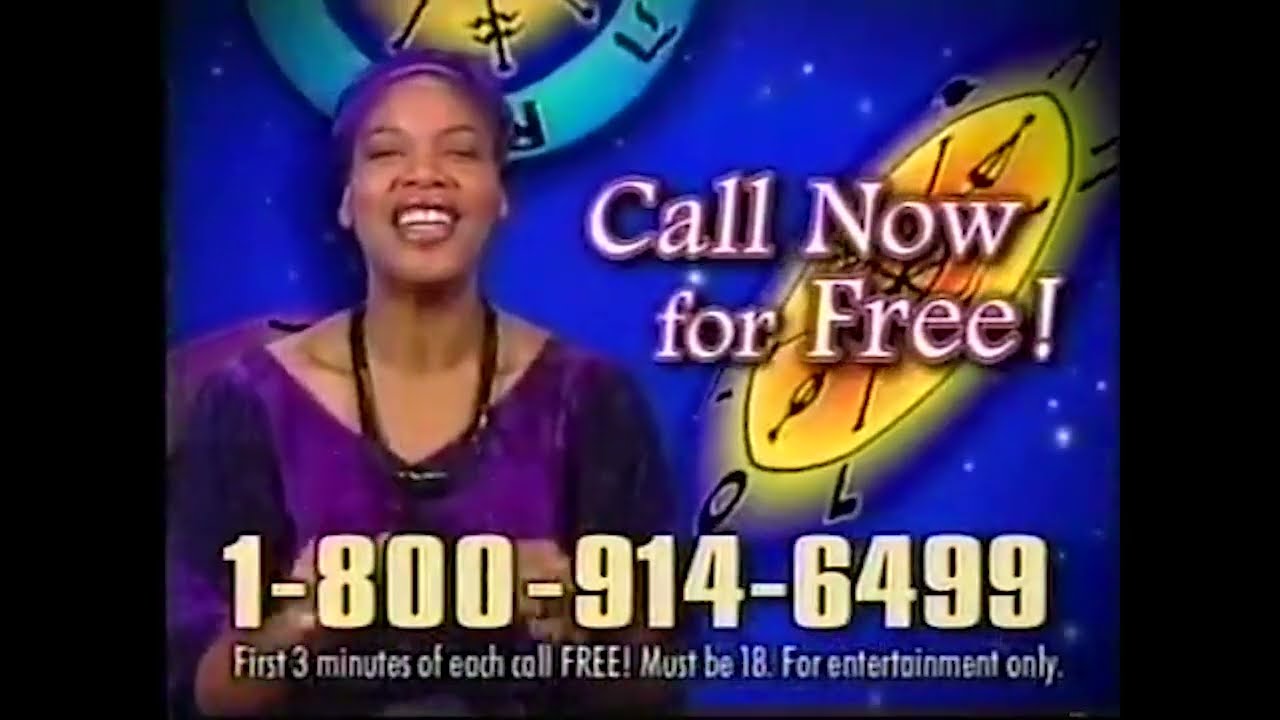
The Jamaican-accented tarot reader who ruled late-night cable — 'Call me now!' — as the face of the Psychic Readers Network. For a few years around the turn of the millennium, Miss Cleo's pay-per-minute readings were an inescapable TV-ad fixture, until the whole operation collapsed under federal scrutiny.

The Oregon Trail
The computer-lab game that taught westward expansion through dysentery and desperation. Every 90s kid named their wagon party after friends, overhunted buffalo, gambled on river crossings, and died of unexpected causes while technically learning American history.

Blockbuster Video
The blue-and-yellow torn-ticket empire where Friday nights meant wandering the new-release wall, hoping the big movie wasn't rented out, and dreading the late fees. At its peak in 2004, Blockbuster dominated home entertainment with 9,094 stores worldwide—until Netflix and streaming dismantled the whole business model.