Murphy Brown

Candice Bergen's hard-charging TV newswoman went through 93 secretaries, and in 1992 a sitcom character ended up in a Vice President's speech. The truckload of potatoes dumped outside Dan Quayle's residence that fall was the show's answer.
Murphy Brown premiered on CBS on November 14, 1988, created by Diane English. Candice Bergen played the title character, a famous investigative journalist and anchor of FYI, a fictional CBS newsmagazine in Washington. The pilot brought her back from the Betty Ford Clinic — over forty, single, sober and sharp-tongued — to a newsroom of stuffy anchor Jim Dial, who called her "Slugger," reporter Frank Fontana, 25-year-old Harvard whiz-kid producer Miles Silverberg and Corky Sherwood, the former Miss America hired to fill in while Murphy was away. A house painter named Eldin, hired to redo her townhouse, stayed for years. Real anchors drifted through: Connie Chung scolded Murphy on camera, and her baby shower was attended by Katie Couric, Joan Lunden and Paula Zahn as themselves.
That baby was the point of collision. In the 1991–92 season Murphy became pregnant by her ex-husband, decided to raise the child alone, and sang "(You Make Me Feel Like) A Natural Woman" after the birth. On May 19, 1992, in a speech about the Los Angeles riots to the Commonwealth Club of California, Vice President Dan Quayle said it "doesn't help matters when prime-time TV has Murphy Brown — a character who supposedly epitomizes today's intelligent, highly paid, professional woman — mocking the importance of fathers, by bearing a child alone, and calling it just another 'lifestyle choice.'" The show answered with its season premiere on September 21, 1992, "You Say Potatoe, I Say Potato," which used footage of the actual speech, built an FYI special around real American families and ended with a truckload of potatoes dumped outside Quayle's residence — a jab at his spelling-bee correction of "potato" that June. It was the most-watched episode in the show's history, and Bergen thanked Quayle when she won the Emmy that year. Quayle eventually got a laugh of his own, naming his favorite show on a local LA station as "Murphy Brown — Not!"
The show won the Emmy for Outstanding Comedy Series in 1990 and 1992 and finished in the Nielsen top ten for four seasons, peaking at No. 3 in 1991–92. Bergen won five Emmys, then asked not to be nominated again. English left after season four, Lily Tomlin replaced Grant Shaud's Miles for the last two years, and the final season was built around Murphy's breast-cancer treatment — an arc credited with a 30 percent rise in women getting mammograms that year, which earned Bergen an American Cancer Society award. The finale on May 18, 1998, had Murphy interviewing God and Edward R. Murrow in a dream, with English in a cameo as a nurse. In 2002 Bergen admitted she had largely agreed with Quayle's speech. A 2018 CBS revival lasted one season.
Similar items
Roseanne
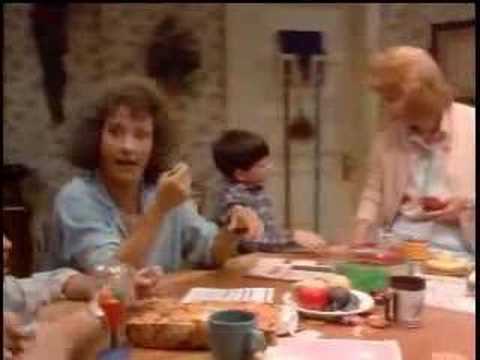
The loudest kitchen table on television. Roseanne Barr and John Goodman as Dan and Roseanne Conner, working double shifts in Lanford, Illinois and trading wisecracks about bills, kids, and each other — the sitcom that made a struggling blue-collar family the biggest thing in prime time.

The Nanny
The flashy girl from Flushing with the unmistakable nasal laugh, hired off the doorstep to raise a stuffy Broadway producer's three kids. Fran Drescher in head-turning leopard print, Niles the butler landing zingers on C.C., and years of will-they-won't-they with Mr. Sheffield.

Seinfeld
"A show about nothing" created by Jerry Seinfeld and Larry David became everything. NBC's quirky hit turned observational humor about minutiae—shirt buttons, parking spots, the mechanics of social obligation—into the decade's most quotable comedy.

Arrested Development
A razor-sharp comedy about a wealthy, deeply dysfunctional real-estate family, canceled after just three seasons on Fox but too clever to fade. Low ratings, massive critical acclaim, and jokes that rewarded rewatching — there was always money in the banana stand. When Netflix revived it, the show's legacy finally caught up to its ambition.