Roseanne
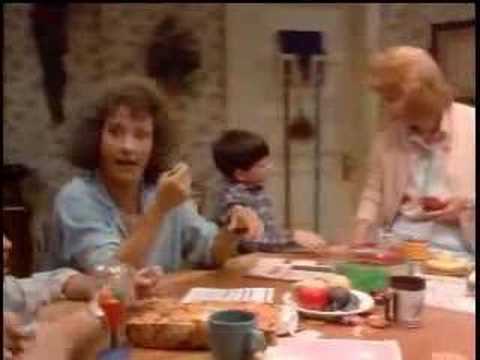
The loudest kitchen table on television. Roseanne Barr and John Goodman as Dan and Roseanne Conner, working double shifts in Lanford, Illinois and trading wisecracks about bills, kids, and each other — the sitcom that made a struggling blue-collar family the biggest thing in prime time.
When Roseanne premiered on ABC on October 18, 1988, most family sitcoms lived in comfortable suburban houses where money never came up. The Conners were the correction: Roseanne and Dan both worked outside the home, the checkbook never quite balanced, and the jokes were delivered over laundry baskets and factory shifts. Critics recognized it as one of the first sitcoms to realistically portray a blue-collar American family with two working parents — and audiences recognized their own living rooms. By its second season, 1989–90, Roseanne was the #1 show in America, edging out The Cosby Show, and it stayed in the Nielsen top five for its first six seasons.
The engine was the cast. Barr's abrasive, deadpan matriarch and Goodman's warm bear of a husband anchored it, with Laurie Metcalf as Roseanne's frazzled sister Jackie, Sara Gilbert as sardonic middle kid Darlene, Lecy Goranson as Becky, and Michael Fishman as D.J. The performances piled up hardware — Metcalf won three straight Emmys from 1992 to 1994, Barr took Outstanding Lead Actress in 1993, and the show earned a Peabody Award in 1992 — even though, famously, the series itself was never nominated for Outstanding Comedy Series.
The original run ended on May 20, 1997, with one of television's strangest finales: after a final season built on the family winning the lottery, the last episode revealed the whole series had been a story written by Roseanne Conner herself — and that in "real" life, Dan had died of his season-eight heart attack and the jackpot never existed. A 2018 revival opened to huge ratings but was cancelled within months after Barr posted a racist tweet; the rest of the cast carried on without her in the spinoff The Conners. The show 90s kids remember, though, is the original: the cackling laugh over the closing credits, and a family that fought about money and still felt like the richest one on TV.
Similar items

Married... with Children
Fox's first primetime series and television's proudest anti-family sitcom: Al Bundy the hard-luck shoe salesman, Peggy, Kelly, Bud, the couch, and Sinatra singing "Love and Marriage" over it all. A 1989 boycott meant to kill it instead made it huge — and after 11 seasons it vanished without a finale.
Home Improvement
Tim Allen's 'Tool Man' ruled the suburban garage with more power and less wisdom than any homeowner should wield. Home Improvement was a blue-collar sitcom about mishaps, masculinity, and the perpetual mystery behind Wilson's always-hidden fence.

Seinfeld
"A show about nothing" created by Jerry Seinfeld and Larry David became everything. NBC's quirky hit turned observational humor about minutiae—shirt buttons, parking spots, the mechanics of social obligation—into the decade's most quotable comedy.

The Nanny
The flashy girl from Flushing with the unmistakable nasal laugh, hired off the doorstep to raise a stuffy Broadway producer's three kids. Fran Drescher in head-turning leopard print, Niles the butler landing zingers on C.C., and years of will-they-won't-they with Mr. Sheffield.