Magic: The Gathering — Ice Age

The frostbitten 1995 Magic: The Gathering expansion — snow-covered lands, the punishing "cumulative upkeep" mechanic, and 383 cards of an ice-locked world. It was the first Magic expansion you could play with no other product, and it launched the game's first named block.
Released in June 1995, Ice Age was a landmark in Magic's early history. Designed by Skaff Elias, Jim Lin, Dave Pettey, and Chris Page, it was the game's eleventh set and sixth expansion — but more importantly, it was the first "stand-alone" expansion — the first expansion that could be played entirely on its own, without mixing in cards from Alpha, Beta, or the core sets. It was also the first expansion to reprint all five basic lands, and at 383 cards it dwarfed earlier expansions.
The set leaned hard into its frozen theme. It introduced snow-covered lands, a variant of the basic lands that certain cards cared about, and the notorious "cumulative upkeep" mechanic — a tax that grew heavier every turn you kept a permanent in play, forcing agonizing decisions about when to let something go. It also brought "cantrips" (small spells that replaced themselves by drawing a card) and the first single-colored legendary creatures. The art carried the mood of an ice-locked apocalypse.
Ice Age was the inaugural set of the Ice Age block, later joined by Alliances (1996) and, more than a decade later, Coldsnap (2006). Among its cards was Necropotence, a black enchantment that let you trade life for cards — a card that went on to define one of the most dominant and feared competitive decks of the mid-'90s. For a generation of players, Ice Age's snowy borders are the look of Magic's first great expansion era.
Similar items

Magic: The Gathering
Richard Garfield's 1993 creation, Magic: The Gathering invented the collectible card game genre and became a phenomenon that consumed thousands of hours and dollars from basement dwellers and tournament pros alike. Casting spells, summoning creatures, and crushing opponents with clever deck construction, Magic made trading-card games respectable — and obsessive.

Magic: The Gathering — Revised Edition
The third Magic core set — the white-bordered 1994 reprint, famous for its washed-out, pale printing. With around 500 million cards produced, Revised was the set that finally put Magic on shelves everywhere, and the one most early players actually opened.
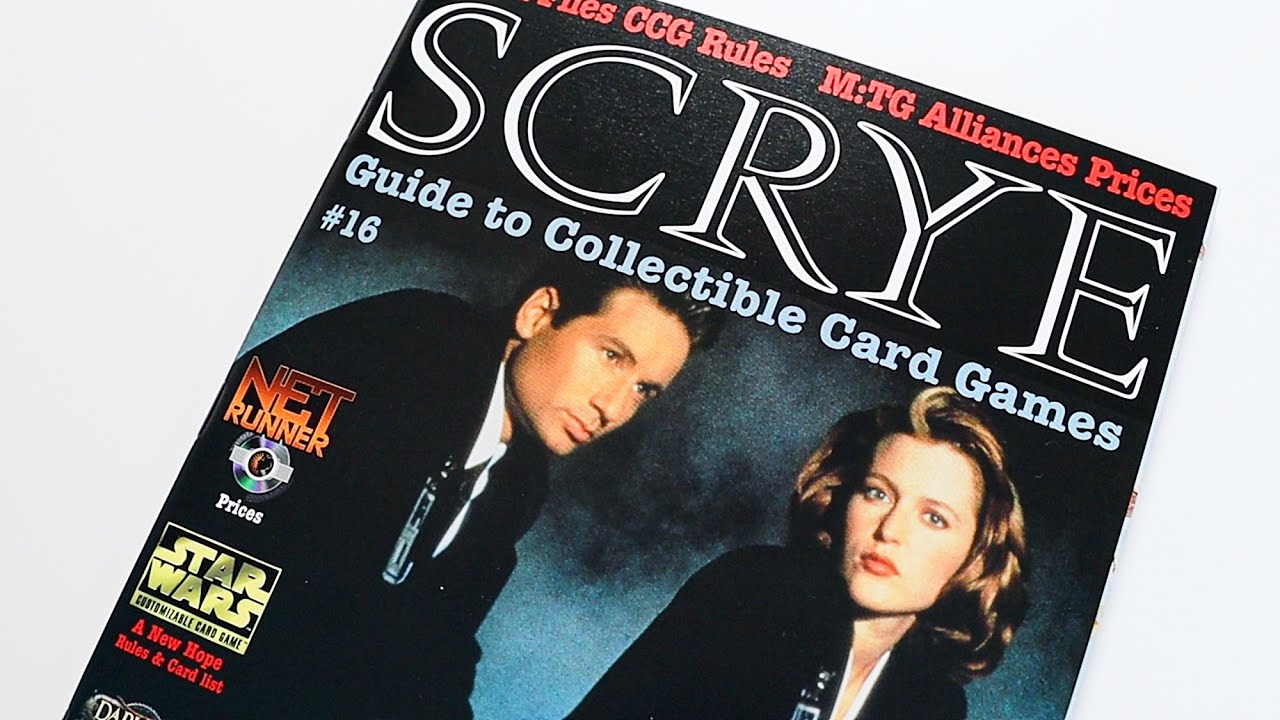
Scrye Magazine
The magazine that told you what your Magic cards were actually worth. Scrye was the price-guide bible of the trading-card-game boom — the fold-out list of secondary-market values you scoured to see if your rare was your ticket to riches.

Pokémon Jungle
The second English Pokémon TCG expansion, released June 1999 — the jungle-themed follow-up to Base Set. Home to the Eeveelution holos (Vaporeon, Jolteon, Flareon) plus Wigglytuff and Scyther, and famous for its no-set-symbol error cards from the unlimited print run.