Metal Gear Solid

Konami's PlayStation blockbuster told you NOT to shoot: Solid Snake crept through Shadow Moses ducking sightlines, hiding under a cardboard box, and answering the codec mid-mission. Hideo Kojima's stealth epic made video games feel like movies — and made one boss read your memory card out loud.
Hideo Kojima had made two Metal Gear stealth games for the Japanese MSX2 computer, but they were little known in the West — which is why the third one wasn't called Metal Gear 3. Conceived during development of Policenauts and started on the 3DO in 1995 before moving to PlayStation, Metal Gear Solid was built by a team of about 20, with Kojima obsessing over authenticity: real weapons demonstrations, set pieces designed individually, and environments mocked up out of Lego blocks to test camera angles. Artist Yoji Shinkawa designed the cast, physically modeling Solid Snake on Jean-Claude Van Damme and Christopher Walken.
Released on PlayStation in Japan on September 3, 1998, and in North America that October 20, the game dropped players into Shadow Moses, a remote nuclear weapons facility seized by the rogue unit FOXHOUND under Liquid Snake. The sneaking — radar, sightlines, guards to evade rather than kill — was half the revolution; the other half was presentation. Cutscenes ran in-engine, voice acting (with David Hayter's gravel as Snake) carried the whole story, and the fourth wall was gleefully broken: psychic boss Psycho Mantis read the player's memory card aloud and made the controller buzz across the floor — and the canonical counter was physically plugging your controller into port two so he couldn't 'read your mind.'
The acclaim was unanimous, and the sales — over seven million copies despite modest expectations — established Metal Gear as a flagship franchise. Widely regarded as a founding father of the stealth genre and the game that popularized cinematic style in the medium, it spawned the expanded Integral edition in 1999, the PS2 sequel Sons of Liberty in 2001, a GameCube remake in 2004, and a spot on virtually every greatest-games list since.
Similar items
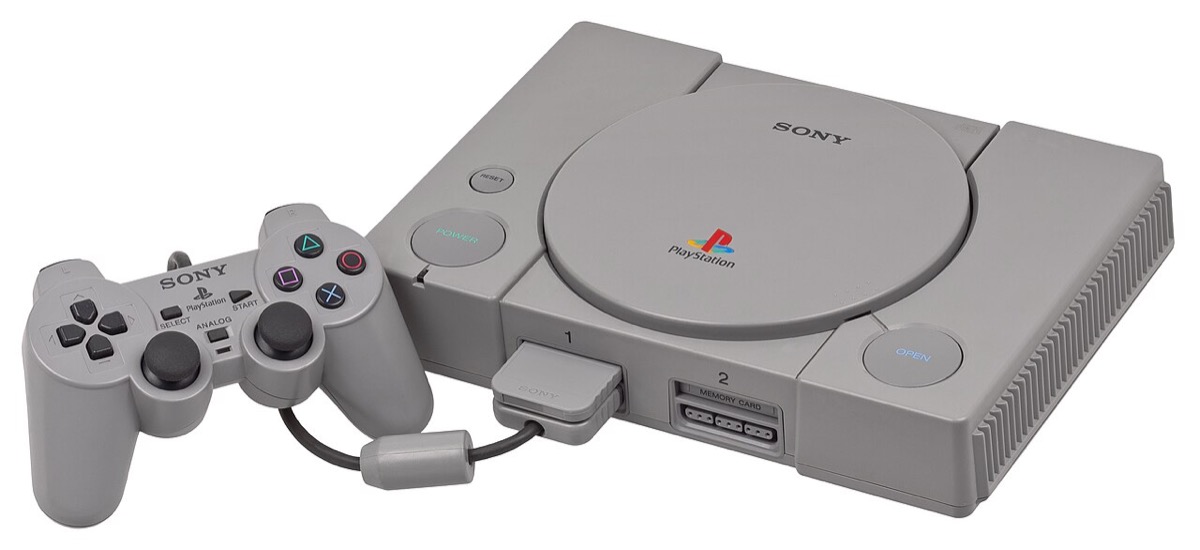
PlayStation
The grey box that took gaming off the cartridge and onto the CD — and took it away from Nintendo and Sega while it was at it. Sony's first console arrived in Japan at the end of 1994 and in America the following September, and it made a generation fluent in memory cards, load screens, and demo discs. It started as a Nintendo project that Nintendo walked away from.

GoldenEye 007
The Nintendo 64 first-person shooter that redefined console multiplayer: four players split-screen deathmatch, and an iron-clad house rule banning Oddjob because his short stature slipped under auto-aim. Rare's landmark game sold over 8 million copies and owned living rooms until Halo arrived.
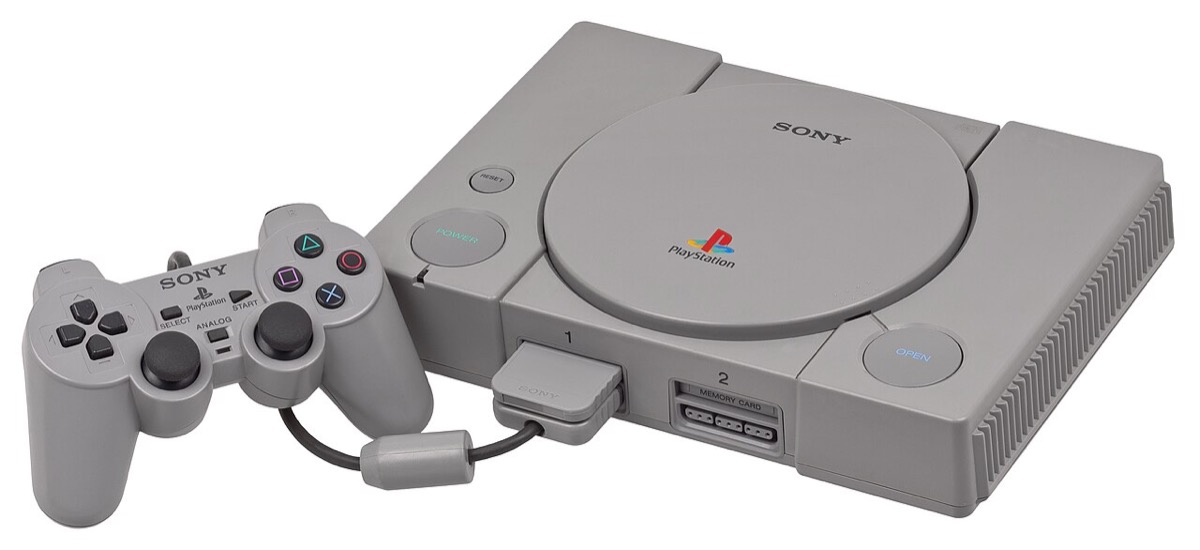
Resident Evil
The PlayStation shocker that dropped you inside a zombie-infested mansion with too few bullets and a save ribbon to ration. It didn't just scare a generation — it named the whole survival-horror genre.

Tom Clancy's Splinter Cell
Sam Fisher creeping through the shadows in his three-eyed night-vision goggles, snuffing out lights and slipping past guards. The Xbox stealth game that made hiding in the dark thrilling.