Judge Dredd
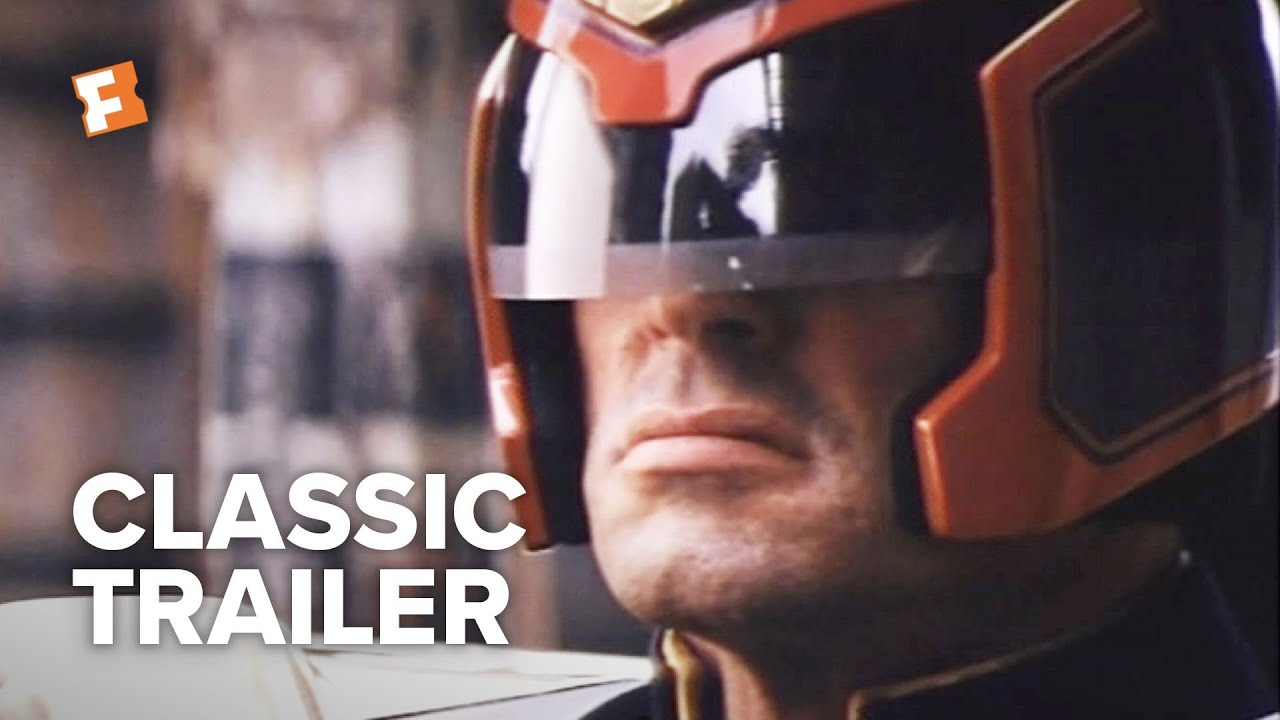
Stallone in a Versace-designed uniform, a real hydraulic robot, and the streets of Mega-City One built at Shepperton. The 1995 adaptation of the 2000 AD comic took Dredd's helmet off, set its director against its star, and flopped in America; the sets and robots found their admirers later.
Danny Cannon came to Judge Dredd as a fan: he had a mock-up poster for a Dredd film printed in 2000 AD, in Prog 534 in August 1987, and after his debut The Young Americans he turned down Die Hard with a Vengeance to make what he called "the Ben-Hur of comic book movies." Arnold Schwarzenegger was considered first; Sylvester Stallone got the badge without knowing the character. Joe Pesci passed on the sidekick Fergie, which went to Rob Schneider. Armand Assante played Rico, Dredd's cloned half-brother, Diane Lane played Judge Hershey and Max von Sydow the Chief Justice, and Stallone and Assante wore blue contact lenses to match von Sydow's eyes.
The production, shot at Shepperton Studios in England with location work in Iceland on a budget of $85 to $90 million, is the part nobody disputes. Stallone personally chose Gianni Versace to design the uniforms. The ABC Warrior robot was a real hydraulic animatronic run by five operators, built after Cannon refused to use a man in a suit, and the Statue of Liberty's face was built in Lenox, Massachusetts. Chris Cunningham, credited as Chris Halls, did Mean Machine Angel's prosthetics.
Then the fights. Dredd takes his helmet off, which he never does in the comics, and fans objected. The film was recut and resubmitted to the MPAA five times to get from NC-17 down to an R, and Stallone and the studio then tried to trim it toward PG-13 with more comedy; Cannon said the final cut differed completely from the script and swore off working with major stars. Released June 30, 1995, it took $34.7 million domestically and $113.5 million worldwide. Rotten Tomatoes has it at 22 percent, and Stallone was a Razzie nominee for Worst Actor. Creator John Wagner's verdict in 2012: "the story had nothing to do with Judge Dredd, and Judge Dredd wasn't really Judge Dredd."
Stallone has called it "a real missed opportunity" and, in 2010, his "biggest mistake." The 2012 reboot Dredd kept Karl Urban's helmet on and earned the cult, though a 2017 CNET retrospective argued the 1995 film "absolutely nailed the look of Mega City One." The Cure's "Dredd Song" runs under the end credits.
Similar items

Demolition Man
A cop and a criminal wake up in 2032, and the future has become a joke they don't get. Demolition Man arrived in October 1993 as a Stallone action vehicle disguised as satire — a gleaming, pacified future where everything fun is outlawed. But the real legacy is Taco Bell and three seashells. And it helped launch Sandra Bullock.

Stargate
Roland Emmerich and Dean Devlin's 1994 hit: a metal ring dug up at Giza in 1928 turns out to be a wormhole, and Kurt Russell's grieving colonel and James Spader's dismissed Egyptologist walk through it to a desert planet where a body-snatching alien is worshipped as Ra. Critics shrugged, it opened to an October record, and it spawned three live-action television series.
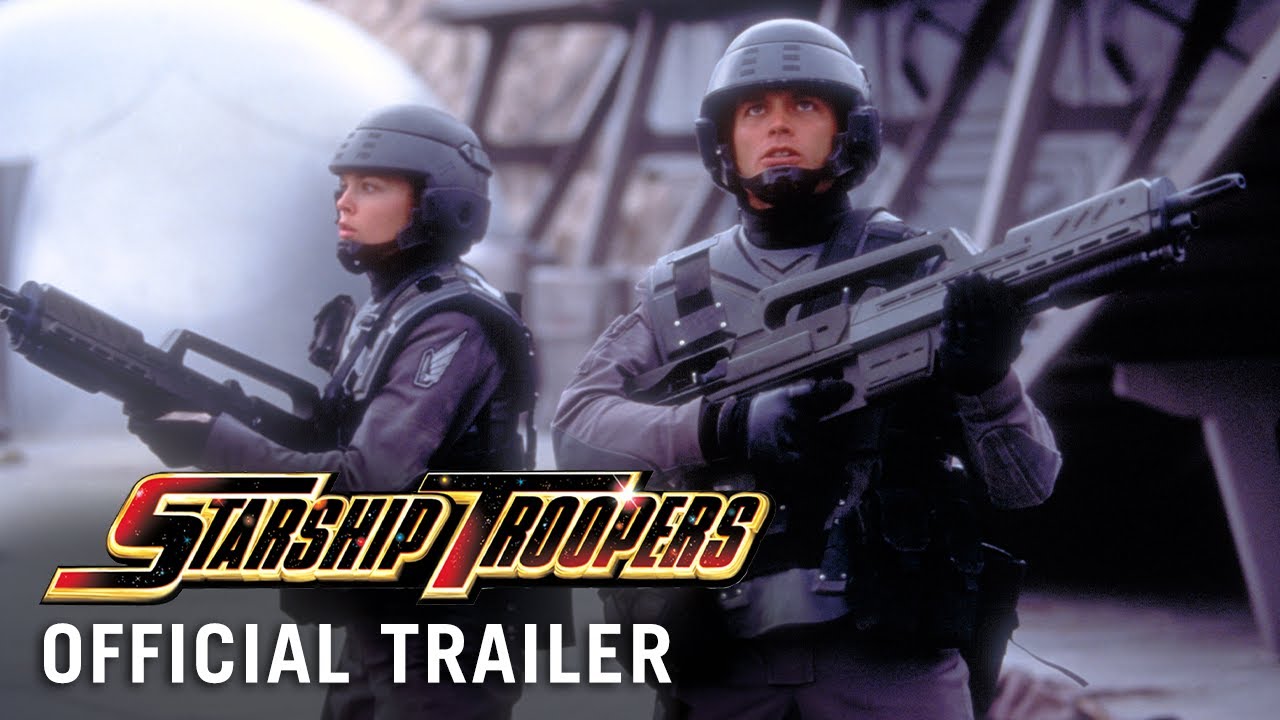
Starship Troopers
Paul Verhoeven's militaristic sci-fi satire based on Robert A. Heinlein's 1959 novel, starring Casper Van Dien as a young soldier fighting giant bugs in a fascistic future society. A visual spectacle that was widely misunderstood upon release but has become a celebrated cult classic.

Independence Day
The White House explodes. Will Smith punches an alien and delivers the one-liner. Jeff Goldblum uploads a virus from a PowerBook. The movie that made July 4th weekend a permanent blockbuster holiday — and the biggest film of 1996 by a mile.