Jibba Jabber

A pot-bellied doll with a long rubbery neck, a shock of colored hair and a groan-tube inside: grab it by the throat, shake, and it made a wobbling, gargling, strangled noise. Ertl's Jibba Jabber was sold as a stress reliever in 1994, until child-abuse experts pointed out what the box was actually teaching.
Jibba Jabber came from Ertl, the Dyersville, Iowa, company better known for die-cast farm toys and the Bumble Ball. It was a soft doll with a round body, a long neck and a wild mop of hair in red, blue, pink or green; Ms. Jibba Jabber had a pink body and nose, the male version a black body and a yellow nose. The whole toy was the sound: a groan-tube mechanism in the wobbling head that produced a choking, strangling gargle when you shook it. Ertl pitched it partly as an adult stress reliever and a gag gift for corporate executives, and the box put it plainly: "Try me! Grab my neck and shake my head."
That line was the problem. After a Milwaukee physician criticized the toy in August 1994, and child-abuse prevention groups objected that a doll you play with by shaking its head was modeling exactly the thing that kills infants, Ertl halted shipments, stickered over the phrase on boxes already made, and redesigned the packaging. David Davenport, Ertl's senior vice president of marketing, told the Deseret News that December: "It wasn't until we launched the product that I even knew about the heinous crime of shaken infant syndrome." The company worked with the National Committee to Prevent Child Abuse on warning labels, and the U.S. Advisory Board on Child Abuse and Neglect later noted that Ertl added a package insert explaining that while Jibba Jabber is for fun, shaking a baby is a lethal form of child abuse, with a list of seven positive ways to respond to a child instead. Some advocates wanted the doll pulled entirely; a year later USA Today was still writing it up as an executive gift.
So the Jibba Jabber survived as a 90s oddity: a genuinely funny noise, with a commercial in the afternoon-cartoon ad breaks, and a toy that shipped with a child-abuse pamphlet. It has since become a thrift-store curiosity, usually with the pamphlet long gone.
Similar items

Bumble Ball
A hard plastic ball covered in soft rubber knobs with a motor inside. Push the switch and it buzzed, shivered and skittered off across the kitchen floor in no direction at all, while the dog lost its mind. Ertl's Bumble Ball was the mid-90s toy that did nothing and was impossible to put down.
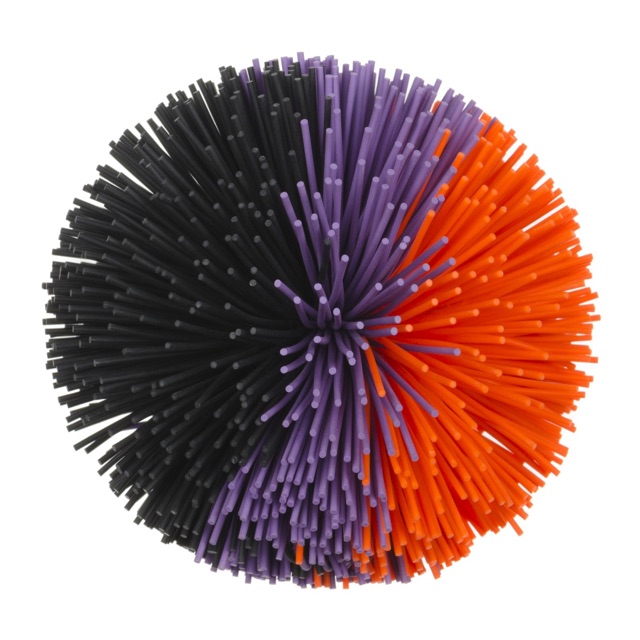
Koosh Ball
A fuzzy sphere of rubber spines that looked like a sea urchin and felt impossible to throw wrong — you couldn't miss a catch, no matter how bad your hand-eye coordination. Invented by engineer Scott Stillinger and launched by OddzOn Products in the late 1980s, the Koosh Ball was the perfect fidget toy before fidget toys were a category.
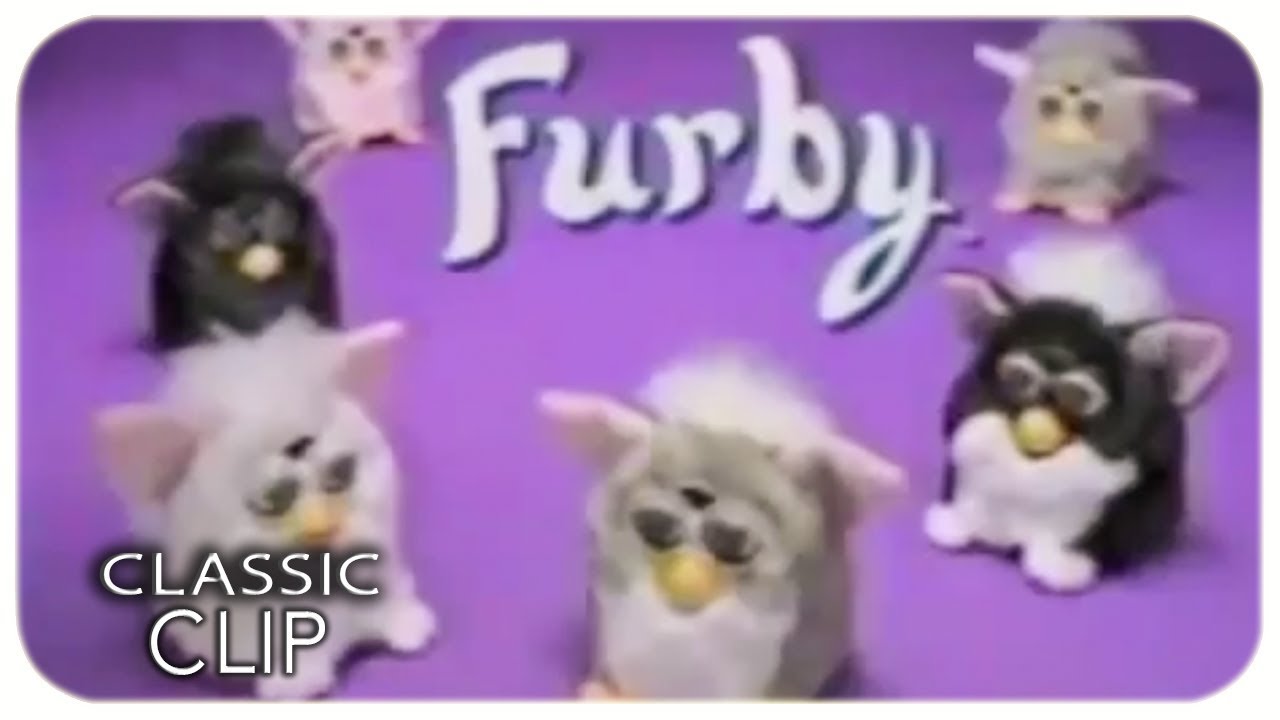
Furby
A furry owl-hamster gremlin that spoke gibberish and slowly "learned" English, making it feel genuinely alive. Tiger Electronics' Furby became the holiday craze of 1998—resale prices hit $100, and the NSA banned it from its offices out of sheer paranoia.

Stretch Armstrong
A gel-filled rubber superhero who stretched to grotesque lengths and slowly oozed back to shape — a sensory toy for kids who liked to push things to their limit. The 1990s revival of a 1976 classic, Stretch Armstrong became a staple of toy boxes and a messy, satisfying favorite.