Jenga

A wobbling tower of 54 wooden blocks, each one slightly different from the last, and the unspoken rule that pulling the wrong one brings everything down. Jenga is the family game that ends in triumph or catastrophe with a single touch — no dice, no luck, just wood, tension, and somebody's shaky hands.
In the early 1970s, British game designer Leslie Scott's family played a game using children's wooden building blocks bought from a sawmill in Takoradi, Ghana. It was simple and hypnotic: stack, pull, stack again, hold your breath. Scott later formalized the idea, named it from "kujenga" — Swahili for "to build" — trademarked the name, and launched Jenga at the London Toy Fair in January 1983.
The design is what makes it work: 54 wooden blocks stacked into an 18-story tower, with each block carrying small variations in its dimensions so that no two feel quite alike. That's why towers lean when you don't expect it, why some blocks slide free and others bind, and why your heart pounds when you commit to the one that might break everything. The game traveled fast: Robert Grebler acquired the North American rights in 1985, worldwide rights passed to Pokonobe Associates with a license to Irwin Toy, and in 1987 Hasbro's Milton Bradley picked it up and put it in every American toy aisle — and from there into the family-game-night rotation of the 1990s.
By 2019, according to brand owner Pokonobe Associates, more than 80 million Jenga games — over 4.3 billion blocks — had been sold worldwide, and in 2020 the game was inducted into the National Toy Hall of Fame. But the real measure of Jenga is the scene it produced in countless living rooms: the leaning tower, the held breath, the slow-motion reach — and the crash, and the shriek, and somebody yelling that it was absolutely not their fault.
Similar items

Connect Four
The upright blue grid, the clack of checkers dropping down the slots, and the gasp when someone spots a diagonal you didn't. Connect Four was the fastest fight you could pick at a kitchen table — and losing meant watching your opponent yank the release bar and rain your defeat onto the floor.
Don't Break the Ice
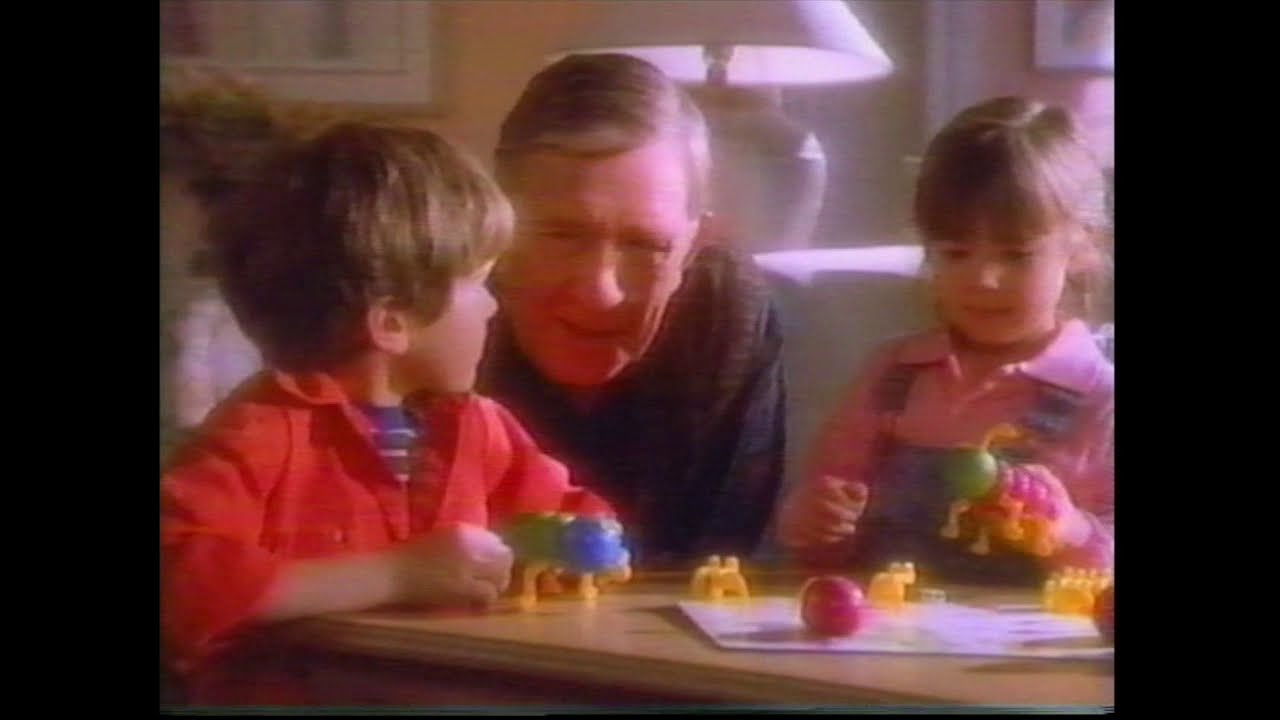
A grid of plastic ice blocks, a tiny mallet in your fist, and one figure standing on thin ice. Tap out a block, hold your breath, pass the hammer. Whoever sends him through the ice loses — and everyone screams either way.

Crocodile Dentist
A children's suspense game where players take turns pressing down a plastic crocodile's teeth, never knowing which one is the hidden trigger that makes the crocodile's jaw snap shut. First published by Milton Bradley in 1990, it delivered pure tension and jump-scare entertainment, with a travel version following its popularity.
Hungry Hungry Hippos
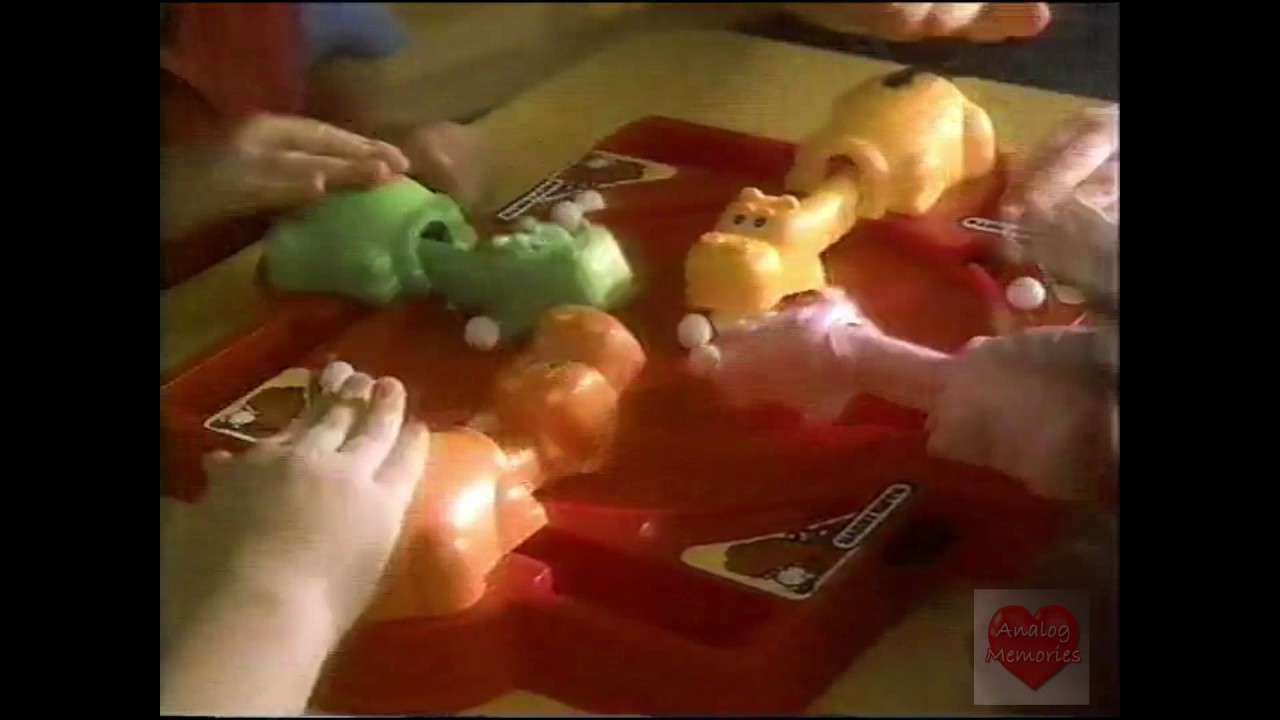
Four plastic hippos, a pile of marbles, zero strategy — just lever-slamming chaos and the loudest thirty seconds in the toy closet. Milton Bradley's 1978 classic was every 90s kid's first taste of pure competitive frenzy.