Gravitron

The flying-saucer ride at every county fair and church carnival: you leaned back against a padded panel, the drum spun up to 24 rpm with the lights strobing and the music blasting, and centrifugal force pinned you to the wall while your panel slid up and your feet left the floor. It went by Starship, Alien Abduction and a dozen other names, and it earned its reputation as the ride you did not eat before.
The Gravitron came out of Wisdom Industries, the family-owned Colorado ride-maker founded in 1969 by Jerry Wisdom, which credits Jerry and his son Victor with developing it. It was a modification of an older ride, the Rotor, and the first one ever built appeared in 1983 at Morey's Piers on the Wildwood, New Jersey boardwalk. Victor Wisdom and two co-inventors filed the design patent for the "amusement ride structure" that December, and it was granted in 1986. By then the ride was on its way to becoming a fixture of fairs and carnivals in many countries.
The mechanics are the whole appeal. The ride is completely enclosed, and 48 padded panels line the inside wall, angled back so riders lean into them. A three-phase motor brings the drum to its top speed of 24 rpm in under 20 seconds, at which point riders feel about three times the force of gravity, the panels slide upward and everyone is held to the wall with their feet off the floor. Because the riders move rather than the floor, the design eliminated a flaw in the Rotor, where feet could get wedged between the moving floor and the wall. The operator sits in the center running the lights and the music; older units wore a lit sign reading "THRILLER," and some carry closed-circuit cameras so the line outside can watch. The entire ride packs onto a single trailer, goes up in under six hours and comes down in three, which is exactly why it turned up in every traveling carnival.
For kids of the 90s it was the ride you dared each other onto and the one you came off green. The queasy reputation is part of the memory, and so is the confusion over the name: the same machine toured as Starship 2000 or 3000, Alien Abduction, Area 51, Devil's Hole, Exodus, Flight to Mars, UFO and more, and Wisdom's own site today calls it the Gravitron, the Starship and Alien Abduction, with a capacity of 45 riders and a throughput of 1,000 riders an hour. Alton Towers in England ran one from 1990 to 1992.
The ride has a safety record to go with the reputation. On August 20, 1991 a Gravitron at the Missouri State Fair spun itself apart and injured seven children, and the resulting lawsuit against the operator and Wisdom led to modifications and stricter standards; in April 2004 a panel came off one at the Dade County Youth Fair in Miami and three riders were thrown out. It is still touring, still spinning at 24 rpm, and still the fair's best argument against a second funnel cake.
Similar items

Roller-Rink Birthday Parties
Brown rental skates with orange wheels, a wristband, a slice of sheet pizza under fluorescent light, and two hours of wobbling to the radio under a mirror ball. The roller-rink birthday party was the default good time of American childhood — limbo stick and couples skate included.
Dippin' Dots
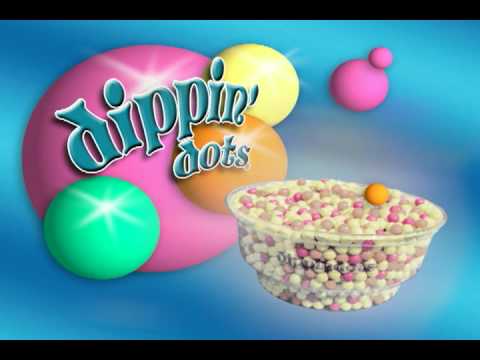
Beaded "ice cream of the future" invented in 1988 by microbiologist Curt Jones, who flash-froze ice cream mix in liquid nitrogen into tiny spheres. Served in a cup and eaten with a spoon, Dippin' Dots became a quintessential 1990s amusement park and mall treat — a novelty that felt futuristic and tasted like the 90s.

Hair Wraps
A tight spiral of colored thread wound down a few strands of hair, made at a sleepover or bought at a beach-town stand. We couldn't find who started it, but by 1998 Klutz had published a whole how-to kit for it.
Rollerblading
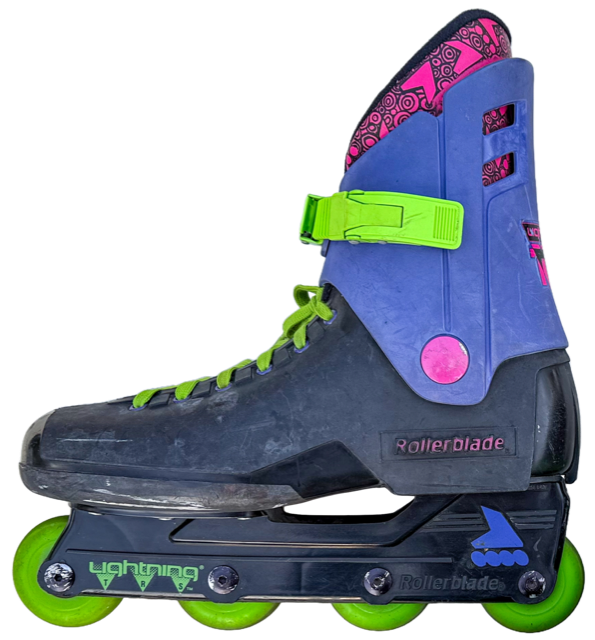
Knee pads, wrist guards, a helmet your mom insisted on, and a driveway full of wobble: for one long decade, America put its shoes on wheels. Rollerblading was the '90s outdoor craze — a brand name that swallowed an entire sport.