Desperate Housewives
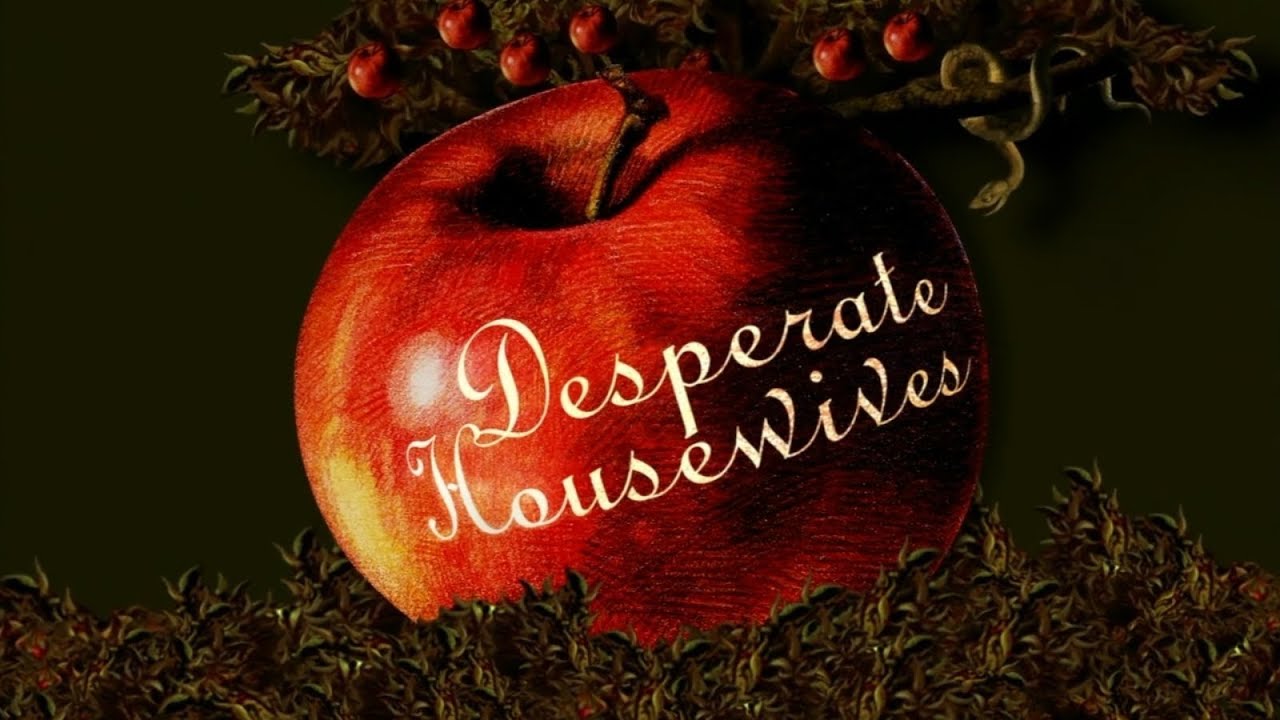
Wisteria Lane looked perfect — the lawns, the casseroles, the cul-de-sac waves — and every bit of it was a cover story. Narrated by a neighbor who takes her own life in the show's first minutes, ABC's suburban satire-soap made Sunday night appointment television again and turned four housewives into the biggest stars on TV.
Marc Cherry's series premiered on ABC on October 3, 2004, and announced its tone immediately: Mary Alice Young (Brenda Strong), a picture-perfect housewife, narrates the show from beyond the grave after her suicide in the opening minutes, and spends eight seasons wryly reporting on the secrets of her surviving neighbors. Those neighbors — Teri Hatcher's klutzy single mom Susan, Felicity Huffman's frazzled ex-executive Lynette, Marcia Cross's Martha-Stewart-perfect Bree, and Eva Longoria's bored trophy wife Gabrielle — lived on Wisteria Lane in the fictional town of Fairview, where every manicured hedge hid a body, an affair, or both.
It was an instant phenomenon. The premiere drew 21.3 million viewers, the first season averaged about 23.7 million a week — the fourth-most-watched show of 2004–05 — and the season finale hit 30.62 million. Arriving the same fall as Lost, it suddenly gave ABC two sensations at once. The show won the Golden Globe for Best Television Series — Musical or Comedy in 2005 and 2006, Hatcher took the 2005 Golden Globe for Best Actress, and even Danny Elfman's needling harpsichord theme won a Primetime Emmy in 2005.
The frenzy couldn't hold forever. Season one's 23.7 million average proved to be the summit; viewership slid steadily from season three onward, down to about 10.6 million — thirty-seventh place — by the final year. The show signed off on May 13, 2012, after eight seasons and 180 episodes — long after the water-cooler era had moved on, but the template it perfected, the sunny suburb rotten under the sod, never really left television.
Similar items

Lost
The ABC serial drama that turned network TV into a mystery box for six seasons. When Oceanic Flight 815 crashed on a mysterious island, survivors discovered that their new home held impossible secrets—a smoke monster, a hidden hatch, a shadowy group called "the Others"—and a mythology so complex that fans spent years theorizing about every detail.

The O.C.
The show that made indie rock cool, gave us Chrismukkah, and turned Newport Beach into the center of the universe. Josh Schwartz's The O.C. launched a thousand emo haircuts and a meme that won't die.

American Idol
Fox's juggernaut singing competition that made appointment television relevant again. Premiering June 11, 2002, American Idol invited America to vote for the next big pop star—and for most of the 2000s, you couldn't escape it. Kelly Clarkson's season-one victory launched her career and countless memes about Simon Cowell's withering critiques.

Twin Peaks
In April 1990, a logging town in the Pacific Northwest became the mystery the whole country was trying to solve. An FBI agent, a damn fine cup of coffee, and one question — "Who killed Laura Palmer?" Twin Peaks proved network television could be genuinely strange, elegantly cinematic, and popular all at once — at least until the answer came, and the spell broke.