Creepy Crawlers

The oven where kids baked their own rubbery bugs and threw them at siblings. ToyMax's Creepy Crawlers used a lightbulb-powered mold oven — safe enough for the 90s, still hot enough to feel dangerous — and the smell of baking Plasti-Goop became one of the decade's most specific sense-memories.
The lineage starts with Mattel's original Thingmaker (1964): die-cast metal bug molds filled with liquid "Plasti-Goop" and heated to roughly 390°F on an open hot-plate oven. Educators praised its creativity; burn-wary regulators disagreed, and new Consumer Product Safety Commission rules in 1973 doomed heat-based toys. A safer 1978 "Thingmaker II" sold poorly, and the concept lay dormant for over a decade.
ToyMax revived it as Creepy Crawlers in 1992 with a key innovation: the "Magic Maker" oven, powered by a simple lightbulb, with a heat-triggered door that stayed closed until the mold cooled — safe enough for 90s parents while keeping the visceral thrill. Kids poured the goop, baked rubbery bugs, and flung them at siblings; a two-season, 23-episode animated series followed in the mid-90s. Releases grew sporadic by the late 90s, but the warmth of the oven and the chemical smell of fresh Plasti-Goop remain permanently filed in a generation's sense-memory.
Similar items
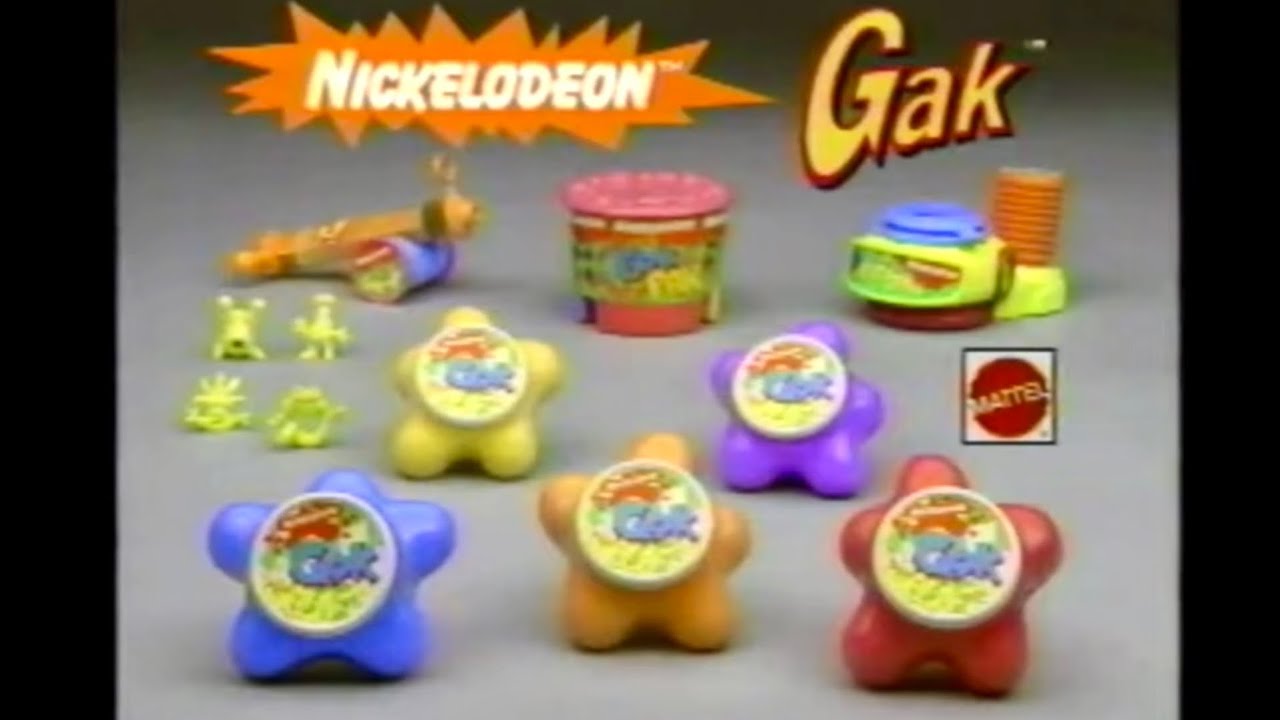
Nickelodeon Gak
Mattel's stretchy, squishy neon compound that made a loud fart noise when you squished it back into its star-shaped container. Named after what the Double Dare crew called the show's on-set slime messes, Gak's genius was the noise—which was the entire point for most kids.

Blurp Balls
Squeeze the grinning monster head and it spat a ball across the room. ERTL's 1991 Blurp Balls were the gross-out toy in the Madballs mold — a squishy creature you loaded through the mouth and fired at your friends.

The Incredible Crash Dummies
Tyco's action figures were engineered for destruction: press one button on the torso and the head and arms sprang off, press the other and the legs flew. They were born from the famous Vince & Larry crash-test-dummy PSAs — and the tie-in backfired so badly that TV networks pulled the safety spots rather than cross-promote a toy.