Axe Body Spray

One part deodorant, three parts marketing, applied in quantities visible from space. Axe hit American shelves in 2002 and turned every middle-school locker room into a chemical event — while its ads promised that one spray would summon stampedes of women.
Unilever launched Axe in France in 1983, and trademark conflicts meant much of the English-speaking world knew it as Lynx — the name it still carries in the UK, Ireland, Australia, and New Zealand. The American invasion came later: Axe was introduced in the U.S. in 2002, and the skinny black can almost immediately became standard-issue equipment for teenage boys.
The advertising did the heavy lifting. From the 1990s onward, Axe and Lynx ads sold a single premise — spray it on, and women lose control — a formula that critics called out for years even as it built the brand. The apex was 2006's "Billions," the Clio-winning spot in which hordes of bikini-clad women stampede out of the jungle and across a beach toward one average, freshly sprayed guy. By the final quarter of 2006, Axe had climbed to a 17.8% share of its category in the U.S.
The lived reality was less cinematic: a seventh grader with a fresh can does not ration. The post-gym-class fog, the pre-dance shower of spray in the hallway, the sting of walking into a cloud of it — that smell is one of the most instantly recognizable sense-memories the 2000s left behind, the punchline of a thousand jokes about middle-school boys.
Axe never went away — the cans are still on shelves, and the brand has long since retooled its advertising away from the babe-magnet formula — but the fog itself belongs to the 2000s, hanging somewhere over every school gym in America.
Similar items
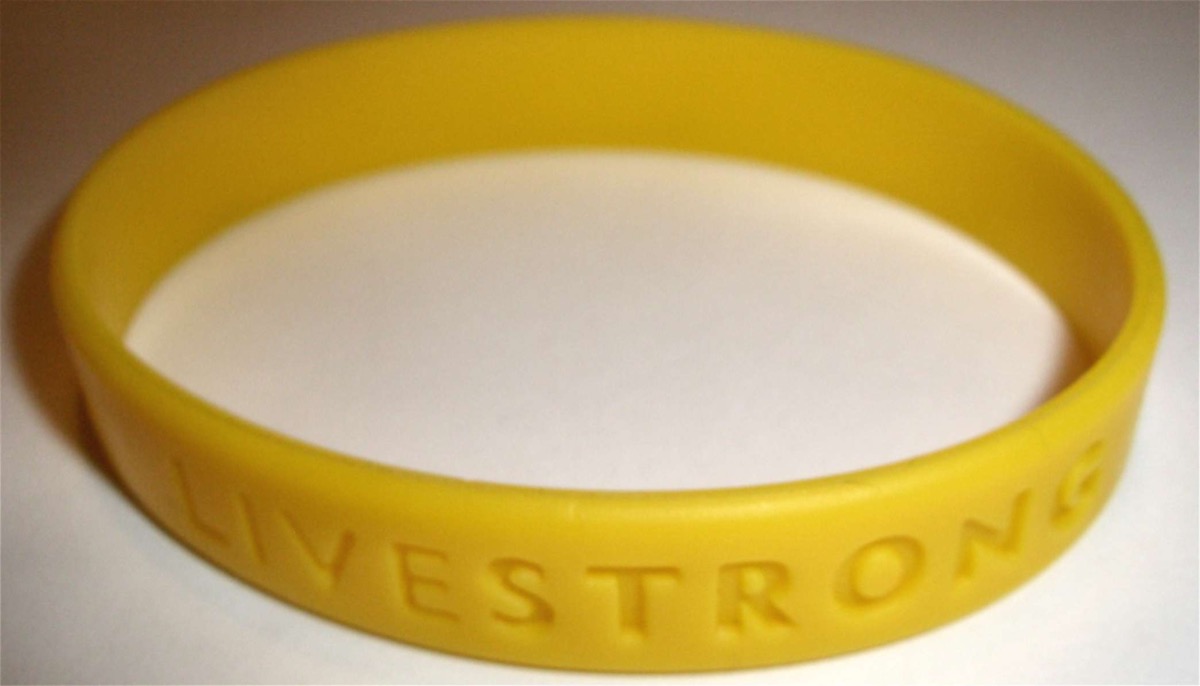
Livestrong Bands
The yellow silicone gel wristband launched in 2004 by the Lance Armstrong Foundation with Nike, sold for $1 to support people affected by cancer. Tens of millions sold, and it ignited the entire cause-awareness rubber-bracelet craze—soon every color stood for a different charity, and everyone stacked them on their wrists like a visible moral portfolio.
GEICO Cavemen
"So easy a caveman can do it" — and the sophisticated, deeply offended cavemen who kept overhearing it. The insurance ads that became a cultural in-joke, then flew too close to the sun as an actual ABC sitcom.

Budweiser "Whassup?!"
Friends on the phone, watching the game, having a Bud — tongues out, "Whassaaaap!" Budweiser's campaign turned a real short film about real friends into the catchphrase that ate the year 2000, when every phone call, hallway, and sitcom in America did the bit.
Budweiser Frogs
Three frogs on a swamp log, croaking one syllable each: "Bud." "Weis." "Er." That was the whole ad — and the entire country spent 1995 doing the impression. It didn't matter that most of the people quoting it weren't old enough to buy the product. That, it turned out, was the problem.