Aladdin's Castle & Tilt

The two names over the mall's darkest storefront: Aladdin's Castle, Bally's chain of carpeted, token-fed game rooms, and Tilt, its Texas-born rival. Between them they put an arcade in hundreds of American malls, and a generation traded quarters for tokens under their signs.
Aladdin's Castle started in 1969, when Jules Millman opened a game room at the Dixie Square Mall in Harvey, Illinois, under a company called American Amusements. Bally, the pinball giant, bought it in April 1974, merged it with its own Carousel Time arcades and put the Aladdin's Castle name on all of them. Growth was fast: 50 locations by the end of 1974, 75 a year later, 221 in 41 states by 1980 and roughly 450 by 1982 once subsidiaries were counted.
Tilt came out of Texas. Craig Singer opened the first Tilt game room at the Six Flags Mall in 1972, and his company, Nickels and Dimes Incorporated of Carrollton, Texas, grew it to roughly 200 locations from Hawaii to New York, plus three in Australia. For kids of the '80s and '90s the two brands were interchangeable in the best way: a dim room at the end of the food court, a token machine by the door, and rows of cabinets.
The video game crash sent Aladdin's Castle into a sharp decline, and Bally sold its interest in 1989 to get out of arcades entirely. Namco bought the chain in 1993 and folded it into what became Namco Cybertainment, which by January 1998 ran 370 mall locations and filed for Chapter 11 protection that month, blaming falling mall traffic while planning to close fewer than 50 stores. The Aladdin's Castle name lingered on a shrinking number of storefronts; the last one, at the Quincy Town Center in Quincy, Illinois, outlasted the brand into the 2020s before being renamed under new operators. Tilt held on longer under its own name, then shifted to the larger Tilt Studio family-entertainment format: as of 2026 there were 16 Tilt Studios and only four of the legacy Tilt arcades left.
Similar items
Arcade Redemption Games
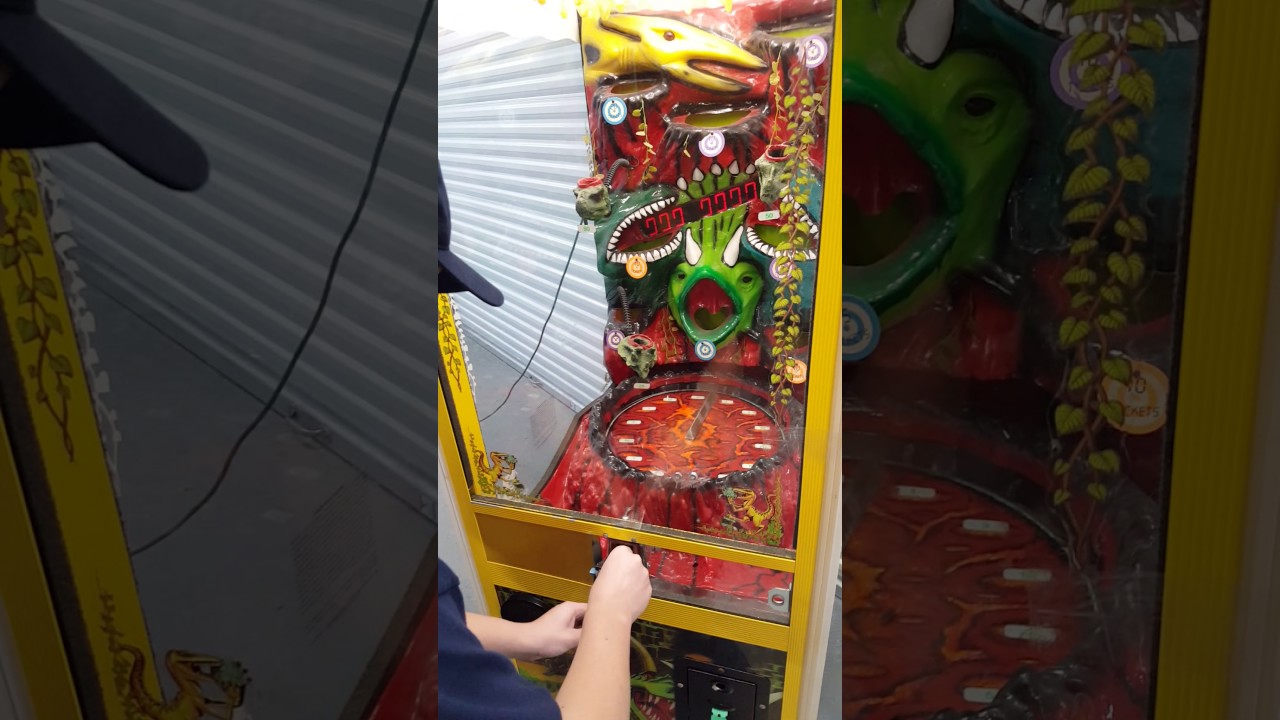
Drop in a token, play a game of skill, and win a stream of paper tickets — then trade the crumpled wad at the glass prize counter for cheap plastic junk. Rock 'N Bowl, Skee-Ball, Wheel 'Em In, Dinoscore: the ticket-frenzy floor of every '90s arcade.

Mall Madness
The electronic board game that let you live out the ultimate '90s fantasy: a shopping spree at the mall. A battery-powered voice called out sales — "Attention shoppers, there's a sale in the..." — while 2 to 4 players raced around a two-story plastic mall to buy everything on their list first.

Teenage Mutant Ninja Turtles Arcade
Konami's 1989 beat-em-up starred four turtles, infinite pizza, and quarter-guzzling boss fights. Teenage Mutant Ninja Turtles Arcade was a four-player coin-op sensation: pick a turtle, bash foot soldiers, work through a story ripped straight from the cartoon. The 1990 NES port added new levels and Pizza Hut advertisements, securing its place in gaming legend.

The Simpsons Arcade
Konami's 1991 four-player brawler let you play as Homer, Marge, Bart, or Lisa on a mission to rescue Maggie. The Simpsons Arcade captured the early cartoon's charmingly off-model animation style, placing you in Springfield with familiar locations and gag-filled bashing. Ported to home computers (Commodore 64 and MS-DOS) back in 1991, it later returned to modern consoles via a digital re-release in 2012.