The Adventures of Tintin

The boy reporter and his dog Snowy stepped off the comic-book page and into a faithfully animated series that arrived on HBO in 1991. For many American kids, this was their first Tintin — and it stuck.
Tintin was born in 1929 when Belgian artist Hergé began publishing his comic-strip adventures in Le Petit Vingtième, the children's supplement of a Belgian newspaper. The boy reporter and his loyal dog Snowy became a phenomenon across Europe, spawning decades of albums and cultural devotion — yet American audiences remained largely unaware.
That changed in 1991, when a co-production between French studio Ellipse and Canada's Nelvana brought 39 half-hour episodes to life across three seasons. The adaptation was remarkable for its faithfulness to Hergé's work: compositions were lifted directly from the comic panels, and the show captured both the adventure and the humor of albums like The Secret of the Unicorn, Tintin in Tibet, The Calculus Affair, and Destination Moon. For viewers accustomed to looser American cartoon adaptations, that level of respect for the source material was almost startling.
HBO launched the series in November 1991, and it traveled well: Nickelodeon picked up reruns, Cartoon Network broadcast it in 1996, and HBO Family carried it deep into the 2000s. Captain Haddock's blistering oaths, Professor Calculus's mishaps, and the bumbling detectives Thomson and Thompson became familiar to a generation of American children who had never seen Hergé's albums. For those kids the series was the gateway — the discovery that decades of comic adventures were waiting beyond the screen came later.
Similar items

Babar
The elephant king told his own childhood stories in this gentle, storybook-paced animated series that arrived on HBO in 1989. A quieter corner of the cartoon dial — orchestral, unhurried, and deeply comforting.
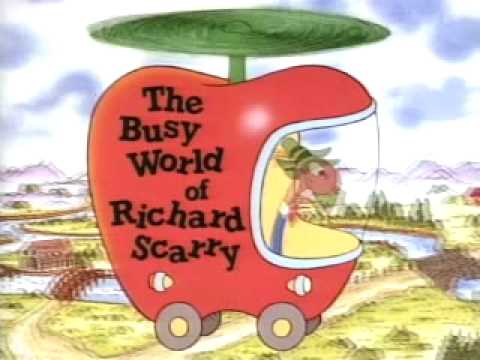
The Busy World of Richard Scarry
Richard Scarry's Busytown came to life in 1994, turning the picture-book world where everything was labeled and nothing was rushed into gentle television. Huckle Cat and Lowly Worm taught a generation of preschoolers how the everyday world actually worked.

Where's Waldo?
Find the man in the red-striped shirt hiding in impossibly crowded scenes — a simple concept that became a full-blown craze when American kids discovered Where's Waldo? in the early 1990s. It swept schools, Halloween parties, and bookstore displays.

Danny Phantom
A 14-year-old turns half-ghost in an accident with his parents' ghost portal, gets an alter ego, and starts protecting his town — all while his own ghost-hunting parents think he's the enemy. The theme song is one millennials still recite word for word.