The Swan Princess

Odette, Derek, the sorcerer Rothbart, and "Far Longer than Forever." The 1994 princess movie that wasn't Disney, from a director Disney had fired, opened the same week The Lion King came back to theaters and died. Then it sold two and a half million tapes and spawned eleven sequels.
Richard Rich had directed The Fox and the Hound and The Black Cauldron at Disney and was set to co-direct Oliver & Company when the studio's new animation chief, Peter Schneider, fired him. He formed Rich Animation Studios with about 26 mostly ex-Disney staff and paid the bills making animated Book of Mormon videos for Jared F. Brown's Living Scriptures. Watching Don Bluth's films and Disney's early-'90s revival, Rich decided to adapt the German folk-tale version of Swan Lake. The script went through twelve drafts in two years and no Hollywood studio would buy it, so Brown folded the studio into a new holding company, Nest Entertainment, and they made it themselves: hand-painted cels, most of them painted at Hanho Heung-Up in Seoul, 275 artists, more than four years of work.
The story pushes Odette and Derek together from childhood until, grown up, Derek cannot name anything he loves about her except her beauty and she walks out, after which the sorcerer Rothbart, transformed into the Great Animal, steals her away to a lake where she is a swan by day and a woman only by moonlight. Jack Palance voiced Rothbart, John Cleese the French frog Jean-Bob, Steven Wright the turtle Speed, with Sandy Duncan also in the cast. Lex de Azevedo and lyricist David Zippel wrote the songs; the ballad "Far Longer than Forever," sung by Liz Callaway and Howard McGillin in the film and by Regina Belle and Jeffrey Osborne over the credits, got a Golden Globe nomination, though the New York Times noted its melody echoes the first five notes of "Beauty and the Beast."
New Line released it on November 18, 1994. In September, Disney had pulled The Lion King from theaters at $267 million and announced a Thanksgiving re-release, and it came back the same month The Swan Princess opened; Variety called the timing sabotage. The film opened in tenth place with $2.4 million and finished with $9.8 million on a $21 million budget. Reviews were mixed but kinder than the grosses: Roger Ebert gave it three stars and said Rich "understands the recent Disney animated renaissance," the Washington Post's Hal Hinson preferred it to The Lion King, and Gene Siskel gave it two stars.
Turner Home Entertainment put it on tape in August 1995 with a Pillsbury tie-in, and it sold more than 2.5 million copies. That audience is why the direct-to-video sequels started in 1997 and never stopped; the series counts twelve films through 2023's A Fairy Tale is Born, and the original got a remastered Blu-ray for its 25th anniversary in 2019 and an Odette dress-design contest for its 30th.
Similar items

The Lion King
The film that taught you to roar and made you cry at a father's death—all before your tenth birthday. Disney's juggernaut — Hamlet with lions — dominated the box office and pop culture like nothing before it, a phenomenon that didn't fade with the VHS but exploded into merchandise, video games, and eventually Broadway's best-grossing production ever.
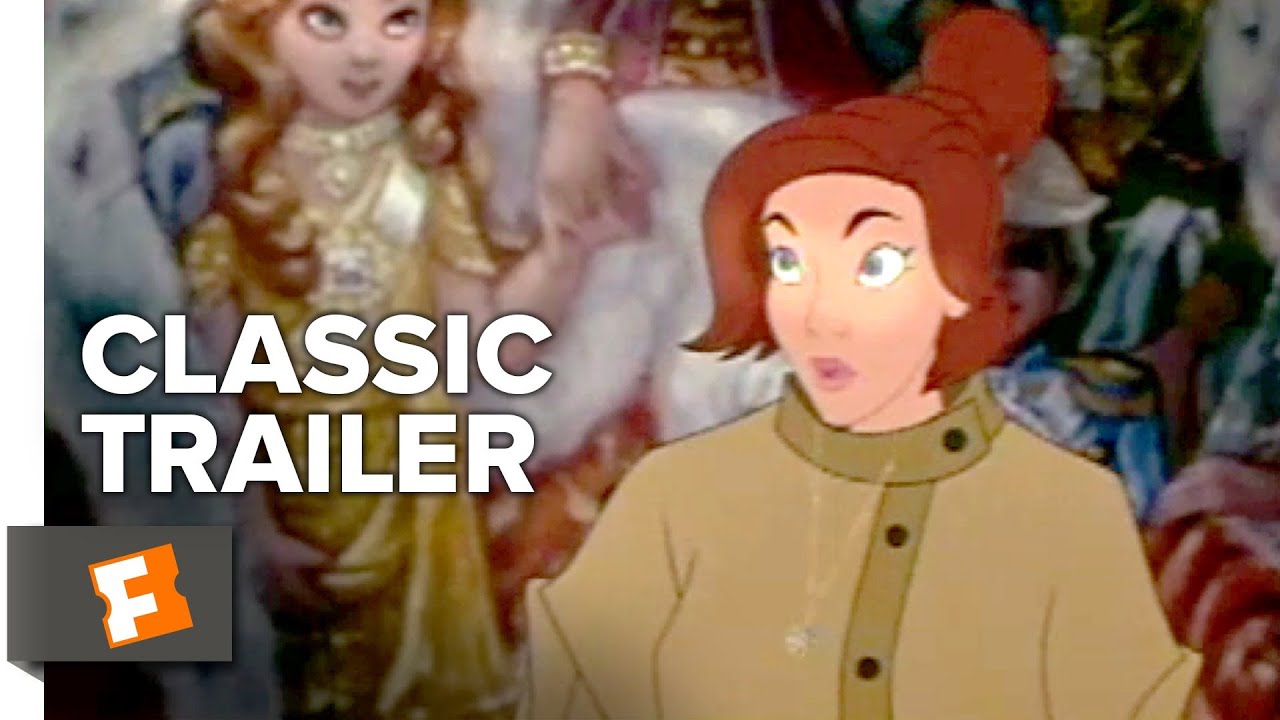
Anastasia (1997)
Don Bluth's lost-princess musical that a whole generation is sure was Disney. Meg Ryan's amnesiac Anya, a music box, Rasputin as an undead villain with an albino bat, and "Once Upon a December" — made in Phoenix by Fox, and released a week after Disney re-issued The Little Mermaid — a scheduling war Fox called deliberate.

FernGully: The Last Rainforest
The Australia–US eco-fable where a logger gets shrunk to fairy size — with Robin Williams improvising as Batty Koda months before Aladdin, and Tim Curry oozing menace as the toxic sludge Hexxus. Modest in theaters, immortal on classroom VHS carts.

The Pagemaster
Macaulay Culkin, four years after Home Alone, ducks into a library to escape a storm and gets melted into a cartoon, where three talking books and Long John Silver, Moby-Dick and Dr. Jekyll chase him toward the exit sign. It cost a reported $34 million, made $13.7 million, and was the last animated feature 20th Century Fox released with hand-painted cels.