The SpongeBob SquarePants Movie

Goofy Goober Rock, the Patty Wagon, seaweed mustaches and David Hasselhoff as a human speedboat. Stephen Hillenburg meant the 2004 movie to be the end of SpongeBob; it made $140 million, Nickelodeon kept the show going, and 4,700 Burger Kings put an inflatable sponge on the roof.
Nickelodeon and Paramount asked Stephen Hillenburg for a SpongeBob movie for more than a year before he said yes in 2002. He had watched The Iron Giant and Toy Story with his son and worried about giving SpongeBob and Patrick something cinematically consequential without losing what he called the show's cadence; the answer was "a doofus and an idiot, on this incredibly dangerous heroic odyssey with all the odds against them." After season three the staff stopped making episodes, and Hillenburg wrote the film with Derek Drymon, Tim Hill, Kent Osborne, Aaron Springer and Paul Tibbitt over three months in a former bank in Glendale. The film was drawn by hand at Rough Draft Studios in South Korea while CGI was taking over: "There's a lot of talk about 2-D being dead," Hillenburg said, "and I hope people don't think that."
The story opens with Mr. Krabs giving the manager's job at the Krusty Krab 2 to Squidward because SpongeBob is "just a kid," which sends SpongeBob and Patrick to the Goofy Goober ice-cream parlor for a sundae bender and a morning hangover. Plankton's Plan Z steals King Neptune's crown, ships it to Shell City and frames Krabs, who is frozen until the crown returns in six days (Patrick talks Neptune down from ten). The road trip in the Patty Wagon ends with the Cyclops, who turns out to be a diver running a gift shop of dried sea creatures. David Hasselhoff, playing himself, carries the pair home on his back; the crew built a lifelike $100,000 replica of him for the fight scene, which he kept at his house and later said freaked him out because it had teeth. Back home, SpongeBob frees a mind-controlled Bikini Bottom with Goofy Goober Rock, sung by Jim Wise.
Hillenburg refused fast-food tie-ins for the food itself, so Burger King made toys and watches instead and perched inflatable SpongeBobs on roughly 4,700 roofs, one of the biggest promotions in fast-food history. The inflatables started disappearing. Burger King offered a year of Whoppers for information; one was found tied to the fifty-yard line at an Iowa college, another under a bed in Virginia, a third with a ransom note, and two Maryland men who were arrested said they were proud of it. The film also became the first to sponsor a NASCAR race, the SpongeBob SquarePants Movie 300 at Charlotte, with SpongeBob on the hood of Jimmie Johnson's car and Patrick on Kyle Busch's.
It premiered on a yellow carpet at Grauman's Chinese Theatre on November 14, 2004, opened second to National Treasure and earned $140 million worldwide on a $30 million budget, losing the holiday to The Incredibles and The Polar Express but turning a profit. Reviews were kind; Roger Ebert called it the Good Burger of animation. Hillenburg had wanted it to be the series finale so the show would not jump the shark; Nickelodeon could not afford to end it, so he stepped down and handed the show to Paul Tibbitt.
Similar items
SpongeBob SquarePants
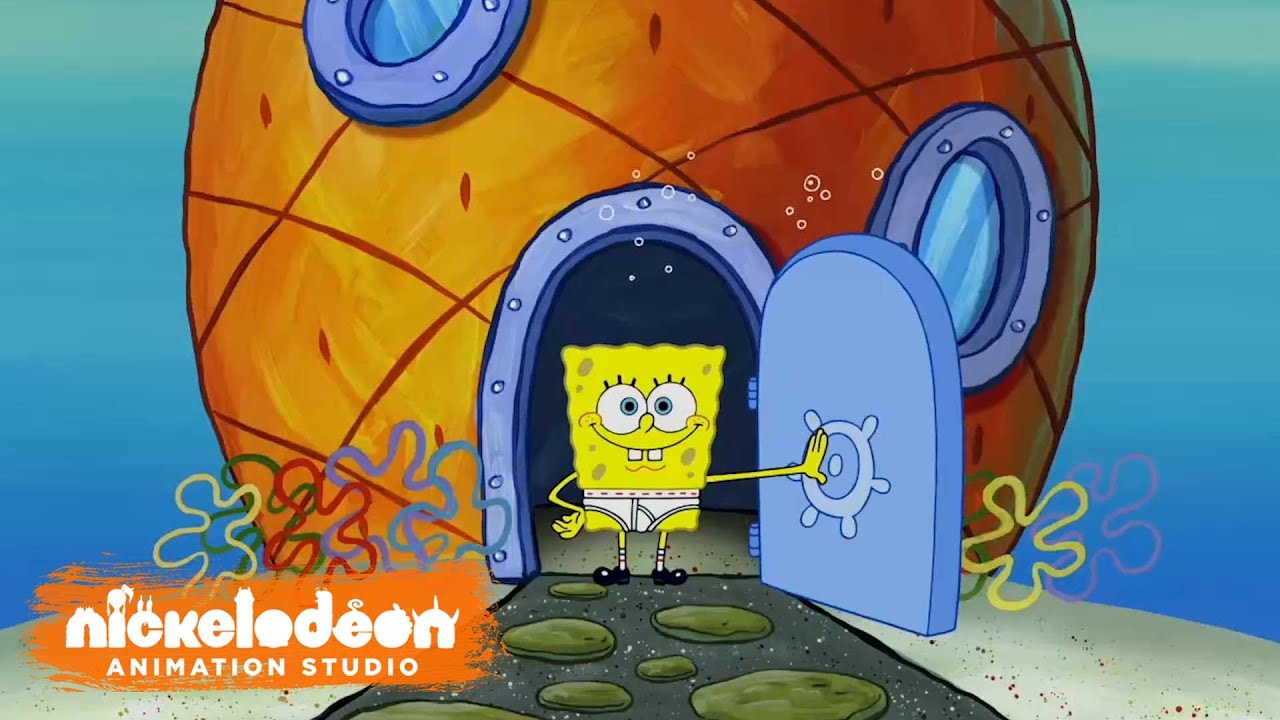
The absurdist sponge working the fry cook line at Bikini Bottom, living under the sea with his starfish best friend, and radiating genuine optimism. SpongeBob SquarePants premiered on Nickelodeon in May 1999 and became the network's biggest hit — a cultural juggernaut that turned early episodes into an endless meme quarry.

David Hasselhoff
Knight Rider's Michael Knight, Baywatch's Mitch Buchannon, and — no joke — the biggest thing on the German pop charts in 1989. He revived a canceled show with his own money, sang on the Berlin Wall in a light-up jacket, and then laughed at the punchline harder than anyone.

The Incredibles
Pixar's 2004 superhero film about a family forced to hide their powers in suburban normalcy — Mr. Incredible, Elastigirl, and their kids Violet, Dash, and baby Jack-Jack. They're drawn out of retirement to battle the villain Syndrome, and the film balances family comedy with genuine action and heart. The Academy Award–winning film proved animation could deliver both laughs and thrills.

The Polar Express
Robert Zemeckis' 2004 motion-capture Christmas film became the instant classic everyone either loved or found genuinely unsettling — sometimes both. Tom Hanks played six roles in a $165 million fever dream about a boy who boards a magical train on Christmas Eve, backed by an Oscar-nominated Josh Groban ballad. It's now a December rite: the movie every elementary school saves for pajama day.